Welcome to another exciting Globle challenge! If today’s mystery country has you puzzled, you’re in exactly the right place. We’ve prepared a comprehensive set of strategic hints to guide you toward the answer while keeping the geographical exploration engaging and educational.
Today’s puzzle might require you to think beyond your initial continental guesses. Let’s navigate toward the answer together!
Also Check: Globle Hints and Answer for December 1, 2025
What is Globle?
Globle is an addictive daily geography game that challenges players to identify a mystery country using color-coded feedback. After each guess, the globe displays colors that indicate your proximity to the target country:
- Red/Hot colors indicate you’re very close to the mystery country
- Orange/Warm colors mean you’re in the general region
- Yellow/Cool colors suggest you’re moderately distant
- White/Cold colors mean you’re far from the target
The challenge is to identify the mystery country in as few guesses as possible while expanding your knowledge of world geography.
Strategic Hints for December 2, 2025
Let’s guide you toward today’s answer with these progressive clues:
Hint 1: The Continent
The mystery country is located in Africa, specifically in the northern region of the continent. This eliminates the Americas, Asia, Europe, and Oceania from consideration.
Hint 2: Coastal Nation
This country has extensive coastlines along two major bodies of water: the Atlantic Ocean and the Mediterranean Sea. It’s positioned at a strategic maritime crossroads.
Hint 3: Regional Position
The mystery country is located in North Africa, in the Maghreb region. If you guessed countries in Sub-Saharan Africa, you’ll see colors directing you northward.
Hint 4: Proximity Clues from the Americas
If you started with Canada, you’d see cooler colors pointing you east and south across the Atlantic. Mexico brings you warmer, indicating the target is across the ocean in a similar latitude band.
Hint 5: European Proximity
This country is very close to Europe, separated by a narrow strait that’s only about 14 kilometers wide at its narrowest point. It’s one of Africa’s northernmost nations.
Hint 6: Geographic Features
The mystery country contains parts of the Atlas Mountains, the Sahara Desert, and fertile coastal plains. It has diverse geography ranging from beaches to mountains to desert landscapes.
Hint 7: Strategic Location
This nation serves as a gateway between Africa and Europe, with its northern tip nearly touching Spain. The Strait of Gibraltar provides a vital maritime passage.
Hint 8: Cultural Identity
This country blends Arab, Berber, and African influences, with French and Spanish also playing roles in its modern culture. It’s known for its distinctive architecture, colorful markets, and rich history.
Hint 9: Major Cities Clue
Famous cities in this country include Casablanca, Marrakech, Fez, and Rabat. These names might help you identify the nation.
Ready for the answer? Scroll down to reveal today’s Globle country!
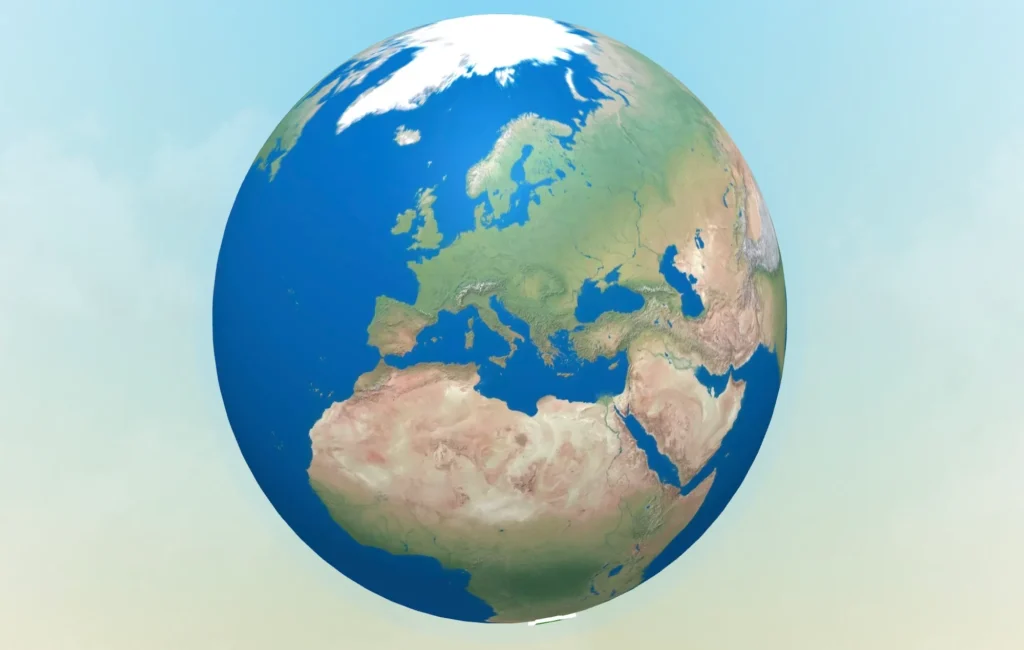
Today’s Globle Answer: Morocco
The answer to today’s Globle puzzle for December 2, 2025 is Morocco.
This North African kingdom sits at the crossroads of African, Arab, and European cultures, making it one of the continent’s most geographically and culturally significant nations.
About Morocco
Morocco, officially the Kingdom of Morocco, is a country located in the Maghreb region of North Africa. Its strategic position has made it historically important for trade, culture, and geopolitics.
Key Facts About Morocco:
- Capital: Rabat (though Casablanca is the largest city)
- Population: Approximately 37-38 million people
- Area: About 446,550 square kilometers (or 710,850 km² including disputed Western Sahara)
- Borders: Algeria to the east, Western Sahara to the south, Atlantic Ocean to the west, Mediterranean Sea to the north
- Geography: Diverse terrain including mountains, deserts, and coastlines
- Government: Constitutional monarchy with an elected parliament
Geographic Significance:
Morocco’s location makes it uniquely positioned in global geography:
- Strait of Gibraltar: Only 14 km from Spain at the narrowest point
- Two Coastlines: Atlantic Ocean (1,835 km) and Mediterranean Sea (512 km)
- Atlas Mountains: Three ranges crossing the country (High, Middle, and Anti-Atlas)
- Sahara Desert: Southern regions transition into the world’s largest hot desert
- Climate Diversity: Mediterranean, oceanic, and desert climates
How to Find Morocco: Strategic Path
Based on the successful guessing path that led to today’s answer:
Step 1: Canada
Starting with Canada in North America establishes your position but shows cooler colors, indicating you need to cross the Atlantic Ocean and move significantly south.
Step 2: Mexico
Moving to Mexico brings warmer colors, suggesting the target country is at a similar latitude but across the Atlantic Ocean in the Eastern Hemisphere.
Step 3: Morocco
Success! Located in North Africa at approximately the same latitude as Mexico and across the Atlantic from North America, Morocco is revealed as today’s answer.
This efficient three-guess solution demonstrates how understanding latitude relationships and cross-continental positioning can lead to quick success. The warming from Canada to Mexico indicated movement toward the correct latitude band, with the final logical step being to cross the Atlantic to North Africa.
Why Morocco Makes an Engaging Globle Puzzle
Morocco presents an interesting challenge for several reasons:
Cross-Continental Thinking
Starting in the Americas requires players to make the mental leap across the Atlantic Ocean to Africa, which isn’t always intuitive.
Latitude Recognition
Morocco’s position at roughly 28-35°N makes it latitude-similar to parts of the southern United States and Mexico, creating an interesting geographical relationship.
Regional Familiarity
While Morocco is well-known culturally, some players may be less certain about its exact location on the African continent.
North Africa Density
The Maghreb region contains several countries (Morocco, Algeria, Tunisia, Libya), requiring geographical precision to distinguish between them.
Morocco’s Geographic Diversity
Understanding Morocco’s varied geography adds depth to today’s puzzle:
Coastal Regions
- Atlantic Coast: Long beaches, fishing ports, and major cities like Casablanca
- Mediterranean Coast: Smaller coastline with cities like Tangier
- Maritime Heritage: Centuries of seafaring and trade history
Mountain Ranges
- High Atlas: Contains North Africa’s highest peak, Mount Toubkal (4,167 m)
- Middle Atlas: Known for cedar forests and Berber villages
- Anti-Atlas: Transition zone between mountains and Sahara
- Rif Mountains: Northern range parallel to the Mediterranean
Desert Landscapes
- Sahara Desert: Southern regions feature vast sand dunes and oases
- Pre-Saharan Zones: Transition areas with unique ecosystems
- Desert Tourism: Popular destinations like Merzouga attract visitors
River Valleys
Major rivers like the Moulouya, Sebou, and Draa create fertile agricultural zones.
Morocco’s Cultural and Historical Significance
Morocco’s geography has shaped its rich cultural heritage:
Historical Crossroads
- Ancient Phoenician and Roman settlements
- Islamic dynasties that built imperial cities
- European colonial influences from France and Spain
- Modern independence and development
Cultural Blend
- Berber Heritage: Indigenous North African people and culture
- Arab Influence: Islamic culture and Arabic language
- African Identity: Part of the African continent and African Union
- European Proximity: Close ties with Spain and France
Economic Importance
- Strategic location for trade between Europe and Africa
- Growing tourism industry attracting millions annually
- Agricultural exports including citrus and vegetables
- Phosphate mining (Morocco has 75% of world reserves)
Tips for Playing Globle
Improve your Globle success with these strategic approaches:
Use Latitude Logic
When colors warm as you move along similar latitudes, consider crossing oceans to different continents at the same latitude band.
Think Strategically About Oceans
If warming occurs as you approach a coast, the target might be across that ocean rather than inland.
Study Regional Geography
Familiarize yourself with regional groupings:
- Maghreb: Morocco, Algeria, Tunisia, Libya
- West Africa: Countries south of the Sahara
- East Africa: Countries along the Indian Ocean
- Southern Africa: Countries at the continent’s southern tip
Remember Strategic Locations
Countries at continental crossroads (like Morocco between Africa and Europe) often appear in puzzles.
Learn Capital Cities
Knowing capitals and major cities helps with country recognition and geographical associations.
Consider Historical Context
Understanding historical trade routes, colonial history, and cultural connections can provide geographical insight.
Educational Value of Today’s Puzzle
Learning about Morocco through Globle offers valuable insights:
- Continental Connections: Understanding links between Africa, Europe, and the Atlantic world
- Geographic Diversity: Recognizing how one country can contain mountains, deserts, and coasts
- Strategic Importance: Learning why certain locations matter historically and economically
- Cultural Geography: Appreciating how location shapes cultural development
Exploring North Africa
Morocco’s position in North Africa highlights the region’s significance:
The Maghreb Region
The western North African region including Morocco, Algeria, Tunisia, Libya, and Mauritania shares:
- Similar climate patterns
- Related cultural and linguistic heritage
- Mediterranean and Saharan influences
- Historical connections dating back millennia
Africa-Europe Relations
Morocco’s proximity to Europe via the Strait of Gibraltar has created:
- Historical migration patterns
- Economic interdependence
- Cultural exchange
- Strategic geopolitical importance
Conclusion
Today’s Globle answer for December 2, 2025, is Morocco—a fascinating North African nation that serves as a bridge between continents and cultures. Whether you found it quickly through our strategic path or needed all our hints, we hope today’s puzzle enhanced your understanding of this geographically diverse and culturally rich country.
The efficient three-guess progression from Canada through Mexico to Morocco demonstrates how understanding latitude relationships and thinking strategically about ocean crossings can lead to rapid success. Each guess provided crucial directional information that narrowed the search.
Morocco’s unique position at the northwestern corner of Africa, its proximity to Europe, and its diverse landscapes make it a perfect Globle challenge that tests both geographical knowledge and strategic thinking.
Come back tomorrow for more Globle hints and answers, and keep exploring the world one country at a time!
How many guesses did it take you to find Morocco? Share your Globle score and strategy in the comments below!
Also Check: Bandle December 2, 2025 Answer