Salt might seem like a simple seasoning ingredient, but in Hytale it’s an essential crafting component for various food recipes that’ll keep you alive during your adventures. Unlike most resources you can mine directly from the world, Salt requires a more roundabout approach involving fishing traps, processing stations, and a bit of patience.
If you’ve been searching mountains and caves expecting to find Salt deposits, you’re looking in the wrong places. This guide explains exactly how to obtain Salt Blocks, convert them into usable Salt, and even purchase emergency supplies when you’re in a pinch. For more essential crafting and resource guides, check out our comprehensive Hytale guides hub.
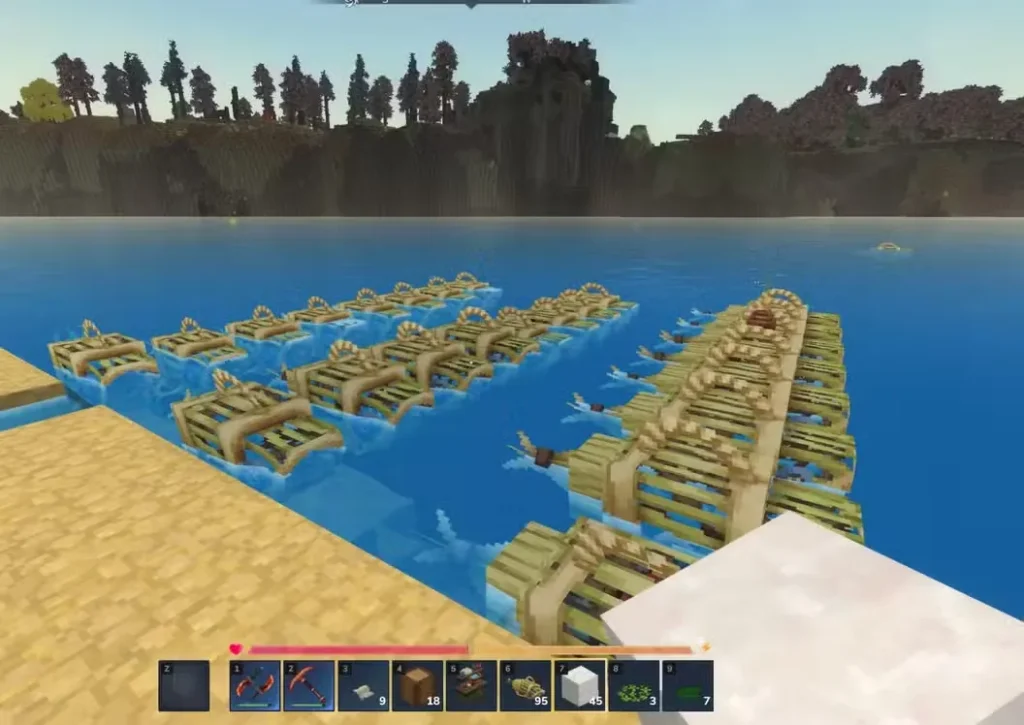
The Primary Method: Fishing Traps for Salt Blocks
The most reliable way to farm Salt in Hytale involves fishing traps, which might seem counterintuitive when you’re looking for a mineral. These traps don’t just catch fish—they also snag various flotsam items including the Salt Blocks you need.
Crafting Fishing Traps
Before you can start collecting Salt Blocks, you’ll need to craft fishing traps at a Tier 2 Farmer’s Workbench.
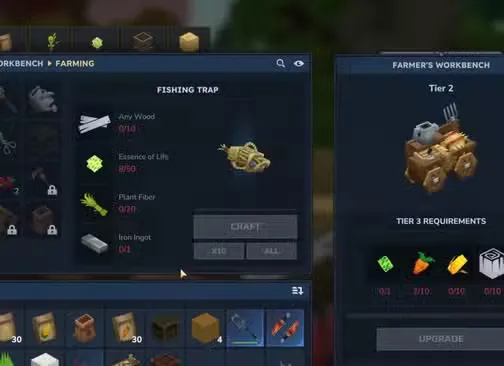
Fishing Trap Recipe:
- Any Wood x10
- Essence of Life x50
- Plant Fiber x20
- Iron Ingot x1
- Crafted at: Farmer’s Workbench (Tier 2)
The Essence of Life requirement is the biggest hurdle here. Fortunately, you can generate large quantities by farming crops in Hytale—every harvested crop drops Essence of Life, making it a renewable resource once you’ve established a farm.
Setting Up Your Fishing Trap Network
Once you’ve crafted your traps, placement matters. You can deploy fishing traps on any body of water—lakes, ponds, or rivers all work equally well. Here’s how to maximize your Salt Block collection:
Trap Deployment Strategy:
- Scout your map for water sources (they’re clearly marked)
- Place multiple fishing traps across different water bodies
- Wait for the traps to activate and fill with catches
- Collect items from activated traps
The key word here is “multiple.” Salt Blocks appear randomly among the various items fishing traps collect, so your odds improve dramatically when you cast a wider net. Don’t rely on just one or two traps—set up five, ten, or even more if you’re serious about Salt farming.
What Fishing Traps Catch
Besides your target Salt Blocks, fishing traps pull in a variety of items:
- Fish (the primary catch)
- Sea shells
- Sticks
- Linen Scraps
- Essence of Water
- Salt Blocks
Critical Tip About Fish Bait: You can craft Fish Bait at the Farmer’s Workbench to reduce trap activation time and increase rare fish catches. However, bait makes fish MORE likely to appear in your traps, which means FEWER Salt Blocks. When you’re specifically farming for Salt, skip the bait entirely. Save it for when you actually want fish.
Processing Salt Blocks into Salt
Raw Salt Blocks aren’t directly usable in recipes—you need to process them first. This happens at the Chef’s Stove, a crafting station you should build relatively early in your playthrough.
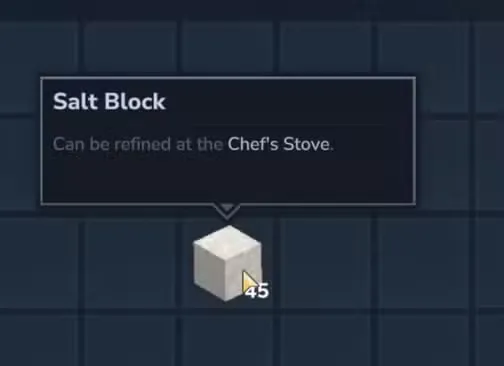
Crafting the Chef’s Stove
Chef’s Stove Recipe:
- Copper Ingot x2
- Any Tree Log x10
- Any Stone x5
- Crafted at: Workbench (Tier 1)
This is a straightforward craft using basic materials. If you’re already cooking food or processing ingredients, you probably have one already.
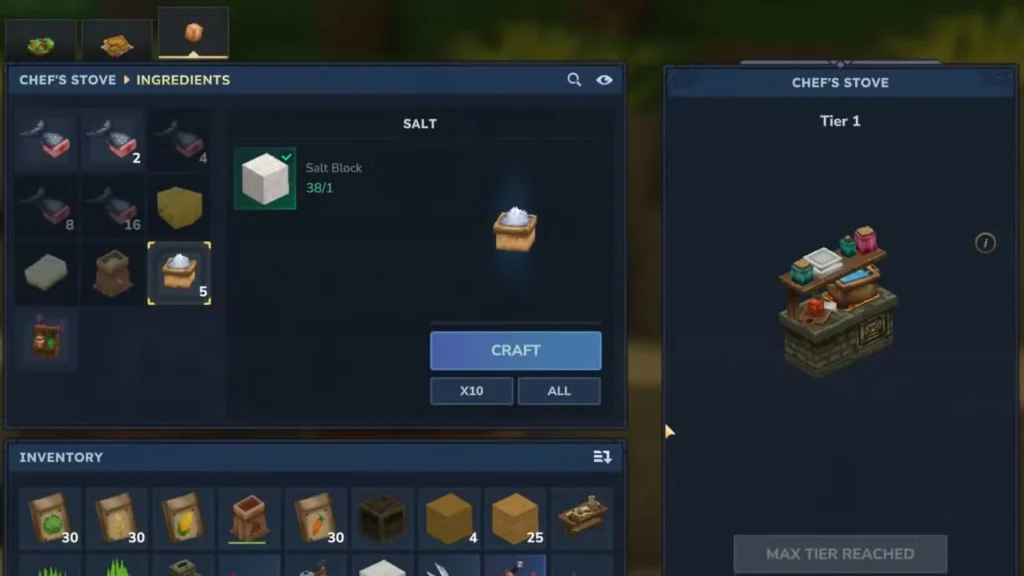
Converting Salt Blocks to Salt
Once your Chef’s Stove is ready:
- Open the Chef’s Stove interface
- Navigate to the Ingredients tab
- Select Salt from the available options
- Craft it
Conversion Ratio: 1 Salt Block = 5 Salt
This 1:5 ratio means each Salt Block you fish up gives you enough Salt for multiple recipes. Even if Salt Blocks seem rare from fishing traps, they go a long way once processed.
Alternative Method: Buying Salt from Traders
If you need Salt immediately and don’t want to wait for fishing traps to activate, there’s a faster option available at the Forgotten Temple.

The Forgotten Temple Trader
An NPC trader at the Forgotten Temple sells Salt in exchange for Essence of Life. This provides an instant solution when you’re in a rush to craft something Salt-dependent.
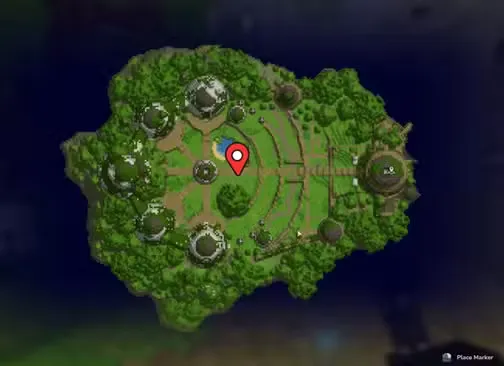
Trading Details:
- Currency: Essence of Life
- Stock: 10 Salt per restock
- Restock Timer: Once every 3 days
The limited stock and restock timer make this a poor long-term farming method, but it’s perfect for emergency situations. If you need 5-10 Salt right now to finish a recipe, the trader saves you from waiting on fishing traps.
Since Essence of Life comes from farming crops, you can generate the currency fairly easily with an established farm. Just remember the 3-day restock limit—buying out the trader means waiting before you can purchase more.

Chest Loot: The Luck-Based Approach
Both Salt Blocks and processed Salt occasionally appear as random loot in chests scattered throughout the world. This isn’t a farming method you can rely on, but it’s worth mentioning.
As you explore dungeons, ruins, and other structures, check every chest you find. The occasional Salt or Salt Block discovery supplements your fishing trap income nicely, even if you can’t count on it as a primary source.
Efficient Salt Farming Strategy
Combining these methods creates the most efficient Salt farming loop:
Early Game:
- Build a Chef’s Stove using basic materials
- Set up crop farming to generate Essence of Life
- Upgrade your Farmer’s Workbench to Tier 2
- Craft 5-10 fishing traps
- Deploy traps across multiple water bodies
Mid to Late Game:
- Expand your fishing trap network to 15-20+ traps
- Use the Forgotten Temple trader for emergency purchases
- Loot every chest you encounter during exploration
- Process all Salt Blocks immediately to keep inventory clean
Storage Tips: Salt doesn’t stack in huge quantities, so consider building bigger chests or crafting a backpack upgrade to manage your growing stockpile of processed Salt and other ingredients.
Why You Need Salt
Understanding what Salt is used for helps you plan how much to farm. While specific recipes vary, Salt typically appears in:
- Advanced cooking recipes for healing items
- Food preservation recipes
- Various crafting formulas at the Chef’s Stove
Having a steady Salt supply ensures you’re never blocked from crafting important consumables when you need them most—like right before a major boss fight or dungeon run.
For more information about Hytale and game updates, visit the official Hytale website.
Frequently Asked Questions
Can I mine Salt Blocks from caves or underground areas?
No, Salt Blocks don’t spawn as mineable blocks anywhere in the overworld. Fishing traps are the only reliable way to obtain them through normal gameplay. You might occasionally find them in chests, but there are no Salt deposits to mine like there are for ores.
How long do fishing traps take to activate?
The exact time varies, but fishing traps activate passively over time as long as they’re placed on valid water sources. Checking your traps every 10-15 minutes of active gameplay is usually sufficient. Fish Bait speeds this up but reduces Salt Block chances, so avoid it when farming specifically for Salt.
Is there a limit to how many fishing traps I can place?
There’s no hard limit on fishing trap quantity—you can place as many as you want across the world. The only real constraint is the resources needed to craft them (especially the Essence of Life). Practical limits come from how many water sources you have access to and how much you want to micromanage checking them all.
What’s the drop rate for Salt Blocks from fishing traps?
The exact percentage isn’t publicly documented, but Salt Blocks appear to be one of the less common items fishing traps collect. Anecdotally, you might see one Salt Block for every 5-10 trap activations, though RNG can swing results in either direction. This is why deploying many traps simultaneously is so important, it smooths out the variance.