The Blacksmith is your most important NPC for gear progression in Nioh 3. She handles weapon forging, Soul Match upgrades, Soul Extraction, Reforge, and Remodeling — all of which become essential for maintaining competitive stats as you push through tougher regions. However, not all Blacksmith functions are immediately available. Two separate Myths unlock her full capabilities.
This guide covers how to find the Blacksmith, forge your first weapons, complete both unlock quests, and use every system she offers efficiently.
How To Unlock the Blacksmith in Nioh 3
The Blacksmith appears relatively early but requires completing specific story objectives first. After the opening tutorial, your goal is reaching western Hamamatsu. This area contains a Crucible dungeon with the boss Jakotsu-baba guarding the exit. Defeat her to remove the Crucible’s corruption and enter the castle for the next story sequence.
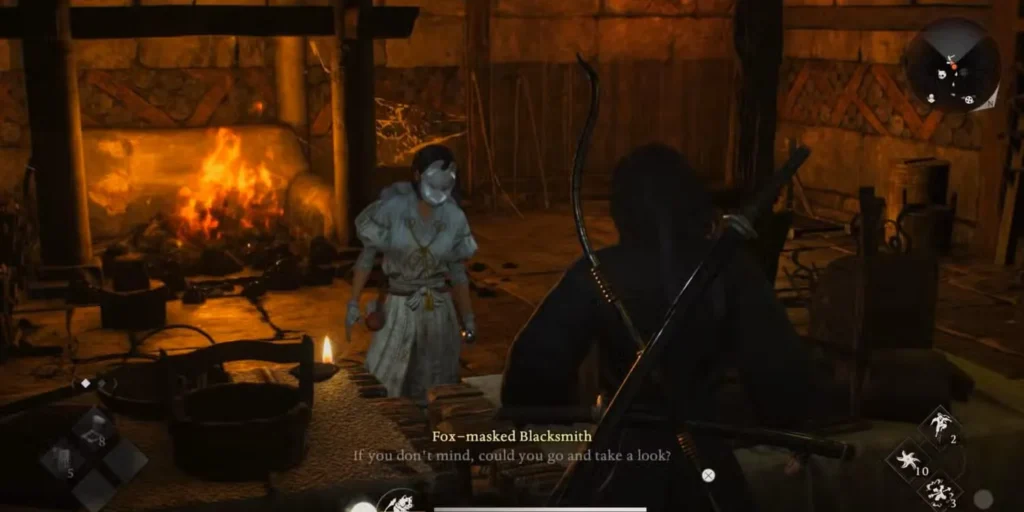
This automatically transports you to the Eternal Rift — your permanent hub for the remainder of the game. Inside, look for the Fox-masked Blacksmith in the southwest building. She becomes accessible immediately and remains available between all missions from this point forward.
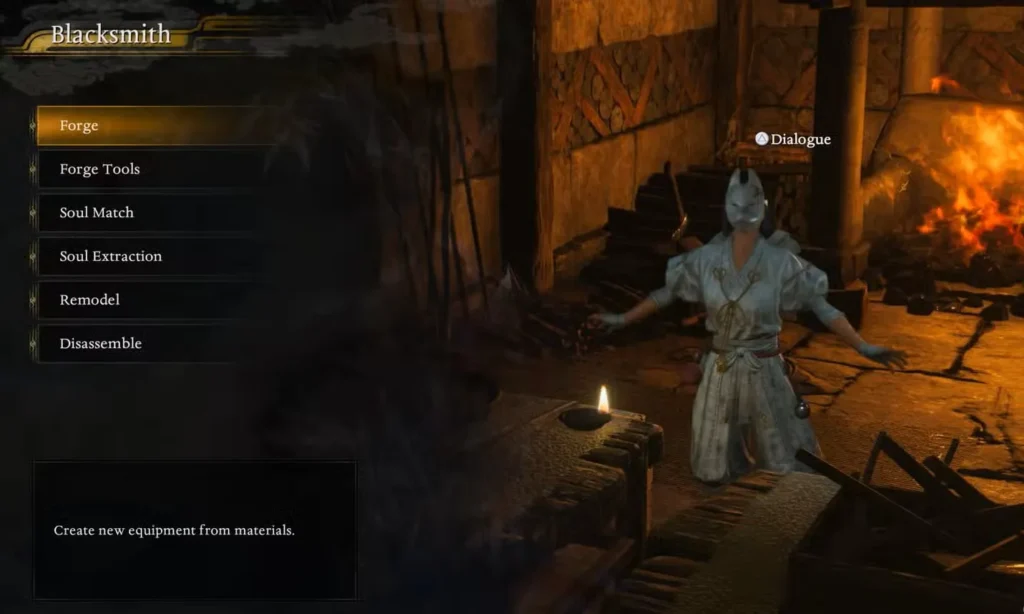
At first visit, Forge and Disassemble are immediately available. Soul Match and Soul Extraction are greyed out until you complete her first quest.
Nioh 3 Blacksmith: All Six Services Explained
The Blacksmith offers six distinct functions — each unlocked at a different point in the game:
Forge — available immediately. Create new weapons and armor from crafting materials. Disassemble — available immediately. Break down unwanted gear into crafting materials (Wood, Ingots, Tamahagane, Lacquer) used for Forging and rarity upgrades. Soul Match — unlocked via A Fierce Flame Myth. Raise a weapon’s level or +Value using Soul Ores. Soul Extraction — unlocked via A Fierce Flame Myth. Convert gear into Soul Ores specifically needed for Soul Matching. Reforge — unlocked via Memories in the Blade Myth. Reroll special effects on gear to better suit your build. Remodel — unlocked once you have a +Value weapon. Change the stat scaling on a weapon to match your chosen attributes.
Disassemble vs Soul Extraction: Critical Difference
This is the single most common beginner mistake at the Blacksmith. Both options consume the gear you select, but they produce completely different resources for completely different purposes:
Disassemble produces crafting materials — Wood, Ingots, Tamahagane, Lacquer. These are used for Forging new gear and upgrading rarity. Use this on common and uncommon drops you don’t need.
Soul Extraction produces Soul Ores — Yellow, Viridian, and Azure. These are exclusively used for Soul Match upgrades. Use this on gear you want to convert into upgrade fuel for your best weapons.
If you select Disassemble when you need Soul Ores, you get the wrong resource and lose the gear permanently. Always check which option you’re selecting before confirming.
How To Forge Weapons at the Blacksmith in Nioh 3
Forging is available the moment you first speak to the Blacksmith — no quest required. The system lets you create weapons directly rather than waiting for specific enemy drops.
What You Need to Forge
All Forge recipes require crafting materials obtained by Dismantling equipment you’re not using. Different weapon types need different material combinations — check the recipe before dismantling to ensure you’re accumulating the right resources. Forging also costs gold, which increases with weapon rarity.
What’s Worth Forging
Consider forging when you’ve unlocked a weapon type you want to test, when your current weapon’s damage is falling behind enemy health pools, or when you’ve accumulated excess materials from exploration. Early-game forging fills equipment gaps without relying on RNG drops. Late-game forging lets you craft specific weapons with desired base stats before customising them further through upgrades.
For help improving combat capabilities alongside your gear, check out our guide on how to get and use Samurai and Ninja Locks.
How To Unlock Soul Match and Soul Extraction: A Fierce Flame Myth
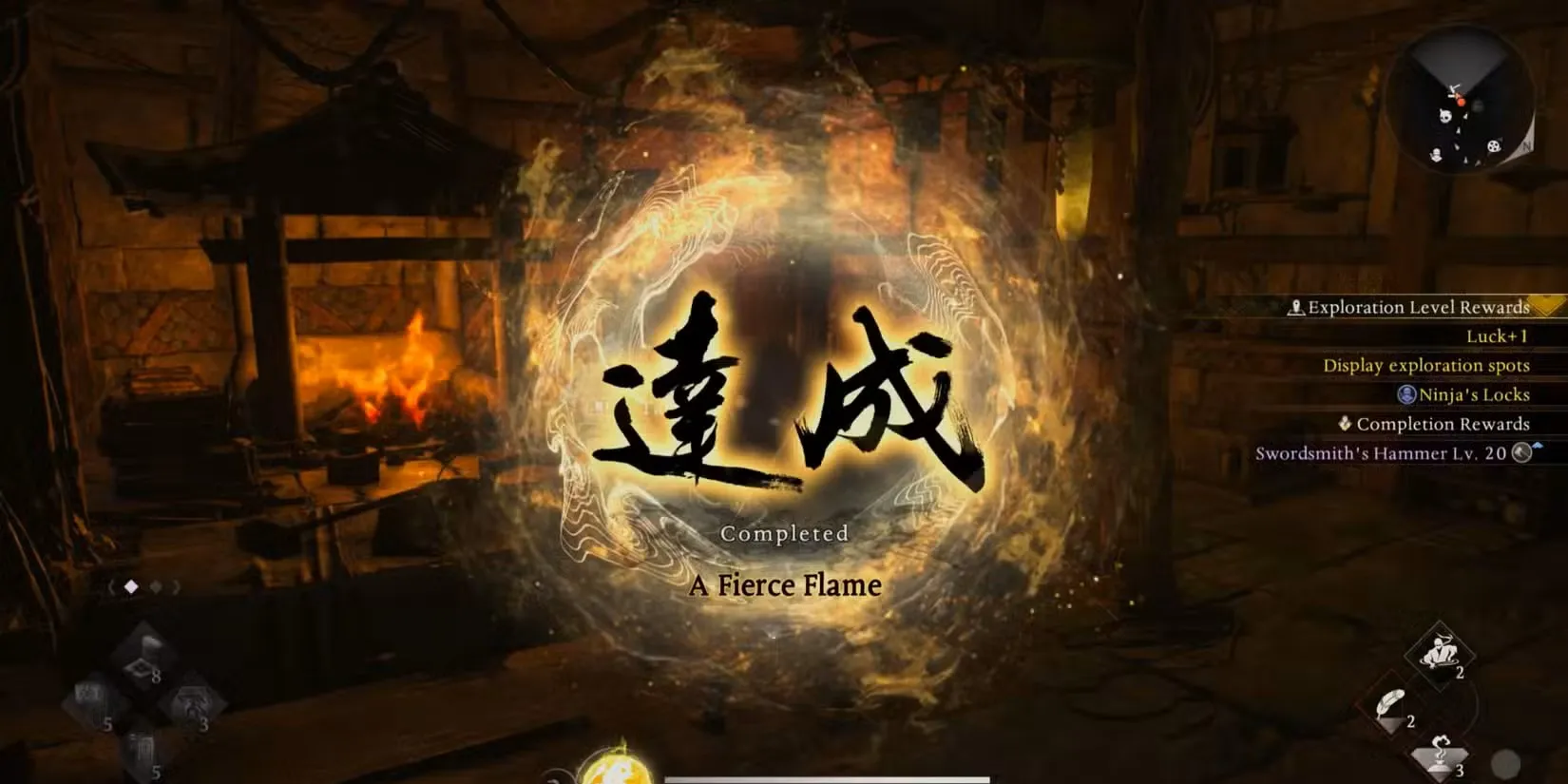
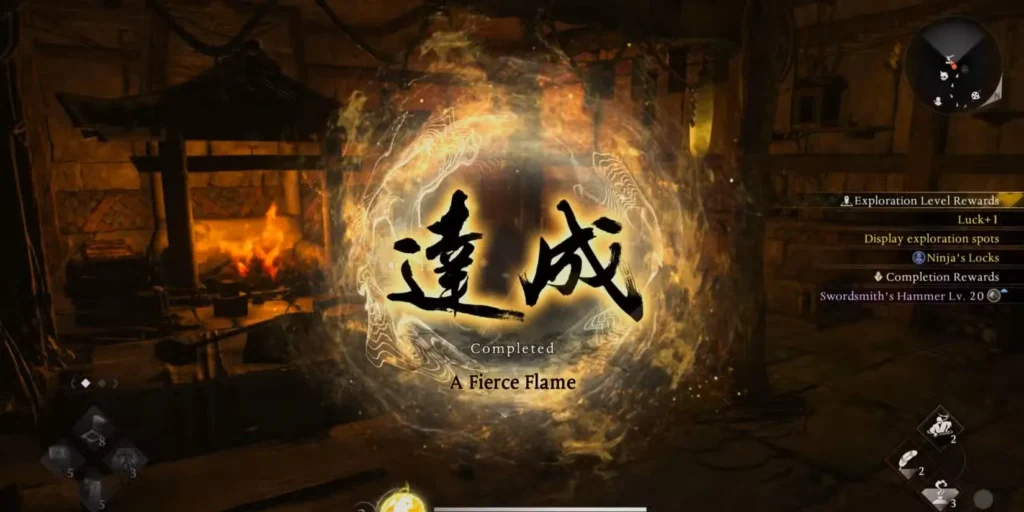
After your first visit to the Blacksmith, speak with her again. She asks you to retrieve Kagutsuchi’s Magatama from a shrine in the Warring States region, triggering the Myth called A Fierce Flame. This unlocks both Soul Match and Soul Extraction.
Reaching Lake Sanaru
Lake Sanaru is in the western end of the 1572 CE Warring States region. The quest objective marker guides you toward a specific shrine once the Myth is active.
Take the left path after entering the Lake Sanaru area and continue until you spot a Scampuss — one of the friendly cat-like Yokai.
Following the Scampuss
The Scampuss serves as your guide. Pet it when you first encounter it, then follow where it runs. It leads you most of the way to the shrine, saving significant exploration time. When it stops moving, pet it again, then continue forward on your own. The shrine entrance appears just ahead.
Retrieving Kagutsuchi’s Magatama
Enter the shrine building to find Kagutsuchi’s Magatama. Pick it up, fast travel back to the Eternal Rift, and speak with the Blacksmith to complete A Fierce Flame and unlock Soul Match and Soul Extraction.
Soul Match: How To Upgrade Weapons in Nioh 3
Soul Match keeps your favourite weapons relevant as you find higher-level gear. Instead of replacing a weapon with good stats or special effects, you feed it higher-level drops to raise it to a competitive level. Soul Match offers two distinct upgrade paths:
Select Level (Yellow and Viridian Soul Ores)
This option raises the weapon’s base level using Yellow Soul Ores (standard) and Viridian Soul Ores (required at higher levels). Increasing a weapon’s level raises its base attack power. Your gear can be levelled well beyond level 100 through repeated Soul Matching — each upgrade costs more Ores and gold than the last.
Select +Value (Azure Soul Ores)
This option upgrades a weapon’s +Value (for example, Wooden Sword → Wooden Sword +1) using Azure Soul Ores and gold. +Value upgrades are the most expensive path but provide the largest single boost to damage and defense. A weapon must reach at least +1 before Remodeling becomes available on it.
Getting Azure Soul Ores: Azure Soul Ores only drop from gear that already has a +1 or higher value. Use Soul Extraction on +Value gear to obtain them. This loot becomes more common from enemy drops in the mid to late game.
Soul Extraction: Getting Soul Ores in Nioh 3
Soul Extraction converts unwanted gear into Soul Ores for Soul Matching. Understanding which Ore each gear type produces prevents wasted extraction runs:
Yellow Soul Ores — extracted from any weapon or armor regardless of level. Used for level-based Soul Match upgrades. Viridian Soul Ores — extracted from higher-level gear. Required for Soul Matching at higher item levels. Azure Soul Ores — only extracted from gear with a +1 value or higher. Required for +Value Soul Match upgrades.
Sort your inventory by +Value before extracting to ensure you’re converting the right gear into the right Ore type. Always use Soul Extraction — not Disassemble — when your goal is upgrade fuel.
How To Unlock Reforge in Nioh 3: Memories in the Blade Myth
Reforge is the Blacksmith’s second major unlock, gated behind her second questline. After completing A Fierce Flame, progress into the Heian era and complete the main quest Sacred Mountain Defiled (defeating the boss Great Tengu). This automatically triggers the Myth Memories in the Blade.
What Memories in the Blade Requires
Return to the Eternal Rift and speak with the Blacksmith to begin. She asks you to find three legendary hidden blades scattered across the Heian region. She marks one location at a time — bring each blade back before the next marker appears. Complete all three deliveries to finish the Myth and unlock Reforge permanently.
Rewards: Reforge unlocked, 1x Samurai’s Locks, three Smithing Texts (Mikazuki: Munechika, Odenta Mitsuyo, Dojikiri Yasutsuna), and the Senji Toyo trophy/achievement.
Note on quest markers: The quest markers are known to disappear if you close the game mid-quest. If your markers vanish, check the Battle Scroll at any Shrine to replay the relevant mission and relocate the blade.
What Reforge Does
Once unlocked, Reforge lets you reroll the special effects (stat modifiers) on any weapon or armor. Select the effect you want to replace and it is swapped out for a randomly rolled alternative from the available pool for that item type. This is how you fine-tune a weapon with great base stats and Soul Match investment but one or two unwanted modifiers into an endgame build piece.
Not all special effects can be reforged — preset stats and set bonus lines cannot be changed. Reforge costs gold and crafting materials per roll.
Remodeling: Changing Stat Scaling in Nioh 3
Remodeling becomes available once a weapon has at least a +1 value. It lets you change the stat scaling of a weapon — which of your character’s attributes (Body, Skill, Strength, etc.) the weapon’s attack power scales from.
This matters significantly for builds. If you’re investing heavily in the Skill attribute but your weapon scales from Strength, Remodeling lets you redirect that scaling to align with how you’ve built your character. This is why +Value weapons are so valuable even beyond the raw damage increase — they unlock build customisation that isn’t otherwise possible.
Remodeling costs crafting materials and gold. Beginners don’t need to engage with it immediately, but understanding it early explains why collecting +Value gear is worth prioritising.
Managing Materials Efficiently at the Blacksmith
Visit the Blacksmith after every mission. Dismantle all gear you’re not actively using before your inventory fills — cramped inventory is one of the most common friction points in Nioh 3, and regular dismantling prevents it.
Prioritise Soul Extraction over Disassemble for rare and high-level gear. Common and uncommon drops can be dismantled for crafting materials, but rare equipment feeds Soul Matching far more efficiently through Extraction.
Keep at least one copy of every gear set you encounter. Set bonuses become increasingly relevant later in the game and can’t be reconstructed if you’ve dismantled all pieces.
Focus Soul Match on one weapon at a time. Spreading Ore resources across multiple weapons leaves everything underleveled. Pick your main weapon per combat style and concentrate upgrades there until enemies stop being challenging.
Save Azure Soul Ores for gear you’ve committed to long-term. +Value upgrades are expensive and consume rare Ores — don’t spend them on weapons you’ll replace in two hours.
For help with quests and collectibles, see our guide on where to find the man’s family in A Drop of Hope Myth.
For more information about Nioh 3, visit the official Team Ninja website, check it out on PlayStation Store, or grab it on Steam.
Frequently Asked Questions
When can I start upgrading weapons in Nioh 3?
Soul Match unlocks after completing A Fierce Flame Myth. The Blacksmith sends you to retrieve Kagutsuchi’s Magatama from a shrine in the Warring States region. Return it to her and both Soul Match and Soul Extraction become available immediately.
What’s the difference between Disassemble and Soul Extraction in Nioh 3?
Disassemble breaks gear into crafting materials (Wood, Ingots, Tamahagane, Lacquer) used for Forging and rarity upgrades. Soul Extraction converts gear into Soul Ores (Yellow, Viridian, Azure) used exclusively for Soul Match upgrades. Both options permanently consume the gear — selecting the wrong one wastes the resource entirely.
What are Yellow, Viridian, and Azure Soul Ores used for?
Yellow Soul Ores raise a weapon’s base level through Soul Match. Viridian Soul Ores are needed for Soul Matching at higher item levels. Azure Soul Ores are required for +Value upgrades (weapon → weapon +1) and can only be extracted from gear that already has a +1 value or higher.
How do I unlock Reforge in Nioh 3?
Reforge unlocks by completing the Memories in the Blade Myth — the Blacksmith’s second questline. You must first complete A Fierce Flame, then progress into the Heian era and defeat the boss Great Tengu in Sacred Mountain Defiled. Return to the Eternal Rift, speak with the Blacksmith, and find three hidden blades across the Heian region to finish the Myth.
What’s the difference between forging and upgrading weapons in Nioh 3?
Forging creates new weapons from crafting materials, giving you fresh gear with base stats. Soul Match (upgrading) raises an existing weapon’s level or +Value using Soul Ores, keeping your favourite gear competitive without replacing it. Use Forge to fill equipment gaps or test new weapon types; use Soul Match to invest in weapons you want to keep long-term.
Can I upgrade armor the same way as weapons in Nioh 3?
Yes — Soul Match applies to both weapons and armor. Select any armor piece as the base and use Soul Ores to raise its level or +Value the same way you would for a weapon. Remodeling also applies to armor with a +Value.