Welcome to Spell Valley (Arena 4) – Where Strategy Matters
Hitting 1000 trophies and entering Spell Valley marks a genuine shift in how Clash Royale plays out. Those early arenas where you could just drop a Giant and watch it walk to the tower? Those days are over. Arena 4 introduces defensive powerhouses like Inferno Tower and splash damage threats like Wizard that will absolutely punish lazy gameplay. You need a real plan now.
The good news is that with the right deck and some solid fundamentals, Spell Valley becomes way more manageable. This guide breaks down five proven decks that work exceptionally well in the current meta, along with the core strategies that will carry you through Arena 4 and beyond.
What Makes Arena 4: Spell Valley Different
Arena 4 sits at 1000+ trophies on the Trophy Road, and it brings some cards that completely change how battles flow. The two biggest game-changers are Inferno Tower and Wizard. Inferno Tower is the best tank-killing building in the game at this level – it ramps up damage incredibly fast and melts Giants, PEKKAs, and other heavy units. Wizard brings serious area damage that wipes out grouped troops supporting your pushes.
What this means practically is that the straightforward beatdown approach of stacking troops behind a Giant stops working reliably. Your opponent drops Inferno Tower in the middle, and your Giant evaporates. They throw Wizard behind their tower, and suddenly your supporting troops are gone before they do anything useful.
Successful Arena 4 decks handle this reality in one of two ways: they either use faster win conditions like Battle Ram or Hog Rider that can pressure before opponents set up their defenses, or they use Giants with smarter support troops and proper spell management to overwhelm defensive setups. Either approach works, but you need to commit to one and build your deck accordingly.
1. Battle Ram Inferno Control Arena 4 Deck – Current Meta Leader
Multiple recent Arena 4 guides point to this deck as the strongest option right now in Spell Valley. It handles both sides of the equation – it has Battle Ram for quick pressure that catches opponents off-guard, and it packs Inferno Tower plus solid defenders to shut down enemy pushes.

The Deck:
- Battle Ram
- Knight
- Wizard
- Archers
- Inferno Tower
- Fireball
- Minions
- Zap
How It Works:
Your primary win condition is Battle Ram. The card charges down the lane fast and breaks into two Barbarians when it connects with anything – towers, buildings, or troops. Those Barbarians do serious damage if they reach the tower.
The core defensive lineup consists of Knight as your ground tank, Inferno Tower for melting heavy units, and Archers plus Minions for ranged damage. When opponents push, you place Inferno Tower centrally to pull and burn their tank. Knight soaks hits from supporting troops. Archers and Minions pick off whatever remains.
Here comes the key part – once you defend successfully and troops survive, you drop Battle Ram right at the bridge in front of those surviving defenders. This converts your defense into an immediate counterpush that your opponent often cannot handle because they just spent elixir on their failed push.
Strategy Breakdown:
Against tanks like Giant, PEKKA, or enemy Battle Rams, place your Inferno Tower in the middle lane position. This pulls the tank away from your towers and gives both Princess Towers time to shoot at it while Inferno ramps up its damage. Keep Zap ready – if your opponent has Inferno Dragon or their own Inferno Tower threatening your pushes, Zap resets the ramp-up and gives your troops more time.
When pressuring with Battle Ram during single elixir time, send it solo or with just Minions backing it up. The goal here is testing what they have and forcing them to use spells or cycle cards. During double elixir, you can commit harder – stack Wizard and Knight or Wizard and Minions behind Battle Ram for devastating pushes that overwhelm defenses.
Spell usage matters tremendously. Fireball should target clumps – aim to hit tower plus Wizard, Musketeer, or Three Musketeers whenever possible. Zap serves three purposes: resetting Inferno Tower or Inferno Dragon, finishing low-health swarms, and combining with Wizard or tower damage to clean up groups.
Common Mistakes:
Do not send Battle Ram blindly into a prepared Inferno Tower without either having Zap ready or supporting troops to distract. The Ram will melt before connecting. Also avoid stacking Wizard, Archers, and Minions all together – one Fireball from your opponent hits everything and gives them a massive elixir advantage.
2. Giant–Mini P.E.K.K.A–Wizard Beatdown Arena 4 Deck
This deck shows up consistently in recent Arena 4 guides as the beginner-friendly beatdown option. It teaches fundamental Clash Royale concepts without overwhelming newer players with complex timing or cycle mechanics.

The Deck:
- Giant
- Mini PEKKA
- Wizard
- Fireball
- Skeletons
- Minions
- Cannon
- Archers
How It Works:
Your win condition centers on Giant pushes. Mini PEKKA serves as your anti-tank defender and counterpush damage dealer. Wizard provides the splash damage you need to clear swarms protecting enemy towers. Minions and Archers add cheap, reliable damage. Cannon acts as your defensive building to pull and distract enemy win conditions.
The deck runs at roughly 3.5 average elixir, which means you cycle back to your key cards reasonably fast without being so cheap that you struggle to build meaningful pushes.
Playing the Deck:
Opening moves depend on your starting hand. If you have Giant, drop him behind your King Tower to start building a slow push. If not, cycle Skeletons or Archers in the back and wait to see what your opponent plays first.
When building your push after placing Giant at the back, add Wizard behind the Giant to burn through any swarms your opponent drops. Then add Mini PEKKA either at the bridge or mid-lane – Mini PEKKA deletes tanks and high-HP defenders incredibly fast. Use Minions or Archers to handle air units or add extra ground damage.
On defense, use Cannon in the center to pull Hog Riders, Battle Rams, Giants, and other threats away from your towers. This central placement lets both Princess Towers shoot the pulled unit. Back up the Cannon with Mini PEKKA plus cheap troops like Skeletons or Minions. When these defenders survive, convert them into a counterpush.
Fireball should target high-value combinations – Wizard or Musketeer clumped with tower, Barbarians plus support troops, or any cluster of medium-health units. Avoid Fireballing single small units unless it also chips the tower or hits multiple valuable targets.
When This Deck Excels:
This setup works best for players who want clear structure – tank goes in front, support goes behind, spells clear defenders. It punishes opponents who spam cheap swarms since Wizard and Fireball counter that approach hard. The deck is also very forgiving of mistakes because Giant has so much health and Wizard handles most defensive responses.
3. Classic Giant Beatdown Deck for Arena 4
Another variation on Giant-based strategies, this version uses more flexible support options and double spells for maximum value trades.

The Deck:
- Giant
- Musketeer
- Valkyrie
- Mini PEKKA
- Bomber
- Goblins or Spear Goblins
- Arrows
- Fireball
Core Strategy:
This deck is about stacking value behind Giant and overwhelming one lane with a slow, powerful push. Giant serves as your tank and primary win condition. Musketeer provides long-range damage against both ground and air. Valkyrie spins through melee swarms like Skeleton Army and Goblin Gang. Mini PEKKA shreds opposing tanks. Bomber handles low-health swarms cheaply.
The key difference from the previous Giant deck is running both Arrows and Fireball. This double spell setup means you can blow out swarms and key defenders more reliably. Goblins or Spear Goblins keep the deck cycle moving while adding extra damage.
Game Plan:
Early game should be reactive. Defend with Valkyrie, Mini PEKKA, Bomber, and Goblins. Only commit to a full Giant push once you understand how your opponent counters tanks.
Mid-game is when you start your Giant pushes. Begin Giant in the back when you are at or near full elixir. Add Bomber or Valkyrie first to handle small troops. Place Musketeer a bit spaced out so Fireball or Poison cannot hit everything at once.
During double elixir, build bigger, layered pushes – Giant plus Valkyrie plus Musketeer plus Bomber creates overwhelming pressure. Use Fireball aggressively on combinations like Musketeer or Wizard plus tower, or Three Musketeers grouped up. Keep Arrows ready to instantly delete Minion Horde or Skeleton Army the moment they drop.
Handling Inferno Tower:
Inferno Tower remains your biggest counter. Try forcing it out on defense first by pressuring one lane. Then push the opposite lane with Giant when Inferno Tower is out of their card rotation. If you have Zap available from chests, consider swapping Arrows for Zap to reset Inferno Tower and give your Giant more time.
This deck works extremely well for free-to-play players because all the cards are common or rare, making them easier to level up. It also performs consistently in low to mid-ladder Spell Valley matches.
4. Hog Rider Pressure Deck for Spell Valley
If your account already has Hog Rider unlocked from chests, this becomes one of the strongest Arena 4 options. The deck focuses on fast pressure and elixir-efficient defense rather than slow pushes.

The Deck:
- Hog Rider
- Valkyrie
- Musketeer
- Cannon or Tesla
- Zap
- Fireball or Freeze
- Goblins or Skeletons
- Fire Spirits
Philosophy:
Your win condition is chip damage from repeated Hog Rider attacks. Defense uses cheap but effective cards – Cannon or Tesla for pulling, Valkyrie for swarms, and Musketeer for air coverage. Goblins, Skeletons, and Fire Spirits let you cycle back to Hog Rider quickly.
Playing It:
The most common offensive play is Hog Rider plus Zap. Drop Hog Rider at the bridge. Hold Zap ready for Skeleton Army, Goblins, Bats, or to reset Inferno Tower. Mix in variations like Hog plus Fire Spirits or Hog plus Valkyrie when you know their counters are not in hand.
On defense, place Cannon or Tesla in the middle to pull Giants, Battle Rams, and other threats. Valkyrie cuts through mass swarms and support troops. Musketeer goes behind the tower or behind Valkyrie for air coverage and ranged damage.
Spell usage breaks down simply – Zap clears low-health troops and resets Inferno buildings. Fireball kills support troops like Wizard, Musketeer, and Witch while chipping towers. If you run Freeze instead of Fireball, the deck becomes more aggressive – Hog plus Freeze on tower and defenders takes huge chunks when they are low on elixir.
Win Condition Mindset:
You do not need to take a tower in one push. Your goal is landing two to three Hog connections per game, then finishing with Fireball and Zap chip damage during double elixir. This deck teaches tempo and elixir trading better than any other Arena 4 option, which makes it valuable for improving as a player even beyond Spell Valley.
5. Giant Skeleton Control Deck for Arena 4
For players who unlocked Giant Skeleton from chests, some modern guides recommend a control-style deck built around his death bomb mechanic.
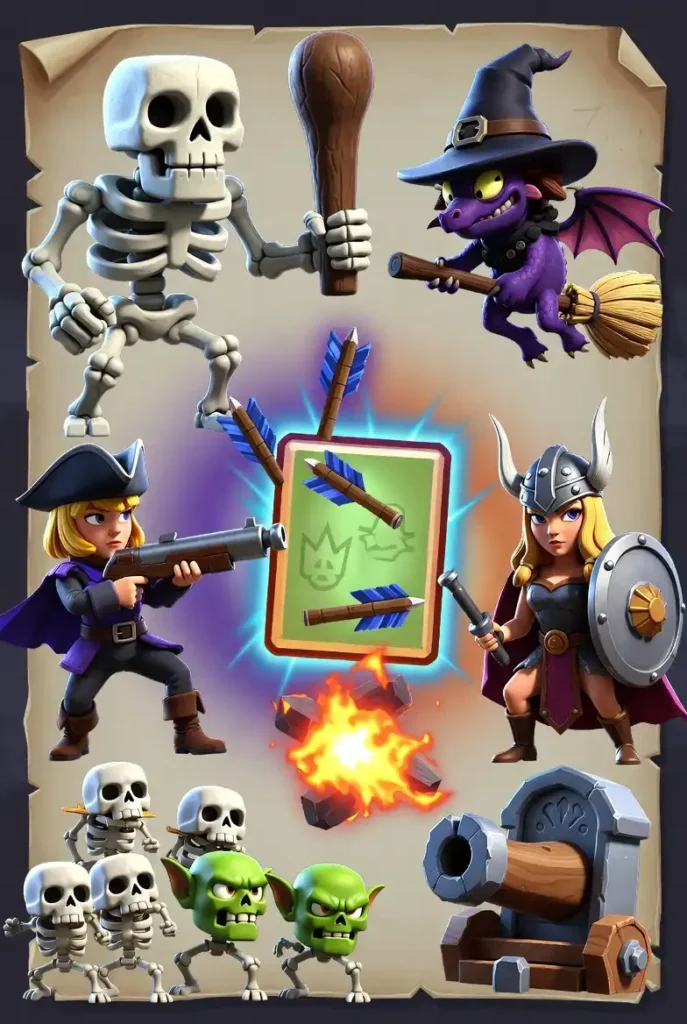
The Deck:
- Giant Skeleton
- Witch or Baby Dragon
- Musketeer
- Valkyrie
- Skeleton Army or Goblins
- Arrows
- Fireball
- Tombstone or Cannon
How It Plays:
Giant Skeleton acts as your defensive anchor. Place him in the lane where your opponent pushes – when he dies, the bomb wipes almost everything near it. Witch or Baby Dragon plus Musketeer provide splash damage and air control. Skeleton Army or Goblins clean up single troops or punish opponents who overcommit. Tombstone or Cannon serves as a cheap building to pull tanks or fast win conditions.
Strategy:
Use Giant Skeleton on defense first. After defending and the bomb goes off, walk him across the bridge with support troops like Witch, Baby Dragon, and Musketeer behind him. If the bomb goes off near the enemy tower, it does serious damage or at least clears all their defenders.
Arrows plus Fireball ensure swarms and support troops cannot stop your pushes cheaply. This deck runs slower than Hog cycle decks but punishes over-commitments and low-skill swarm spam incredibly hard, which makes it effective in Spell Valley where many players still make those mistakes.

General Arena 4 Spell Valley Strategy Tips
Regardless of which deck you choose, these fundamentals will accelerate your climb out of Arena 4.
Build Around Elixir-Efficient Defense
Spell Valley introduces splash damage and ramping damage mechanics that punish overcommitting. The guides stress aiming for positive elixir trades – spending less than your opponent on each defense, then converting those defenders into counterpushes.
Use cards like Valkyrie, Bomber, Wizard, and Baby Dragon to kill multiple troops for a small elixir cost. Let Inferno Tower or Mini PEKKA handle tanks instead of dropping multiple medium-cost troops that accomplish the same thing less efficiently.
Learn Proper Building Placement
Place defensive buildings like Cannon, Inferno Tower, and Tombstone roughly in the center lane in front of your King Tower. This pulls Giants, Hog Riders, Battle Rams, and other threats away from your towers while letting both Princess Towers shoot the pulled unit. This placement trick appears in high-level play consistently and gets emphasized repeatedly in arena deck guides.
Do Not Run Only High-Cost Cards
New players in Spell Valley often jam several cards costing five to seven elixir into one deck. Then they cannot defend in time because they lack elixir. Arena 4 deck guides almost always recommend including multiple one to three elixir cards for cycling and emergency defense.
Good low-cost options for Spell Valley include Skeletons, Goblins, Spear Goblins, Fire Spirits, Electro Spirit (if available), Archers, and Bomber.
Use Spells for Value, Not Panic
Fireball and Poison should hit tower plus at least one high-value troop – Wizard, Musketeer, Witch, or Three Musketeers. Arrows and Zap should finish swarms and provide resets. Do not waste them on single small troops unless those troops are protecting a tower-critical unit like Giant, Hog Rider, or Battle Ram.
Once opponents see you wasting spells, they can safely flood you with swarms and stack support troops because they know you cannot answer it.
Focus Upgrades on Core Cards
Arena and meta guides advise prioritizing a small set of core cards rather than spreading your gold across everything. In Spell Valley, safe long-term upgrade targets include Fireball, Zap, and Arrows since they work in almost every arena. Knight, Valkyrie, Musketeer, and Mini PEKKA serve as evergreen defensive backbone troops. Then pick one win condition – Battle Ram, Giant, or Hog Rider – depending on which deck archetype you commit to.
Which Arena 4 Deck Should You Choose?
Here are quick recommendations based on playstyle:
Want the most current meta deck with strong defense? Go for Battle Ram Inferno Control (Deck 1).
Brand new to Clash Royale and want something simple? Use the Giant – Mini PEKKA – Wizard Beatdown (Deck 2) or Classic Giant Beatdown (Deck 3).
Prefer fast, aggressive gameplay and already have Hog Rider? Choose the Hog Rider Pressure Cooker (Deck 4).
Have Giant Skeleton and like big defensive bombs? Try Giant Skeleton Wall Control (Deck 5).
Pick one archetype, stick with it, and level only those key cards. With tight elixir trades, correct building placements, and one of these optimized Spell Valley decks, climbing out of Arena 4 becomes much more consistent. Once you master these fundamentals, you will find yourself ready to tackle higher arenas with confidence.
Arena 4 Spell Valley Decks – Frequently Asked Questions
What trophy range is Spell Valley?
Spell Valley is Arena 4 and starts at 1000 trophies on the Trophy Road. You enter it once you reach 1000 trophies and stay there until you climb to the next arena.
How do I counter Inferno Tower in Arena 4?
Inferno Tower counters require either resetting it with Zap or overwhelming it with multiple units. If using tank decks, try forcing Inferno out on defense first, then push the opposite lane when it cycles out of their hand. If using fast decks like Hog Rider, keep Zap ready to reset Inferno Tower mid-ramp so your Hog gets more hits. Alternatively, use fast win conditions like Battle Ram that pressure before opponents can set up Inferno Tower.
What cards should I upgrade first in Spell Valley?
Focus on upgrading spells first since they work across all arenas – Fireball, Zap, and Arrows are safe investments. Then upgrade your core defensive troops like Knight, Valkyrie, Musketeer, and Mini PEKKA. Finally, commit to one win condition based on your chosen deck – either Battle Ram, Giant, or Hog Rider – and upgrade that consistently. Spreading upgrades across too many cards slows your progression significantly.
Is Giant still good in Spell Valley with Inferno Tower everywhere?
Giant remains effective in Arena 4 but requires smarter play than earlier arenas. You need proper support troops like Wizard or Musketeer, spell support to clear defenders, and good elixir management. The key is not just dropping Giant and hoping – instead, defend efficiently first, build elixir advantage, then commit to Giant pushes when you have the resources to support him properly. Giant decks work well for beginners because they teach fundamental beatdown concepts that carry into higher arenas.
How long does it take to get through Spell Valley?
The time varies significantly based on deck choice, card levels, and how well you understand the fundamentals. With a solid deck and consistent play, most players can climb from 1000 to 1300 trophies (exiting Spell Valley) within a few days to a week. The key factors are picking one deck and sticking with it, focusing upgrades on core cards from that deck, and practicing the fundamental strategies like proper building placement and elixir-efficient defense. Players who switch decks constantly or spread upgrades too thin tend to plateau longer in Arena 4.


