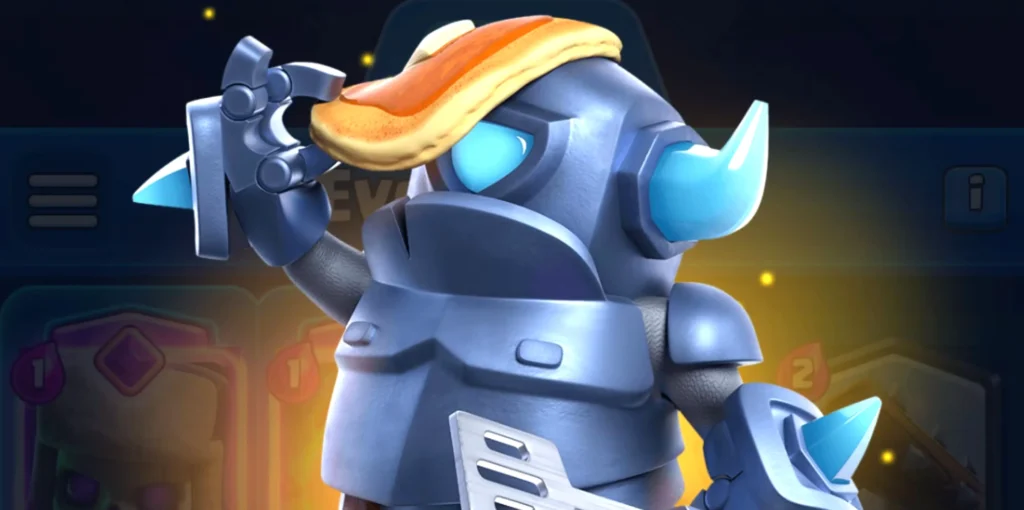
Welcome to P.E.K.K.A’s Playhouse (Arena 6)
Reaching 1600 trophies and entering P.E.K.K.A’s Playhouse represents a meaningful moment in your Clash Royale journey. This is Arena 6, where you finally start unlocking Epic cards that genuinely reshape how you can build decks. P.E.K.K.A, Baby Dragon, Witch, Skeleton Army, Guards, and Goblin Barrel all become available here, and these cards open up completely new strategic possibilities.
If you recently climbed through Spell Valley, you already understand the importance of solid defense and smart elixir management. Arena 6 builds on those fundamentals while introducing powerful Epic cards that can turn matches in your favor when used correctly.
This guide breaks down five proven decks currently dominating P.E.K.K.A’s Playhouse, along with the core strategies that will carry you through Arena 6 and set you up for success in higher arenas.
What Makes Arena 6: P.E.K.K.A’s Playhouse Stand Out
Arena 6 sits at 1600+ trophies on the Trophy Road. The defining characteristic of this arena is the Epic card unlocks. These Epics slot naturally into three major deck archetypes that work exceptionally well here:
Aggro decks use Hog Rider combined with Witch and Skeleton Army for fast pressure and devastating defense against tanks.
Control and chip decks leverage Goblin Barrel plus Guards and Wizard to whittle down towers while maintaining rock-solid defense.
Beatdown decks continue using Giant as the core tank but now add Baby Dragon or Witch as support for far more effective pushes.
The beauty of Arena 6 is that you can finally customize your deck around your preferred playstyle instead of being forced into whatever cards you happen to have. Whether you like aggressive rushing, patient chip damage, or overwhelming beatdown pushes, there are strong Epic-enhanced options available.
1. Valkyrie–Hog–Witch Arena 6 Deck – Versatile All‑Rounder
Recent Arena 6 analysis calls this deck arguably the best choice for P.E.K.K.A’s Playhouse because of its versatility and balanced approach to both offense and defense. It handles almost any matchup competently.

The Deck:
- Zap
- Minions
- Fireball
- Valkyrie
- Hog Rider
- Skeleton Army
- Baby Dragon
- Witch
Average Elixir: 3.6
How It Wins:
Your primary win condition is Hog Rider supported by Witch, Skeleton Army, Minions, and Baby Dragon. The defensive core consists of Valkyrie, Baby Dragon, Witch, and Skeleton Army, which creates incredible anti-swarm coverage and lane control. Zap and Fireball finish towers and clear key defenders.
During single elixir, start with cheap defenses using Valkyrie, Baby Dragon, and Witch. When these troops survive your defensive stand, immediately drop Hog Rider at the bridge in front of them to convert defense into a counterpush. Use Hog plus Zap to force early tower chip and reveal what counters your opponent has available.
Strategy Breakdown:
Single elixir focuses on efficient defense and quick counterattacks. Defend with Valkyrie plus Baby Dragon or Witch, then drop Hog at the bridge in front of surviving troops so everything walks together toward the tower. This creates immediate pressure your opponent often cannot handle because they just spent elixir defending.
Save Skeleton Army specifically for enemy P.E.K.K.A, Mini P.E.K.K.A, or Hog Rider, especially when you know their Zap is out of cycle. The swarm melts these threats incredibly fast when timed correctly.
During double elixir, you can commit to bigger, layered pushes. Stack Valkyrie in front with Witch, Baby Dragon, and Hog behind her. This combination overwhelms most defenses because Valkyrie tanks and clears ground swarms, Baby Dragon handles air threats, Witch spawns skeletons continuously, and Hog hammers the tower.
Keep Fireball ready for valuable targets like Wizard, Musketeer, or Witch positioned near the tower. Hitting the support unit plus the tower gives massive value. Use Zap for resets on Inferno Tower or Inferno Dragon and for quick swarm clears when needed.
2. Giant–Hog–Wizard Arena 6 Deck – Dual Win Condition Pressure
This deck runs both Giant and Hog Rider as win conditions, creating constant pressure from multiple angles. The heavy offensive hybrid approach keeps opponents constantly reacting instead of building their own pushes.

The Deck:
- Bomber
- Zap
- Mega Minion
- Fireball
- Hog Rider
- Giant
- Wizard
- Baby Dragon
Average Elixir: 3.6
How It Wins:
You have two building-targeting threats in Giant and Hog Rider. Wizard, Baby Dragon, and Bomber provide splash damage from different ranges and roles. Mega Minion adds high single-target DPS and functions as a strong defensive option. Fireball plus Zap removes defenders and chips towers.
Playing the Deck:
Safe opening moves include dropping Giant at the back or playing Baby Dragon or Bomber at the back to observe your opponent’s response. If your cycle allows, Hog Rider at the bridge with Zap in hand tests their defenses immediately and reveals what cards they have.
Your main push structure uses Giant plus Wizard or Bomber for heavy lane pressure. The splash damage behind Giant clears swarms trying to stop the push. If your opponent overcommits defending your Giant push, immediately pressure the opposite lane with Hog Rider to split their elixir and force difficult decisions.
On defense, Baby Dragon plus Wizard or Bomber handles swarms and supporting troops effectively. Mega Minion and Zap clean up tanks and glass cannon units. The defensive lineup is surprisingly robust despite the deck’s offensive focus.
This deck excels when you like maintaining constant pressure and using spell value to break through defenses. The dual win condition approach means opponents can never fully prepare for your next move because you can switch between Giant beatdown and Hog pressure depending on what they show.
3. Guards–Wizard–Goblin Barrel Control Deck – Chip and Defend
This low-cost control deck chips away with Goblin Barrel while using robust defensive units to shut down enemy pushes. It rewards patient play and smart elixir management.

The Deck:
- Spear Goblins
- Zap
- Knight
- Fireball
- Mini P.E.K.K.A
- Wizard
- Goblin Barrel
- Guards
Average Elixir: 3.3
How It Wins:
Your win condition is Goblin Barrel chip damage combined with spell chip from Fireball and Zap. The defensive core consists of Knight, Mini P.E.K.K.A, Guards, Wizard, and Spear Goblins. The playstyle is straightforward – defend efficiently, then throw Barrels and spells until the tower falls.
Defensive Strategy:
Mini P.E.K.K.A and Knight handle tanks and win conditions. Guards work exceptionally well against Mini P.E.K.K.A, P.E.K.K.A, and Prince because their shields absorb the massive damage from these units while the Guards chip away. Wizard plus Spear Goblins provide splash damage and cheap ranged DPS for handling both ground and air threats.
Offensive Strategy:
After successfully defending, send Goblin Barrel when your opponent is low on elixir or when their small spell cycles out of their hand. Timing matters tremendously because a well-placed Barrel with no answer does substantial damage. Use Fireball on medium units clumped near the tower – Wizard, Musketeer, and Witch are prime targets. Zap finishes low-health defenders and secures extra Goblin stabs before they die.
This deck is perfect if you prefer a safer, control-oriented playstyle and feel comfortable winning through chip damage rather than huge overwhelming pushes. It also teaches excellent defensive positioning and elixir management, which translates well to higher arenas.
4. Classic Giant Beatdown Arena 6 Deck – Beginner Foundation
Recent comprehensive Arena 6 guides recommend this classic Giant beatdown and control hybrid as an excellent learning deck that remains effective at P.E.K.K.A’s Playhouse. It teaches fundamental concepts while being forgiving of mistakes.

The Deck:
- Giant
- Bomber
- Spear Goblins
- Musketeer
- Knight
- Arrows
- Skeletons
- Valkyrie or Mega Minion
How It Wins:
Your win condition centers on Giant tanking for Bomber, Musketeer, and Spear Goblins positioned behind him. Defense uses Knight, Valkyrie or Mega Minion, Skeletons, Bomber, and Musketeer. Arrows clears swarms attempting to stop Giant pushes.
Game Plan:
Early game should focus on defending cheaply with Knight, Skeletons, Bomber, and Spear Goblins. Once you gain an elixir advantage or reach full elixir, drop Giant at the back to start a slow push.
Building your push involves stacking Bomber and Musketeer behind Giant. Add Valkyrie in front of the support troops to clear swarms and protect them from melee units. Use Arrows on Skeleton Army, Minion Horde, or grouped low-health defenders trying to stop your push.
The defense-into-counterpush pattern works beautifully here. Use Knight plus Skeletons to kite and neutralize P.E.K.K.A or Mini P.E.K.K.A by pulling them into the center where both towers shoot them. When your defensive troops survive, drop Giant in front to convert defense into a counterpush immediately.
This deck remains very forgiving for newer players because Giant has substantial health, giving you time to fix mistakes. It teaches core fundamentals – defend cheaply, build a big tank push, and use spells for value – that carry into every arena beyond this one.
5. Core P.E.K.K.A Deck Concepts for Arena 6
Several modern Arena 6 deck analyses emphasize that if you choose to build around P.E.K.K.A, you should pair it with a secondary win condition like Hog Rider or Battle Ram. This prevents your offense from becoming too slow or predictable.
Common Patterns:
P.E.K.K.A decks typically combine P.E.K.K.A with Hog Rider or Battle Ram. P.E.K.K.A clears tanks and punishes overcommitments on defense. Meanwhile, Hog or Ram applies fast pressure while opponents focus on stopping the P.E.K.K.A push or recovering from defending it.
The support shell usually includes Wizard, Baby Dragon, or Valkyrie to clear swarms that would otherwise surround and kill P.E.K.K.A. Cheap troops like Skeletons and Goblins provide cycle cards and distraction. The standard spell pair is Fireball plus either Zap or Arrows.

Sample P.E.K.K.A Deck Structure:
- P.E.K.K.A
- Hog Rider or Battle Ram
- Wizard or Baby Dragon
- Valkyrie
- Skeletons
- Goblins or Spear Goblins
- Fireball
- Zap or Arrows
If you want to embrace the P.E.K.K.A’s Playhouse theme and build around the arena’s signature card, this route offers a fun and powerful option. However, it is mechanically harder to pilot than Giant or Hog decks because P.E.K.K.A moves slowly and requires more careful timing and support.

General Tips for Climbing Out of Arena 6: P.E.K.K.A’s Playhouse
These patterns get stressed repeatedly across current Arena 6 guides and will accelerate your progression.
1. Build Around One to Two Win Conditions
Successful decks at this level almost always have a primary win condition – Giant, Hog Rider, Goblin Barrel, P.E.K.K.A, Battle Ram, or Mortar. Some decks run a secondary win condition like Hog plus Giant, Hog plus Barrel, or P.E.K.K.A plus Ram.
Avoid building random collections of troops with no clear tower-targeting threat. You need cards that actually damage towers, not just defend well.
2. Keep Average Elixir Reasonable
Most successful Arena 6 decks sit around 3.3 to 3.8 average elixir. Running too heavy means you cannot answer fast Hog, Goblin Barrel, or Mortar pushes in time. Running too light without a tank means you get outscaled by Giant or P.E.K.K.A pushes during double elixir.
3. Respect Swarm Cards and Small Spells
This arena is full of Skeleton Army, Goblin Gang or Goblins, Bats, Minions, Spear Goblins, Witch, and Baby Dragon. Make sure your deck has at least one cheap spell like Zap or Arrows. Also include at least one splash unit like Valkyrie, Wizard, Baby Dragon, Bomber, or Witch.
Without these tools, swarms will overwhelm your pushes consistently and you will struggle to defend efficiently.
4. Defend First, Then Counterpush
Every strong guide emphasizes patience in Arena 6 play. Defend efficiently and keep troops alive. Then drop your win condition – Giant, Hog, Ram, or P.E.K.K.A – in front of surviving defenders to counterpush.
This approach is substantially stronger than mindlessly spamming win conditions at the bridge. You get more value from your elixir because the defensive troops you already paid for now contribute to your offense.
5. Focus Upgrades on Your Arena 6 Core Cards
Gold and wild cards remain scarce at this trophy range. Guides consistently suggest focusing your upgrades on your core win conditions first – Giant, Hog Rider, P.E.K.K.A, Goblin Barrel, or Battle Ram. Then upgrade key support and defensive cards like Wizard, Valkyrie, Mini P.E.K.K.A, Baby Dragon, Zap, and Fireball.
A deck with high-level core cards beats a random mix of underleveled cards nearly every time. Spreading upgrades too thin leaves you without any cards that can compete at your trophy level.
Which Arena 6 Deck Should You Choose?
Here are recommendations based on your preferences:
Want the most versatile, well-rounded deck? Choose Va-Ho-Witch Army (Deck 1).
Like aggressive pressure from multiple angles? Use Gi-Ho-Wi (Deck 2).
Prefer patient, defensive chip strategies? Go with Guards-Wiz-Barrel Control (Deck 3).
New to the game and want solid fundamentals? Pick Classic Giant Beatdown (Deck 4).
Own P.E.K.K.A and want to use the signature card? Build a P.E.K.K.A Core deck (Deck 5).
Commit to one deck, upgrade those specific cards, and practice the core strategies. With proper elixir management and smart counterpushing, you will climb through P.E.K.K.A’s Playhouse consistently and find yourself ready for the challenges ahead. Once you master Arena 6 fundamentals, higher arenas become significantly more manageable.
Arena 6 Decks – Frequently Asked Questions
What trophy range is P.E.K.K.A’s Playhouse?
P.E.K.K.A’s Playhouse is Arena 6 and begins at 1600 trophies on the Trophy Road. You enter once you reach 1600 trophies and remain there until climbing to the next arena.
Should I use Epic cards just because they’re unlocked in Arena 6?
Not necessarily. Epic cards like P.E.K.K.A, Baby Dragon, Witch, and Skeleton Army are powerful, but they work best when integrated into cohesive deck strategies. A well-constructed deck with commons and rares often performs better than randomly throwing Epics together. Use Epics when they genuinely fit your deck’s game plan and complement your win condition.
How do I counter Skeleton Army in Arena 6?
Skeleton Army appears frequently in P.E.K.K.A’s Playhouse and can instantly shut down single-target threats like Hog Rider, Prince, or Mini P.E.K.K.A. Counter it with small spells like Zap or Arrows that eliminate the entire swarm instantly. Alternatively, use splash damage troops like Valkyrie, Wizard, Baby Dragon, or Bomber that clear the skeletons while continuing your push. Always keep one of these answers available when pushing with high-value single-target units.
Is Goblin Barrel worth using as a main win condition?
Goblin Barrel works excellently as a win condition in control decks. The key advantage is that it forces opponents to spend elixir or take substantial tower damage. When used unpredictably and when opponents lack small spells in cycle, Goblin Barrel lands significant chip damage. Combined with spells like Fireball and solid defense, chip strategies remain highly effective through Arena 6 and beyond. The Guards-Wiz-Barrel Control deck demonstrates this approach successfully.
How long does it take to progress through P.E.K.K.A’s Playhouse?
Progression time varies based on deck selection, card levels, and gameplay understanding. With a solid deck from this guide and focused upgrades on core cards, most players move from 1600 to around 2000 trophies within one to two weeks of consistent play. The critical factors are sticking with one deck instead of constantly switching, concentrating upgrades on that deck’s key cards, and practicing the defend-then-counterpush strategy that defines Arena 6 success. Players who spread resources across multiple decks or neglect defensive fundamentals tend to plateau longer.