Welcome to another day of Globle, where your geography knowledge gets put to the test! If today’s mystery country has you spinning the globe without success, we’ve got the hints you need to crack this puzzle.
December 19th’s Globle takes us to the Middle East, featuring a country with ancient history and modern significance. Let’s navigate through some strategic clues to help you pinpoint today’s location!
What Is Globle?
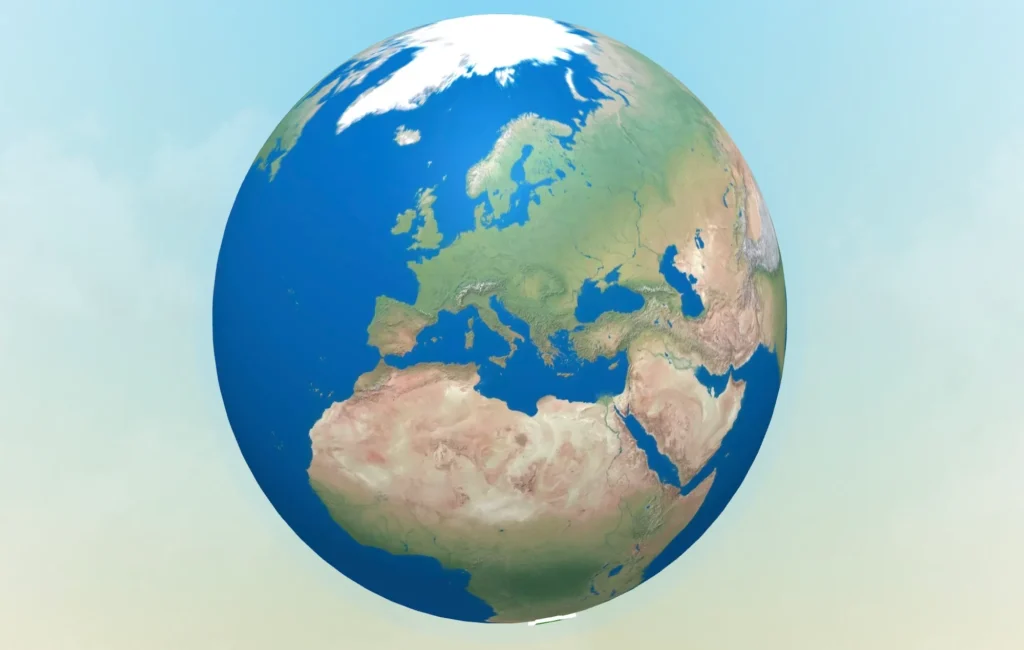
Globle is a daily geography game that challenges you to identify a mystery country. With each guess, the globe changes color to show how close you are: warmer colors (red, orange) mean you’re getting closer, while cooler colors (blue, purple) indicate you’re far away. The goal is to find the target country in as few guesses as possible.
It’s a fantastic way to test your geographic knowledge and learn about countries around the world!
Quick Hints for Today’s Globle
Let’s start with some broad clues to point you in the right direction:
- Region: Middle East / Western Asia
- Size: Large country by regional standards
- Major Rivers: Home to two historically significant rivers
- Borders: Shares borders with six countries
- Climate: Mostly arid and semi-arid
- Access to Water: Has a small coastline in the south
Still need more help? Let’s get more specific!
Strategic Hints for Globle December 19
Hint 1: Geographic Location This country is located in Western Asia, in the heart of the Middle East. If you’ve been guessing countries in Europe or Asia and seeing warmer colors toward the Middle East, you’re on the right track. Focus your attention on countries between the Mediterranean Sea and the Persian Gulf.
Hint 2: Neighboring Countries The country shares borders with Turkey to the north, Iran to the east, Kuwait to the southeast, Saudi Arabia to the south, Jordan to the southwest, and Syria to the west. If you’ve guessed any of these neighbors, you should be seeing very warm colors!
Hint 3: Ancient Civilization This country occupies much of ancient Mesopotamia, often called the “Cradle of Civilization.” It’s the land between two famous rivers that gave birth to some of humanity’s earliest civilizations, including the Sumerians, Babylonians, and Assyrians.
Hint 4: The Two Rivers The country is defined by two major rivers that flow from north to south: the Tigris and Euphrates. These rivers meet in the south to form the Shatt al-Arab waterway before emptying into the Persian Gulf.
Hint 5: Capital City The capital is Baghdad, one of the most historically significant cities in the Islamic world. It was once the center of the Abbasid Caliphate and is known for its rich cultural and scientific heritage.
Hint 6: Modern History This country has been prominent in recent world news and history, particularly over the past few decades. It experienced major conflicts in 1991 and 2003, and has been working toward stability and reconstruction in recent years.
Hint 7: Oil Resources The country has some of the world’s largest proven oil reserves, making petroleum a crucial part of its economy. It’s a founding member of OPEC (Organization of the Petroleum Exporting Countries).
Hint 8: Cultural Heritage The country is home to numerous UNESCO World Heritage Sites, including the ancient city of Babylon, the Ashur archaeological site, and the historic city of Erbil with its ancient citadel.
Tips for Playing Globle
Want to master Globle? Here are some proven strategies:
Start with continental anchors: Begin with large, centrally-located countries on each continent (like Brazil, China, Egypt, or Australia) to quickly determine which region to focus on.
Use the color gradient wisely: Pay close attention to how colors change with each guess. Even slight color shifts can tell you whether you’re moving in the right direction.
Think regionally: Once you’ve narrowed down the continent, focus on countries within that specific region. Understanding regional geography is key to success.
Consider country size: The intensity of the color can sometimes give you clues about whether you’re looking for a large or small nation.
Remember landlocked countries: Don’t forget about countries that don’t have coastlines. Many challenging Globle answers are landlocked nations.
Study border relationships: Understanding which countries share borders helps you triangulate locations more effectively.
Learn from each guess: Every guess provides valuable information. Use the feedback strategically to eliminate possibilities and narrow your search.
The Answer to Today’s Globle
Ready for the reveal? Here it is!
Today’s Globle answer is: Iraq
Iraq is a country in Western Asia, located in the heart of the Middle East. With an area of approximately 438,317 square kilometers (169,235 square miles), it’s a significant nation both geographically and historically.
About Iraq
Iraq occupies most of ancient Mesopotamia, the region between the Tigris and Euphrates rivers where human civilization flourished thousands of years ago. The name “Mesopotamia” literally means “between rivers” in Greek, perfectly describing this historic land.
The country’s strategic location has made it a crossroads of civilizations throughout history. From the ancient Sumerians who invented writing, to the Babylonian Empire of Hammurabi, to the Assyrian Empire, to the Islamic Golden Age under the Abbasid Caliphate—Iraq has been at the center of human advancement for millennia.
Geography and Climate
Iraq’s geography is diverse, though dominated by arid and semi-arid conditions:
Rivers and Valleys: The Tigris and Euphrates rivers flow from the mountains of Turkey through Iraq, providing crucial water resources and fertile land. The Mesopotamian Plain between these rivers has supported agriculture for thousands of years.
Mountains: The northern region features the Zagros Mountains, which form a natural border with Iran and Turkey. This mountainous area is part of Iraqi Kurdistan and has a more temperate climate.
Deserts: The western and southern regions include parts of the Syrian Desert and Arabian Desert, characterized by extreme heat and minimal rainfall.
Marshlands: Southern Iraq once contained extensive marshlands between the Tigris and Euphrates, known as the Mesopotamian Marshes. These wetlands are being restored after being drained in previous decades.
Coastline: Iraq has a very short coastline along the Persian Gulf (about 58 kilometers or 36 miles), providing access to international waters through the port of Umm Qasr.
Major Cities
Baghdad: The capital and largest city, located on the Tigris River. Baghdad was founded in 762 CE and became the center of the Islamic world during the Abbasid Caliphate, renowned for its House of Wisdom and contributions to science, mathematics, and literature.
Basra: Iraq’s main port city in the south, located near the Persian Gulf. It’s a crucial economic center due to its proximity to oil fields.
Mosul: A major city in northern Iraq, located on the Tigris River. It’s near the ancient Assyrian city of Nineveh.
Erbil (Arbil): The capital of Iraqi Kurdistan, featuring one of the oldest continuously inhabited cities in the world, with its citadel dating back thousands of years.
Historical Significance
Iraq’s historical importance cannot be overstated:
- Writing: The Sumerians developed one of the world’s first writing systems (cuneiform) around 3400 BCE
- Law: The Code of Hammurabi, one of the earliest written legal codes, originated in Babylon
- Mathematics: The Babylonians made significant advances in mathematics, including the base-60 number system still used for time
- Astronomy: Ancient Mesopotamians were skilled astronomers who tracked celestial movements
- Literature: The Epic of Gilgamesh, one of the earliest known works of literature, comes from ancient Mesopotamia
Modern Iraq
Contemporary Iraq is a federal parliamentary republic with a population of approximately 41 million people. The country is ethnically and religiously diverse, with Arab and Kurdish populations and a mix of Shia and Sunni Muslims, along with Christian and other minority communities.
Iraq’s economy is heavily dependent on petroleum, which accounts for the vast majority of government revenue and exports. The country has the world’s fifth-largest proven oil reserves.
Cultural Heritage
Iraq is home to numerous archaeological treasures and historical sites:
- Babylon: The ancient city famous for its Hanging Gardens (one of the Seven Wonders of the Ancient World)
- Ur: One of the world’s oldest cities and birthplace of Abraham according to biblical tradition
- Ashur: The ancient capital of the Assyrian Empire
- Hatra: A well-preserved ancient city combining Eastern and Western architectural traditions
- Samarra Archaeological City: Famous for its 9th-century mosque with a distinctive spiral minaret
Natural Resources
Beyond oil, Iraq possesses:
- Significant natural gas reserves
- Phosphate and sulfur deposits
- Fertile agricultural land in river valleys
- Date palm groves (Iraq is a major date producer)
Play Today’s Globle
Ready to test your geography knowledge? Head over to Globle to play today’s puzzle and explore countries around the world!
More Daily Puzzle Solutions
Love daily challenges? Check out these other puzzle games:
- Wordle 1644 Hints and Answer for December 19, 2025
- Bandle Hints and Answer for December 19, 2025
- Quordle Hints and Answer for December 19, 2025
- Worldle Hints and Answer for December 19, 2025
Why Globle Matters for Geographic Literacy
Globle is more than just a game—it’s a daily opportunity to improve your understanding of world geography. In an increasingly interconnected world, knowing where countries are located and understanding their regional contexts is invaluable.
Each Globle puzzle encourages you to think about:
- Continental and regional geography
- Border relationships between nations
- The relative positions of countries
- Geographic features like rivers, mountains, and coastlines
This kind of spatial thinking enhances your overall geographic literacy and helps you better understand international news, global economics, and world cultures.
Middle Eastern Geography
Today’s answer highlights the Middle East, a region of tremendous historical and modern significance. Understanding Middle Eastern geography is crucial for comprehending global affairs:
Core Middle Eastern countries include:
- Iraq, Iran, Saudi Arabia, Turkey, Syria, Jordan, Israel, Lebanon, Kuwait, Bahrain, Qatar, United Arab Emirates, Oman, and Yemen
Key geographic features:
- Persian Gulf
- Red Sea
- Mediterranean Sea
- Tigris and Euphrates Rivers
- Zagros Mountains
- Arabian Desert
Learning to recognize these countries and their relationships will significantly boost your Globle performance!
Final Thoughts
Today’s Globle featuring Iraq was a solid challenge that tested your knowledge of Middle Eastern geography! Iraq’s central location in the region, bordered by six different countries, makes it an important nation to know when playing geography games.
Whether you identified Iraq quickly by recognizing its position between Iran and Saudi Arabia, or needed several guesses to narrow down the location, you’ve now learned about this historically rich nation that gave birth to some of humanity’s earliest civilizations.
The land between the Tigris and Euphrates rivers has witnessed the rise and fall of empires, the birth of writing, and countless contributions to human civilization. Today’s puzzle reminds us that geography is deeply intertwined with history and culture.
Keep sharpening your geography skills, study those regional maps, and remember—every Globle puzzle is an opportunity to explore our fascinating world. Come back tomorrow for another geographic adventure!