Welcome to today’s Globle challenge! If you’re having trouble pinpointing the mystery country or want to verify your answer before making your final guess, you’re in the right place. Let’s explore comprehensive hints and strategies for solving the Globle puzzle on December 21, 2025.
What is Globle?
Globle is a captivating daily geography game that challenges players to identify a mystery country using a color-coded feedback system. Unlike traditional geography quizzes with multiple-choice answers, Globle uses a heat map approach: warmer colors (ranging from light pink to deep red) indicate you’re getting closer to the target country, while cooler colors (white or very light pink) show you’re far away.
The game encourages strategic thinking about global geography, requiring players to consider continents, regions, neighboring countries, and spatial relationships to narrow down possibilities efficiently.
How to Approach Globle Strategically
Before diving into today’s specific hints, let’s review effective strategies for playing Globle:
Starting Strategies
Central Location Method: Begin with countries in the middle of major continents or regions. This quickly reveals which part of the world contains the mystery country.
Continental Anchors: Use well-known countries as reference points—try China for Asia, Brazil for South America, or Germany for Europe—to determine the general region.
Systematic Elimination: Once you’ve identified the correct continent or region, work methodically through countries in that area, paying attention to color intensity changes.
Geographic Landmarks: Consider major geographic features like mountain ranges, seas, and rivers that might help narrow your search.
Reading the Color Signals
Temperature Gradient: Pay close attention to subtle color changes. Even a slight warming from one guess to the next indicates you’re moving in the right direction.
Proximity Indicators: Very hot colors (bright red) mean you’re extremely close—likely in a neighboring country or the same region.
Cold Zones: White or very pale pink colors indicate you’re thousands of miles away, so eliminate that entire region from consideration.
Progressive Hints for Today’s Globle
Ready for some hints? Here are increasingly specific clues to help identify today’s mystery country:
Hint 1: Continental Location
Today’s country is located in Eastern Europe, positioned at a crucial geographic and geopolitical crossroads between Europe and Asia.
Hint 2: Size Classification
This is a large country by European standards, ranking as the largest country entirely within Europe by land area, covering approximately 603,628 square kilometers (233,062 square miles).
Hint 3: Geographic Borders
The mystery country shares borders with seven other nations: Russia to the east and northeast, Belarus to the north, Poland, Slovakia, and Hungary to the west, and Romania and Moldova to the southwest.
Hint 4: Major Water Bodies
The country has coastline along two significant bodies of water: the Black Sea to the south and the Sea of Azov to the southeast, providing important maritime access.
Hint 5: Historical Context
This nation has a complex and turbulent history, having been part of various empires and states throughout history. It gained independence from the Soviet Union in 1991, becoming a sovereign nation.
Hint 6: Recent International Prominence
The country has been at the center of major international attention in recent years due to ongoing geopolitical conflicts and has received significant global focus, particularly since 2022.
Hint 7: Capital City
The capital and largest city is Kyiv (also spelled Kiev), one of Europe’s oldest cities with a history spanning over 1,400 years. The city sits on the Dnieper River.
Hint 8: Cultural Identity
The country has a distinct cultural identity with its own language (closely related to but distinct from Russian), rich traditions in literature, music, and art, and strong national pride.
Hint 9: Economic Characteristics
Known as the “breadbasket of Europe,” the country has extensive fertile agricultural land, producing significant quantities of grain, particularly wheat, as well as sunflower oil and other crops.
Hint 10: Geographical Features
The landscape is predominantly flat steppes and plateaus, with the Carpathian Mountains in the west and the Crimean Mountains in the south. The Dnieper River is the major waterway flowing through the country.
Hint 11: Regional Position
The country occupies a strategic position between the European Union to the west and Russia to the east, serving as a cultural and geographic bridge between these regions.
Hint 12: First Letter
The country’s name begins with the letter ‘U’ and consists of seven letters total.
Additional Geographic Clues
To further narrow down your search:
- Climate: Temperate continental climate with cold winters and warm summers
- Natural Resources: Rich in iron ore, coal, natural gas, and fertile soil
- Major Cities: Besides Kyiv, other significant cities include Kharkiv, Odesa, Dnipro, and Lviv
- Population: Approximately 41 million people (pre-2022 estimates)
- Chernobyl: Site of the infamous 1986 nuclear disaster, now an exclusion zone
- European Aspirations: The country has pursued closer ties with the European Union and NATO
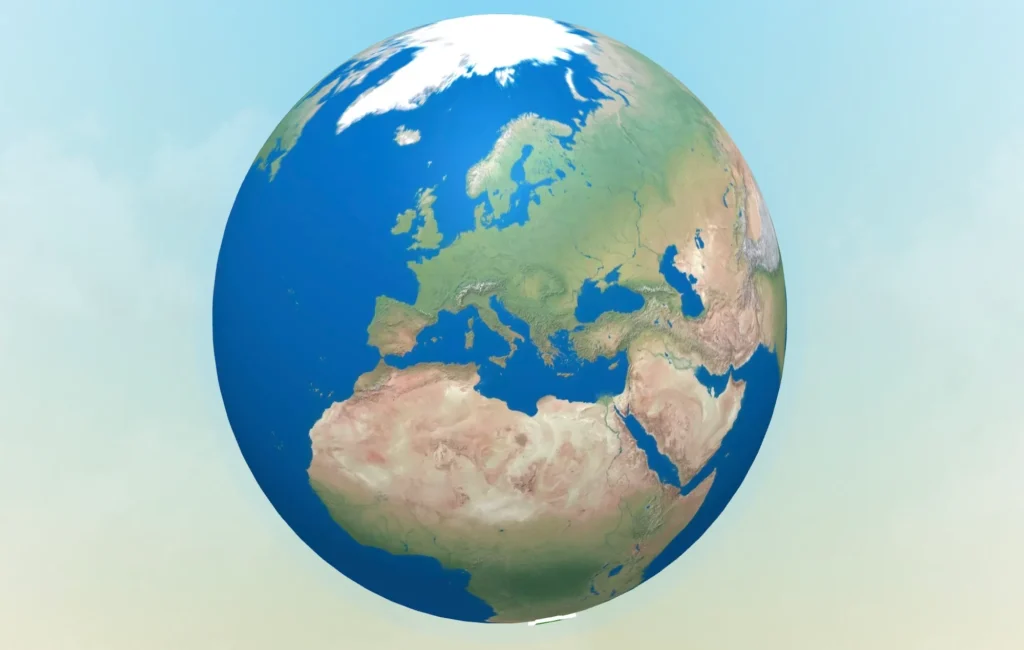
The Answer to Today’s Globle
The answer to Globle for December 21, 2025, is: UKRAINE
Ukraine is Eastern Europe’s largest country entirely within the continent’s boundaries, bridging the geographical and cultural space between Central Europe and Russia. Its strategic location has made it historically significant and, in recent years, the focus of intense international attention.
Comprehensive Look at Ukraine
Geography and Landscape
Size and Extent: Ukraine covers 603,628 square kilometers, making it roughly the size of Texas or slightly smaller than France. It stretches 1,316 km from east to west and 893 km from north to south.
Topography: The country is predominantly flat, characterized by fertile plains called steppes. The Carpathian Mountains in the west provide dramatic contrast, with Hoverla being the highest peak at 2,061 meters.
Major Rivers: The Dnieper River, Europe’s fourth-longest river, flows through the heart of Ukraine, dividing it into right-bank and left-bank regions. Other significant rivers include the Dniester, Southern Bug, and Donets.
Coastline: Ukraine has approximately 2,782 km of coastline along the Black Sea and Sea of Azov, providing crucial maritime access for trade and defense.
Climate Zones: The country experiences a temperate continental climate, with warm summers and cold winters. Southern coastal areas enjoy milder, Mediterranean-influenced weather.
Historical Background
Ancient History: The territory has been inhabited since at least 32,000 BC. Kyivan Rus, a powerful medieval state centered in Kyiv, is considered a cultural ancestor of modern Ukraine, Russia, and Belarus.
Cossack Era: The Cossack Hetmanate (16th-18th centuries) represents a significant period of Ukrainian autonomy and military tradition, with the Cossacks becoming symbols of Ukrainian independence and warrior spirit.
Imperial Period: Ukraine was divided between the Russian Empire and Austria-Hungary for much of the 18th and 19th centuries, creating regional cultural differences that persist today.
Soviet Era: Ukraine became a founding member of the Soviet Union in 1922. The Holodomor famine of 1932-33, which killed millions, remains a deeply traumatic historical event.
Independence: Ukraine declared independence on August 24, 1991, as the Soviet Union collapsed. The country has since worked to establish its identity as a sovereign European nation.
Recent History: The Orange Revolution (2004) and Euromaidan Revolution (2014) reflected popular desires for democratic governance and European integration. Since 2014, Ukraine has faced territorial challenges and ongoing conflict.
Cultural Richness
Language: Ukrainian is the official state language, a distinct East Slavic language with its own grammar, vocabulary, and alphabet. Russian is also widely spoken, particularly in eastern and southern regions.
Literature: Ukraine has produced notable writers including Taras Shevchenko, whose poetry helped establish modern Ukrainian literary language, and Nikolai Gogol, who wrote in Russian but depicted Ukrainian life.
Folk Traditions: Traditional Ukrainian culture includes distinctive embroidery (vyshyvanka), folk music, dance (hopak), and crafts. Easter eggs (pysanky) showcase intricate traditional designs.
Cuisine: Ukrainian food culture centers on hearty dishes like borscht (beet soup), varenyky (dumplings), and salo (cured pork fat). Bread holds sacred significance in Ukrainian tradition.
Music: From traditional folk songs to modern pop and electronic music, Ukraine has a vibrant musical heritage. The country won the Eurovision Song Contest in 2004, 2016, and 2022.
Economic Profile
Agricultural Powerhouse: Ukraine’s fertile black soil (chernozem) covers about two-thirds of the country, making it one of the world’s largest grain exporters. It’s often called Europe’s breadbasket.
Industrial Base: Heavy industry, particularly steel production and machinery manufacturing, remains important, especially in eastern regions like the Donbas.
Energy Sector: Despite having significant coal reserves and some natural gas, Ukraine has historically relied on energy imports, making energy independence a national priority.
Technology: Kyiv has emerged as a significant IT outsourcing hub, with a growing tech sector attracting international investment and talent.
Challenges: Corruption, infrastructure needs, and recent conflicts have hampered economic development, though reforms have been ongoing.
Notable Sites and Features
Kyiv: The capital city boasts magnificent golden-domed churches, including the UNESCO-listed St. Sophia’s Cathedral and Kyiv Pechersk Lavra monastery complex.
Lviv: This western city showcases Central European architecture and culture, with a beautifully preserved historic center reflecting Polish, Austrian, and Ukrainian heritage.
Odesa: The Black Sea port city is famous for its opera house, Potemkin Stairs, and beach culture, serving as Ukraine’s maritime gateway.
Carpathian Mountains: This mountain range offers skiing, hiking, and access to traditional Hutsul culture in picturesque villages.
Chernobyl Exclusion Zone: Site of the 1986 nuclear disaster, now a haunting reminder of technological catastrophe and a unique ecosystem where nature has reclaimed human spaces.
Crimea: The peninsula features dramatic mountains, historic sites, and resort towns along the Black Sea coast, though its status has been disputed since 2014.
Current Global Context
International Relations: Ukraine has pursued Euro-Atlantic integration, signing an Association Agreement with the EU and seeking NATO membership, while navigating complex relationships with neighboring Russia.
Humanitarian Concerns: The country has faced significant humanitarian challenges in recent years, with millions of people affected by displacement and conflict.
Global Support: Ukraine has received substantial international support, including humanitarian aid, economic assistance, and diplomatic backing from Western nations.
Agricultural Impact: As a major grain exporter, disruptions in Ukraine have global implications for food security, particularly affecting countries dependent on grain imports.
Resilience: Despite challenges, Ukrainian civil society, cultural institutions, and national identity have demonstrated remarkable resilience and strength.
Why Ukraine Can Be Challenging in Globle
Ukraine presents several challenges for Globle players:
- Size Surprise: While large, it’s not as immediately recognizable as smaller, distinctively shaped countries, and players might overlook it when searching Eastern Europe.
- Regional Confusion: Eastern Europe contains many countries, and without clear geographic knowledge, players might guess Poland, Romania, or Belarus before finding Ukraine.
- Media Familiarity Paradox: Despite recent prominence in international news, many people haven’t studied Ukraine’s precise location and borders closely.
- Neighbor Density: With seven bordering countries, the color warming can be gradual as you approach from different directions.
- East-West Extent: The country’s significant east-west stretch means you might be “close” in terms of color while still being quite far from the actual borders.
Strategies for Eastern European Countries
When Globle leads you to Eastern Europe, consider these distinctive features:
Poland: T-shaped country extending south from the Baltic coast
Romania: Carpathian Mountains create a distinctive arc shape in the center
Belarus: Landlocked, sits north of Ukraine and south of Baltic states
Ukraine: Largest country in the region, with Black Sea access to the south
Moldova: Small, landlocked between Romania and Ukraine
Baltic States: Small countries on the Baltic Sea coast
Hungary: Landlocked, positioned in Central Europe with Danube River
Advanced Globle Techniques
To improve your performance in future games:
Geographic Knowledge Building
Study Border Relationships: Understanding which countries share borders dramatically improves your ability to narrow down options once you’re in the right region.
Learn Regional Characteristics: Different regions have distinctive geography—deserts, mountains, coastlines, island chains—that help with identification.
Memorize Unusual Cases: Know which countries are landlocked, which have multiple exclaves, and which have complex borders.
Systematic Search Patterns
Spiral Method: Once warm, search in expanding circles or spirals around your hot guesses to efficiently cover nearby countries.
Border Walking: If very hot, systematically guess all countries that border your current guess.
Eliminate Systematically: Keep mental track of which countries you’ve ruled out to avoid redundant guesses.
Color Interpretation Skills
Subtle Changes: Train yourself to notice small color variations that might indicate you’re getting warmer even though you’re still relatively far away.
Relative Heat: Remember that “hot” is relative—bright orange might mean 500 miles away in one context but 1,000 miles in another depending on country sizes.
Context Clues: Consider the countries you’ve already tried and their colors to triangulate the target’s likely location.
Educational Value of Geography Games
Globle and similar games offer significant educational benefits:
Spatial Awareness: Regular play improves your mental map of world geography and spatial relationships between countries.
Current Events Context: Understanding geography helps contextualize international news and global issues.
Cultural Appreciation: Learning about countries’ locations often sparks interest in their cultures, histories, and peoples.
Critical Thinking: The strategic problem-solving required develops analytical and deductive reasoning skills.
More Daily Puzzle Games
If you enjoyed today’s Globle challenge and want to explore other daily puzzles, check out these engaging games:
- Globle Hints and Answer for December 20, 2025
- Bandle Hints and Answer for December 21, 2025
- Wordle 1646 Hints and Answer for December 21, 2025
- Quordle Hints and Answer for December 21, 2025
- Worldle Hints and Answer for December 21, 2025
Each game offers unique challenges testing different knowledge areas, from vocabulary and music to geography and pattern recognition.
Final Thoughts
How many guesses did it take you to identify Ukraine today? Whether you found it quickly or needed to work through Eastern Europe systematically, each Globle puzzle enhances your understanding of global geography and the relationships between nations.
Ukraine’s prominent position in recent international discourse makes it more recognizable to many players, yet translating that awareness into precise geographic knowledge can still be challenging. The country’s significant size, diverse landscape, and complex history make it a worthy subject for today’s puzzle—offering both an accessible challenge and an opportunity to reflect on an important nation.
Keep exploring the world one country at a time, and return tomorrow for another geographic adventure. Every Globle puzzle is a chance to expand your global perspective and deepen your appreciation for our diverse planet. Happy puzzling!