Merry Christmas, geography enthusiasts! While you’re enjoying the holiday festivities, why not take a moment to challenge your geographical knowledge with today’s Globle puzzle? December 25, 2025, brings us a fascinating European country that has played a significant role in history and culture.
Whether you’re a geography expert or still learning your way around the world map, we’ve prepared strategic hints to guide you toward today’s answer without spoiling the fun immediately. Let’s embark on this geographical journey together!
What is Globle?
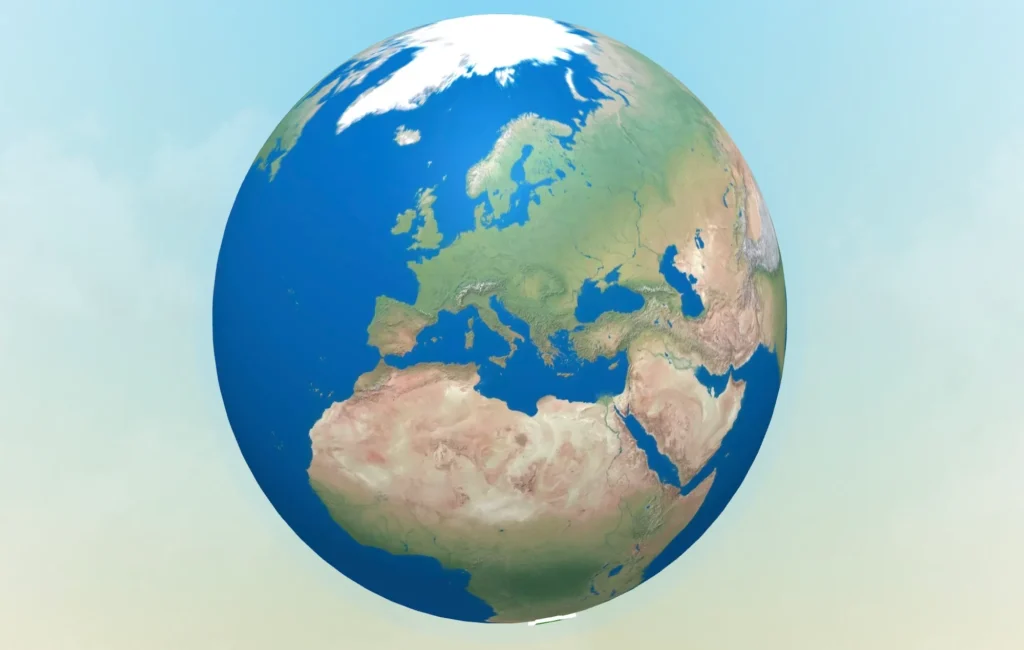
For those new to this addictive daily challenge, Globle is a geography-based puzzle game where players attempt to identify a mystery country. Unlike traditional map quizzes, Globle uses a unique color-coded feedback system to guide your guesses. Each time you guess a country, the globe shows you how close you are to the target through a heat map system where hotter colors indicate proximity and cooler colors indicate distance.
The game challenges players to use their geographical knowledge, understanding of continental layouts, and strategic thinking to identify the mystery country using as few guesses as possible. It’s a perfect way to expand your world geography knowledge while having fun.
Strategic Hints for Today’s Globle
Before revealing the answer, let’s explore some carefully crafted hints that will point you in the right direction while preserving the challenge.
Hint 1: Continental Location
Today’s mystery country is located in Central Europe, a region known for its rich history, diverse cultures, and strategic geographical position. This area has been at the crossroads of major European civilizations for centuries.
Hint 2: Landlocked Status
The country you’re looking for is landlocked, meaning it has no direct access to the ocean. It shares borders with seven other countries, making it one of the most connected nations in its region.
Hint 3: Major River
One of Europe’s most important rivers flows directly through today’s mystery country, dividing its capital city into two distinct sections. This river has been vital for trade and cultural exchange throughout European history.
Hint 4: Historical Significance
This country was once part of a powerful dual monarchy that controlled vast territories in Central Europe until the early 20th century. Its capital was one of the most important cities in this empire.
Hint 5: Cultural Heritage
The country is famous for its thermal baths, classical music heritage, and distinctive cuisine that includes goulash and paprika as signature elements. It has produced numerous Nobel Prize winners and has a strong tradition in mathematics and science.
Hint 6: Neighboring Countries
If you’ve been guessing around Central Europe, you’re on the right track. The mystery country shares borders with Austria, Slovakia, Ukraine, Romania, Serbia, Croatia, and Slovenia.
Hint 7: Capital City Clue
The capital city is divided by a major river into two historic parts: one side known for its castle and hills, the other for its parliament building and urban center. This dual nature is even reflected in the city’s name.
The Answer to Today’s Globle
If you’re ready to confirm your guess or need the final answer, here it is:
The answer to today’s Globle for December 25, 2025, is Hungary.
Located in Central Europe, Hungary is a landlocked country of approximately 9.6 million people with a rich cultural heritage and fascinating history. Its capital, Budapest, is often called the “Pearl of the Danube” and ranks among Europe’s most beautiful cities.
Why Hungary Makes an Excellent Globle Answer
Hungary presents an interesting challenge for Globle players because of its central European location. Depending on your starting guesses, the heat map could lead you through various European countries before narrowing down to this Magyar nation.
The country’s position makes it an excellent test of geographical knowledge, requiring players to understand the layout of Central and Eastern Europe, recognize landlocked countries, and navigate the complex borders of this historically significant region.
Fascinating Facts About Hungary
Hungary has a unique linguistic heritage—Magyar, the Hungarian language, is part of the Finno-Ugric language family, making it completely different from the Indo-European languages spoken by its neighbors. This linguistic isolation reflects the country’s distinct cultural identity.
The country sits atop one of the world’s largest thermal water cave systems, which has given rise to Budapest’s famous bath culture. The city has more thermal springs than any other capital in the world, with a bathing tradition dating back to Roman times.
Hungary has produced an impressive number of notable figures in science, arts, and culture. The country has produced 13 Nobel Prize winners, including scientists like Albert Szent-Györgyi who discovered Vitamin C, and numerous mathematicians who have made groundbreaking contributions to their field.
The Hungarian Parliament Building in Budapest is one of Europe’s most stunning architectural achievements, featuring neo-Gothic design and serving as an iconic symbol of the nation. It’s the third-largest parliament building in the world.
Geography and Borders
Hungary’s strategic location in the Carpathian Basin has made it a crossroads of European history. The country covers approximately 93,000 square kilometers and features diverse geography from the Great Hungarian Plain (Alföld) to Lake Balaton, Central Europe’s largest lake.
The Danube River, Europe’s second-longest river, flows through Hungary from north to south, providing vital transportation routes and defining much of the country’s geography. The river’s journey through Budapest creates some of the continent’s most picturesque urban landscapes.
Tips for Improving Your Globle Strategy
To become better at Globle and reduce your guess count, consider these strategic approaches:
Start with central countries in each continent to quickly determine which region you should focus on. Countries like Kazakhstan in Asia, Brazil in South America, or Algeria in Africa provide excellent initial reference points.
Learn continental geography systematically by studying regional groups like Central Europe, Southeast Asia, or West Africa. Understanding which countries cluster together helps you navigate the heat map more effectively.
Pay attention to the color intensity changes between guesses. A significant color shift indicates you’re moving in the right or wrong direction, helping you adjust your strategy accordingly.
Study landlocked countries and island nations specifically, as these present unique challenges. Knowing the landlocked countries of Europe or the island nations of Oceania can save you multiple guesses.
More Daily Puzzles to Challenge Yourself
If you’ve solved today’s Globle and want more puzzle action this Christmas Day, try these other daily challenges:
Test your vocabulary with Wordle 1650, where today’s five-letter word puzzle offers a different kind of mental challenge.
Music lovers should try Bandle, which tests your ability to identify songs from progressive audio clues.
For another geography challenge with a visual twist, check out Worldle, where you identify countries by their shapes.
Word puzzle fans can tackle Quordle, solving four words simultaneously for an extra challenge.
Try NYT Strands for a themed word search experience with clever connections.
Historical Context: The Austro-Hungarian Empire
Understanding Hungary’s answer requires appreciating its historical significance. From 1867 to 1918, Hungary was part of the Austro-Hungarian Empire, one of Europe’s great powers. This dual monarchy united the Austrian Empire and the Kingdom of Hungary under a single monarch, creating a multinational state that controlled much of Central Europe.
The empire’s dissolution after World War I dramatically changed Hungary’s borders, reducing its territory by about two-thirds through the Treaty of Trianon in 1920. This historical event still influences Hungarian national consciousness and helps explain the country’s current relationships with its neighbors.
Budapest: A Tale of Two Cities
Hungary’s capital deserves special mention. Budapest was actually formed in 1873 by uniting three separate cities: Buda and Óbuda on the western bank of the Danube, and Pest on the eastern bank. This unification created one of Europe’s great capitals, combining the historic castle district of Buda with the bustling commercial center of Pest.
The city’s stunning architecture, including the Chain Bridge connecting the two sides, the Fisherman’s Bastion, and the grand boulevards of Pest, makes it one of Europe’s most visited destinations. Its thermal baths, ruin bars, and vibrant cultural scene attract millions of visitors annually.
Hungarian Contributions to World Culture
Hungary has punched well above its weight in cultural contributions. The country has a strong classical music tradition, producing composers like Franz Liszt and Béla Bartók who left indelible marks on Western classical music.
In cinema, Hungarian directors and cinematographers have won numerous Academy Awards. The country’s influence on Hollywood during its golden age was so significant that there was a saying: “It’s not enough to be Hungarian, you also have to have talent.”
Hungarian cuisine has also made its mark globally, with dishes like goulash, chicken paprikash, and dobos torte gaining international recognition. The country’s use of paprika is so distinctive that it has become synonymous with Hungarian cooking.
Final Thoughts
Today’s Globle answer of Hungary offers a wonderful opportunity to explore Central Europe’s geography and appreciate a country with rich cultural heritage and historical significance. Whether you guessed it quickly or needed several attempts, the journey of discovery is what makes Globle such an engaging daily challenge.
Geography games like Globle do more than test our knowledge—they inspire us to learn about places we might never visit, understand global connections, and appreciate the incredible diversity of our world. Each daily puzzle is a chance to become a more informed global citizen.
Keep playing, keep learning, and most importantly, keep exploring the fascinating world of geography through Globle. Tomorrow brings a new country, new challenges, and new opportunities to expand your geographical knowledge.
Happy holidays, and may your Globle streak continue strong into the new year!
How many guesses did it take you to find Hungary? Share your Globle results and your favorite facts about this Central European gem in the comments below!