Welcome to another edition of Globle, the geography game that tests your knowledge of countries around the world! If today’s mystery nation has you spinning the globe in confusion, don’t worry—we’ve prepared a series of helpful hints that will guide you to the answer without spoiling the fun too quickly.
Globle for January 7, 2026, features a country that might not be on everyone’s radar, making it a genuinely challenging puzzle. Let’s explore some clues that will help you narrow down the location and solve today’s geographical mystery.
How to Play Globle
If you’re new to Globle, here’s how it works: You need to guess the mystery country with unlimited attempts. After each guess, the color of the guessed country changes to indicate how close you are to the correct answer:
- White/Light color means you’re very far from the target
- Warmer colors (yellow, orange) mean you’re getting closer
- Red/Hot colors mean you’re very close to the mystery country
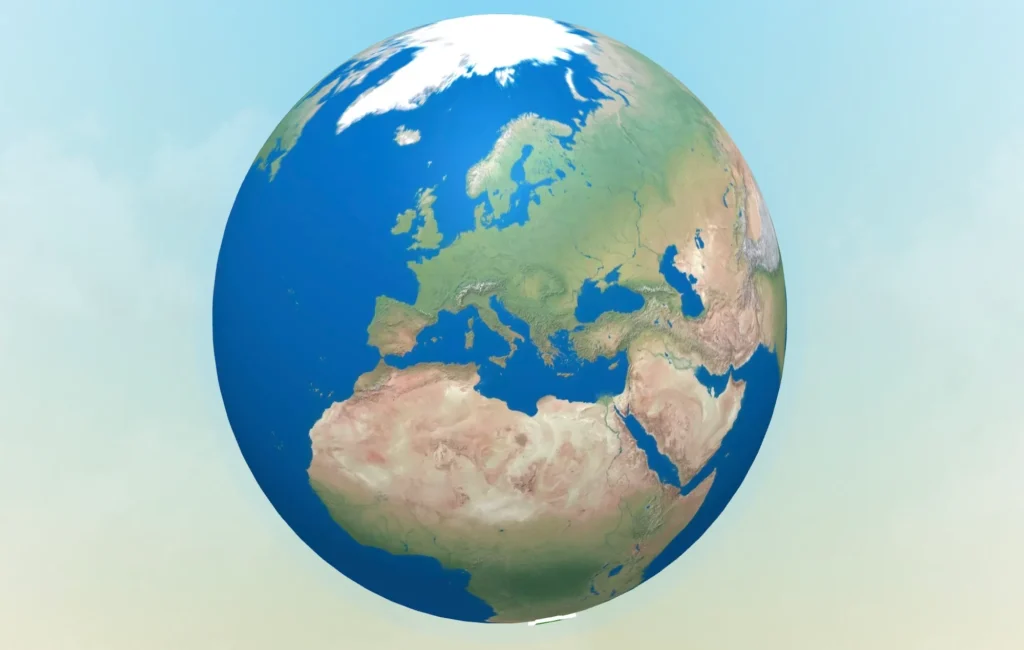
The game uses geographical proximity, so countries closer to the target will appear “hotter” on the color scale. You can rotate the 3D globe to explore different regions and make strategic guesses.
General Geographical Hints
Let’s start with broad clues about today’s mystery country:
Hint 1: This country is located in Central Asia, a region known for its historical significance along the ancient Silk Road.
Hint 2: The country is landlocked, meaning it has no direct access to any ocean or sea.
Hint 3: This nation shares borders with four other countries, making it relatively well-connected within its region.
Hint 4: The terrain is predominantly mountainous, with some of the world’s most spectacular mountain ranges passing through its territory.
Hint 5: This country gained independence in 1991 following the dissolution of the Soviet Union.
Regional and Continental Clues
Need to narrow down the region? Here are some more specific geographical hints:
Continent: Asia
Region: Central Asia, positioned between major regional powers
Neighboring Countries: This nation borders China, Kazakhstan, Tajikistan, and Uzbekistan
Climate: The country experiences a continental climate with significant temperature variations between seasons
Notable Geography: More than 90% of the country is covered by mountains, including parts of the Tian Shan and Pamir mountain ranges
Cultural and Historical Hints
Let’s add some context about the country’s identity:
Capital City: The capital is Bishkek, a city with a population of around one million people
Population: Approximately 7 million people call this country home
Language: The official languages are Kyrgyz and Russian, reflecting both indigenous heritage and Soviet influence
Cultural Heritage: The country has a rich nomadic tradition, with yurts (traditional portable dwellings) still playing a role in cultural identity
Famous Feature: This country is known for Issyk-Kul, the world’s second-largest alpine lake and one of the largest high-altitude lakes
Strategic Guessing Tips
If you’re still working on finding the answer, try these strategic approaches:
- Start with larger countries in Central Asia like Kazakhstan or Uzbekistan to get your bearings
- The country is relatively small compared to its neighbors, so focus on smaller nations in the region
- Look between China and Kazakhstan on the map—this will put you in the right neighborhood
- It’s one of the “stans”—the Central Asian countries whose names end in “-stan”
- If you’ve guessed Tajikistan and Uzbekistan, look at countries that share borders with both
The Answer to Today’s Globle
If you’ve made multiple attempts and want to confirm your answer, or if you’re ready to learn something new, here it is:
The answer to Globle for January 7, 2026, is Kyrgyzstan.
About Kyrgyzstan
Kyrgyzstan (also spelled Kyrgyz Republic) is a fascinating Central Asian nation that many people might overlook, making it an excellent Globle challenge. This mountainous country is home to some of the world’s most breathtaking landscapes and a rich cultural heritage.
Geography and Natural Beauty
Kyrgyzstan is often called the “Switzerland of Central Asia” due to its dramatic mountain scenery. The Tian Shan mountain range covers approximately 80% of the country, with peaks reaching over 7,000 meters (23,000 feet). The country’s highest point is Jengish Chokusu (formerly known as Peak Pobeda) at 7,439 meters.
The jewel of Kyrgyzstan’s natural attractions is Lake Issyk-Kul, the second-largest alpine lake in the world after Lake Titicaca. Despite being surrounded by snow-capped mountains, the lake never freezes due to its salinity and depth, and it remains a popular destination for tourism.
History and Culture
Kyrgyzstan has a deeply rooted nomadic heritage. For centuries, the Kyrgyz people lived as nomadic herders, moving their livestock across mountain pastures with the seasons. This lifestyle has left a lasting impact on the country’s culture, from its traditional crafts to its cuisine.
The country was incorporated into the Soviet Union in 1936 and gained independence on August 31, 1991. Since independence, Kyrgyzstan has maintained a unique position in Central Asia, often described as the most democratic of the former Soviet Central Asian republics, though it has experienced political turbulence.
Modern Kyrgyzstan
Today, Kyrgyzstan’s economy relies on agriculture, mining (particularly gold), and increasingly, tourism. Adventure travelers are discovering the country’s potential for trekking, horseback riding, and cultural tourism. The capital, Bishkek, is a modern city that blends Soviet-era architecture with contemporary development.
The country is also known for its hospitality—visitors often comment on the warmth and generosity of the Kyrgyz people, who maintain strong traditions of welcoming guests.
Why Kyrgyzstan Can Be Challenging in Globle
Several factors make Kyrgyzstan a tricky Globle answer:
- Relatively small size compared to neighbors like Kazakhstan and China
- Lower global profile than some other countries in the region
- Landlocked position surrounded by other landlocked or large countries
- Similar-sounding names to other Central Asian nations (Tajikistan, Kazakhstan, Uzbekistan)
- Less frequent appearance in international news compared to neighboring countries
Improving Your Globle Strategy
Want to get better at Globle? Here are some tips to improve your geographical knowledge and guessing strategy:
Study regional geography: Understanding which countries are neighbors helps you make strategic guesses based on the color feedback.
Learn about landlocked countries: Many Globle answers are landlocked nations that don’t have the geographical prominence of coastal countries.
Focus on smaller nations: Countries with smaller land areas or populations are often featured because they’re more challenging.
Understand continental divisions: Knowing the boundaries between continents and major regions helps narrow down possibilities quickly.
Use strategic first guesses: Start with countries that are geographically central to major regions to get quick feedback on which part of the world you should focus on.
Remember former Soviet states: Countries that gained independence in 1991 are frequently featured and worth studying.
More Daily Puzzle Games
If you enjoyed today’s geographical challenge, why not test yourself with other popular daily puzzles? We’ve got comprehensive guides for:
- Wordle 1663 Hints and Answer for January 7, 2026
- Bandle Hints and Answer for January 7, 2026
- Quordle Hints and Answer for January 7, 2026
- NYT Strands Hints and Answer for January 7, 2026
- Worldle Hints and Answer for January 7, 2026
Each game offers a unique way to challenge your brain, from word puzzles to music identification to more geography challenges.
The Educational Value of Globle
Globle is more than just a game—it’s a daily geography lesson that helps players learn about countries they might never have explored otherwise. Each puzzle is an opportunity to discover new places, learn about different cultures, and understand how nations relate to each other geographically.
Games like Globle have proven effective at improving geographical literacy in an era when such knowledge is increasingly important. Understanding where countries are located, what regions they belong to, and who their neighbors are provides valuable context for understanding international news, global economics, and cultural diversity.
Central Asia: A Region Worth Exploring
Today’s answer highlights Central Asia, a historically significant but often overlooked region. The five Central Asian countries—Kazakhstan, Kyrgyzstan, Tajikistan, Turkmenistan, and Uzbekistan—sit at the crossroads of civilizations, where the ancient Silk Road once connected East and West.
These nations offer incredible natural beauty, from deserts to mountains, and possess rich cultural traditions that blend Persian, Turkic, Mongol, and Russian influences. As the world becomes more interconnected, Central Asia is emerging as an important region for trade, resources, and geopolitics.
Did you successfully locate Kyrgyzstan on your own, or did you need some hints to guide you? Either way, every Globle puzzle expands your geographical knowledge and appreciation for our diverse world. Come back tomorrow for another geographical adventure, and keep exploring!
Happy globe-spinning, and may your guesses always trend toward the hotter colors!