If you’ve been grinding through StarRupture and leveling up your corporations, you’ve probably hit that wall where simple materials just won’t cut it anymore. Eventually, Future Health Solutions is going to ask you for some pretty complicated stuff, and Ceramics is one of those essential mid-to-late game materials that’ll keep popping up in crafting recipes.
The catch? You can’t just stumble upon Ceramics or buy them from a vendor. You’ll need to unlock the recipe first, then set up a proper production line with multiple machines working together. Don’t worry though—once you understand the process, it’s actually pretty satisfying to watch everything churn out automatically.
Let me walk you through everything you need to know about getting Ceramics in StarRupture.
What Are Ceramics Used For?
Before we dive into the how, let’s talk about the why. Ceramics are a crucial material for advancing your relationship with Future Health Solutions, one of the corporations you’ll be working with throughout the game. Beyond that specific questline, Ceramics also serve as a component in crafting other advanced materials and items you’ll need as you progress.
Think of Ceramics as a gateway material—once you can produce them efficiently, you’re opening doors to more complex crafting chains. If you’re serious about unlocking all crafting recipes and pushing toward the max level cap, getting comfortable with Ceramics production is essential.
Unlocking the Ceramics Recipe
Here’s the first hurdle: even if you have all the right machines set up, you won’t be able to craft Ceramics until you unlock the recipe at your Recipe Station. This is a pattern you’ll see throughout StarRupture—the more advanced the material, the more you’ll need to invest upfront to unlock it.
Recipe Requirements
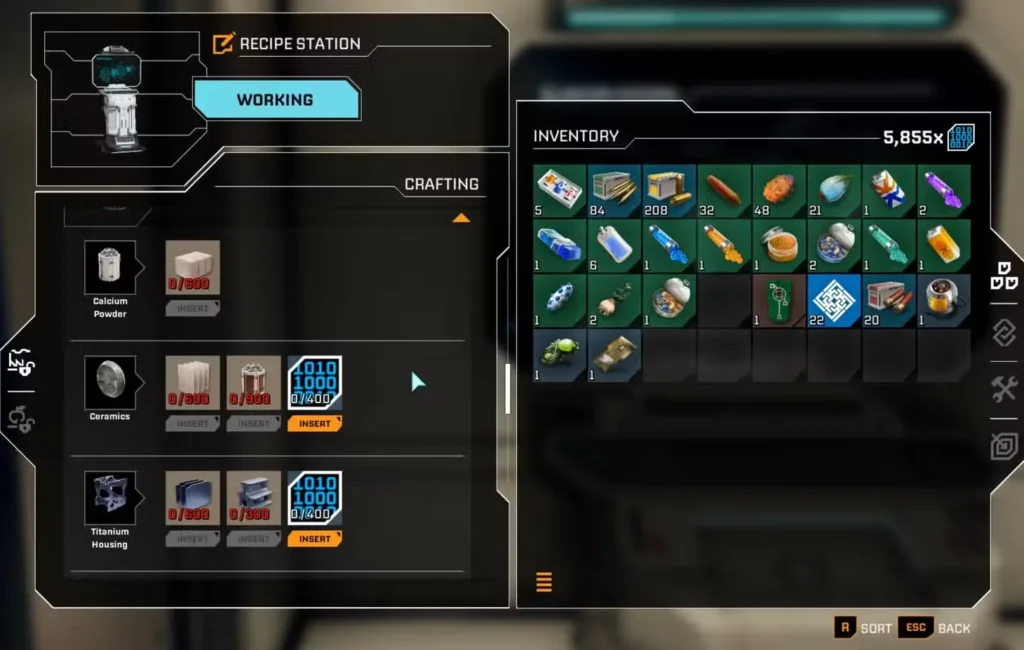
Head to your Recipe Station and gather these materials:
- 600 Calcite Sheets
- 900 Wolfram Powder
- 400 Data Points
Yeah, I know—that’s a lot. But here’s the good news: if you’ve been playing for a while, you probably have the infrastructure to gather these resources already. Let’s break down how to get each one.
Getting Wolfram Powder
Wolfram Powder is actually one of the easier components once you’ve got a Furnace up and running. Here’s the chain:
- Mine Wolfram Ore (you’ll find deposits scattered around the map)
- Smelt it in a Smelter to create Wolfram Bars
- Process the Wolfram Bars in a Furnace to get Wolfram Powder
Pretty straightforward three-step process. If you’re trying to gather 900 of these for the recipe unlock, I’d recommend setting up an automated system with an Extractor on a Wolfram deposit. Check out our guide on how to automate ore extraction if you haven’t dipped into automation yet.
Getting Calcite Sheets
Calcite Sheets require a bit more machinery, but the process is still manageable:
- Mine Calcium Ore (or set up an Extractor on a Calcium deposit)
- Smelt it in a Smelter to create Calcium Blocks
- Process the Calcium Blocks in a Fabricator to get Calcite Sheets
The Fabricator is key here—make sure you’ve unlocked it before attempting this. You’ll need 600 Calcite Sheets just to unlock the Ceramics recipe, so again, automation is your friend.
Getting Data Points
This is honestly the easiest part. Data Points are incredibly simple to farm if you know what to look for:
- Chuck any old tech items into your Analyzer
- Scan flora, fauna, or vermin parts you pick up while exploring
- Basically anything you find lying around that seems “research-able” can go in there
You only need 400 Data Points, and if you’ve been exploring at all, you probably have random junk in your inventory that’ll get you there fast. Don’t sleep on the Analyzer—it’s one of the most efficient ways to convert trash into something useful.
Crafting Ceramics: Setting Up Your Production Line
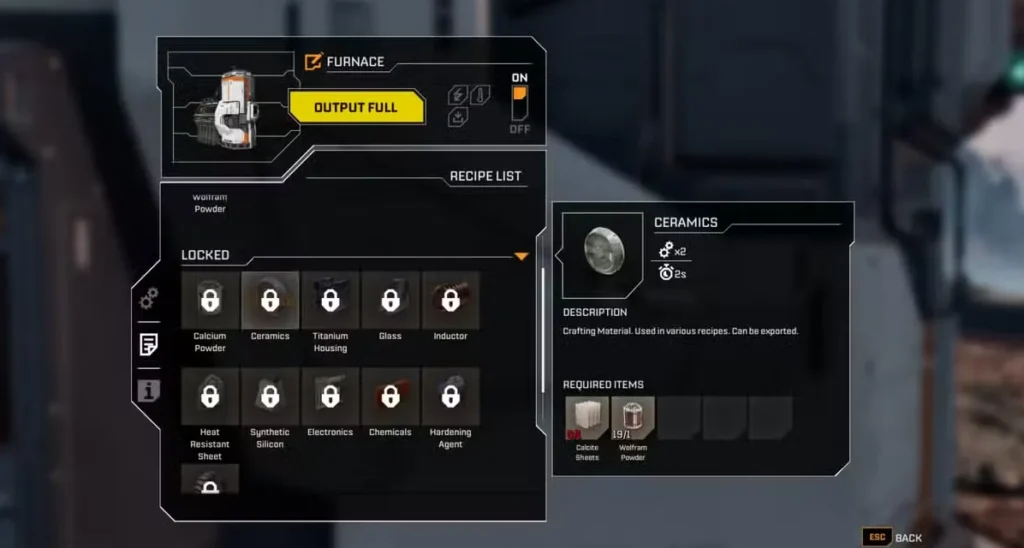
Alright, you’ve unlocked the recipe. Now comes the fun part: actually making Ceramics. This is where StarRupture’s automation mechanics really shine, because Ceramics require combining two different materials in a single Furnace.
The Basic Recipe
Ceramics = Calcite Sheets + Wolfram Powder (combined in a Furnace)
Simple enough on paper, right? The challenge is setting up two separate production lines that feed into the same machine.

Understanding Multi-Input Rails
Here’s something the game doesn’t explain super clearly: Furnaces (and most machines) have multiple input slots. If you look at the input side of a Furnace, you’ll notice there are actually several rail connection points. This is how you combine different materials.
When setting up your production line, you’ll need to route two different rail lines into the same Furnace—one carrying Wolfram Powder, the other carrying Calcite Sheets. The machine will automatically pull from both inputs and combine them into Ceramics.
If you’re new to building complex setups, our guide on how to connect power and working with building materials might help you get comfortable with the basics first.
Production Line 1: Wolfram Powder
Set up your first line like this:
- Extractor on a Wolfram Ore deposit
- Smelter to convert Wolfram Ore → Wolfram Bars
- Furnace (let’s call this Furnace A) to convert Wolfram Bars → Wolfram Powder
- Rail from Furnace A leading to Furnace B (this is where Ceramics will be made)
Production Line 2: Calcite Sheets
Now for the second line running parallel:
- Extractor on a Calcium Ore deposit
- Smelter to convert Calcium Ore → Calcium Blocks
- Fabricator to convert Calcium Blocks → Calcite Sheets
- Rail from the Fabricator leading to Furnace B (the same Furnace receiving Wolfram Powder)
Putting It All Together
Both production lines should converge at Furnace B. Make sure:
- Both rails connect to different input points on Furnace B
- Power is properly connected to all machines in the chain
- There’s enough throughput (you might need multiple Extractors if things are moving slowly)
Once everything’s hooked up and powered, Furnace B will automatically combine the Wolfram Powder and Calcite Sheets into Ceramics. You can then route the output wherever you need it—whether that’s storage or another crafting station for more complex materials.
Tips for Efficient Ceramics Production
Use the Building Drone: If you’re laying down a lot of machines and rails, the Building Drone is a lifesaver. It speeds up construction significantly and helps you visualize your production lines before committing.
Plan Your Layout: Cramming machines together might seem efficient, but it makes troubleshooting a nightmare. Leave some space between production lines so you can easily identify bottlenecks or add upgrades later.
Stock Up on Power: These production chains eat through power, especially when you’re running multiple Smelters and Furnaces. Make sure your power grid can handle the load, or you’ll be dealing with constant shutdowns.
Consider Storage Buffers: Adding Storage Containers between production stages can help smooth out any inconsistencies in your supply chain. If one part of the line produces faster than another, buffers prevent backups.
Upgrade When Possible: As you level up and unlock better machines or weapon mods for faster harvesting, revisit your Ceramics setup. What works early game might become a bottleneck later.
FAQs
Can I find Ceramics anywhere in the world, or do I have to craft them?
Ceramics are entirely craftable—you won’t find them lying around or dropped by enemies. You’ll need to unlock the recipe and set up a production line to get them. There’s no shortcut here, which is why setting up automation early is so valuable.
What’s the fastest way to get the 900 Wolfram Powder needed to unlock Ceramics?
Set up an automated Extractor on a Wolfram deposit and let it run while you handle other tasks. Connect it directly to a Smelter and then a Furnace so the whole chain runs without manual input. You can speed things up by placing multiple Extractors on the same deposit or using automated ore extraction techniques.
My Furnace isn’t combining the materials—what am I doing wrong?
Double-check that both rail lines are connected to separate input points on the Furnace. If both materials are trying to enter through the same input rail, the machine won’t process them correctly. Also verify that both production lines are actually producing materials—sometimes one line gets backed up and stops feeding into the Furnace.
Are Ceramics used for anything besides the Future Health Solutions questline?
Yes! Ceramics are a component in several advanced crafting recipes. As you progress through the game and unlock more blueprints, you’ll find Ceramics popping up in various high-tier items. It’s worth setting up a permanent production line rather than just crafting enough for one quest.
And that’s everything you need to know about getting Ceramics in StarRupture! Once you’ve got your production line humming along, you’ll have a steady supply for whatever the corporations throw at you next. The setup might seem complicated at first, but honestly, it’s just about understanding how to chain machines together and use those multi-input rails effectively.
If you’re looking to expand your base even further, check out our beginner’s guide for more foundational tips, or dive into unlocking all weapons if you want to focus on combat while your production runs in the background. Happy crafting!