Life Corrosion is one of the most dangerous status effects in Nioh 3. Unlike standard damage that reduces your current health, Life Corrosion permanently lowers your maximum health until cured. This leaves you vulnerable with a smaller health pool during critical encounters, especially in Crucible zones where every hit counts. Fortunately, four distinct removal methods exist — combat damage, Healing Pills, grave recovery, and Jizo Blessings.
This guide explains what causes Life Corrosion (and Blood Corrosion), how to remove it through all four methods, and which Jizo Blessings to prioritize for Crucible survival.
What Causes Life Corrosion in Nioh 3
Life Corrosion appears as a red segment on your health bar, indicating reduced maximum health. You’ll contract this condition through two specific circumstances:
Taking Damage in Crucibles and Lesser Crucibles
Any damage received from enemies while inside Crucible or Lesser Crucible areas inflicts Life Corrosion. These corrupted zones are marked clearly on your map and feature distinctive visual corruption effects with black spikes erupting from the ground.
Crucible enemies are significantly stronger than open-world versions — they have enhanced health, attack power, and all of their attacks apply Life Corrosion on hit. This makes even minor damage accumulate into serious maximum health reduction over extended fights.
Equipping Crucible Weapons
Crucible Weapons are special weapons obtained inside Crucibles that deal massive damage but come with a severe drawback: when you take damage from an enemy while a Crucible Weapon is equipped, you suffer Life Corrosion. The corrosion comes from receiving hits, not from attacking with the weapon.
This creates a risk-reward balance — Crucible Weapons provide significant offensive power, but any damage you take while wielding one reduces your maximum health. Smart players swap to standard weapons when expecting to take hits, then switch back to Crucible Weapons for burst damage windows.
Blood Corrosion (Crucible Blood Pools)
A separate but mechanically identical status called Blood Corrosion exists in specific Crucible missions. Walking into blood pools on the ground triggers this effect, which functions exactly like Life Corrosion — your maximum health decreases and the red bar appears on your health gauge.
Blood Corrosion is removed through the same methods as Life Corrosion: attacking enemies or using Healing Pills.
How To Remove Life Corrosion in Nioh 3: All Four Methods
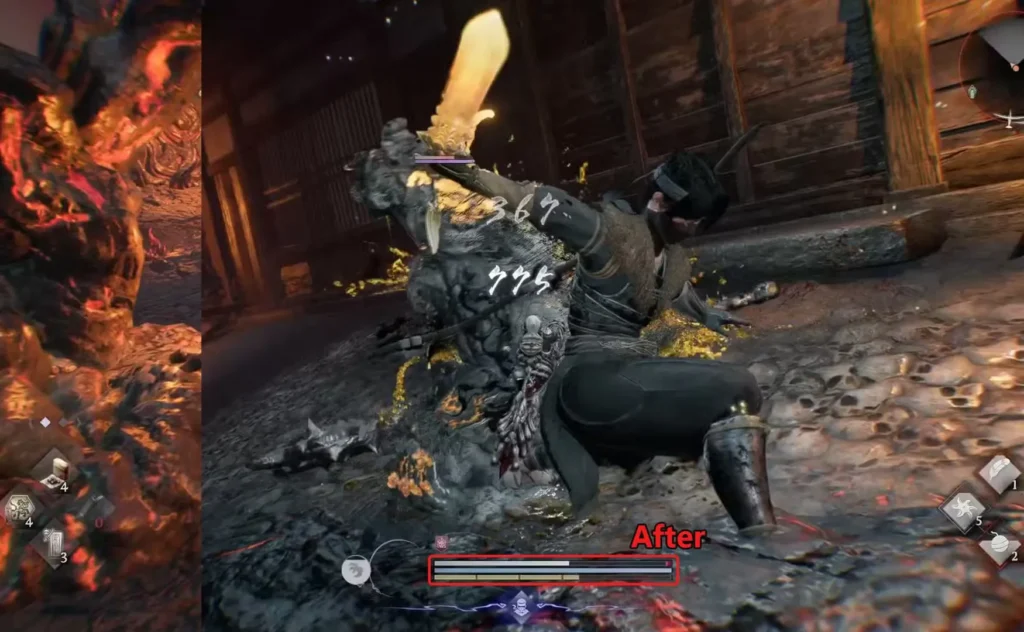
Method 1: Attack Enemies (Combat Removal)
The most immediate removal method doesn’t require items or preparations — just deal damage to enemies. Each hit gradually reduces the red corrosion bar on your health indicator until it disappears completely.
How it works:
- Any weapon and combat style removes corrosion
- Corrosion removal scales with total damage output, not hit count
- High-damage attacks remove significantly more corrosion per strike
Best attacks for fast removal:
- Backstab assassinations — nearly clears all corrosion in one hit
- Critical strikes on stunned or vulnerable enemies
- Heavy weapon charged attacks — more corrosion removed than light attacks
- Skill-based finishers — enhanced corrosion clearing with special moves
Ninja Style ranged option: Ninjutsu abilities like Shuriken and Kunai slowly remove Life Corrosion from a safe distance. The removal rate is slower than melee, but the safety factor makes this viable when you can’t risk additional close-range damage.
Strategic application: If heavily corroded before a boss fight, farm weaker enemies with powerful attacks to clear the status quickly rather than entering the encounter at reduced maximum health.
For help with combat progression, check our guide on how to unlock skills and increase skill capacity.
Method 2: Use Healing Pills (Item Removal)
Healing Pills are consumable items that cure Life Corrosion when used. Unlike Elixirs (which only cure corrosion after upgrading Jizo Blessings), Healing Pills work immediately without any prerequisites.
This makes Healing Pills the most reliable emergency cure when you’re heavily corroded and can’t safely engage in combat. Stock them before entering Crucibles and use them strategically when your maximum health drops to dangerous levels.
Method 3: Recover Your Grave (Death Recovery)
When you die in Nioh 3, a grave marked by a golden glow appears at the spot where you died (if you have a Guardian Spirit equipped). Recovering your lost Amrita by interacting with this grave also restores some of your depleted maximum Life from corrosion.
This creates a strategic decision after death — push back to your grave not just for Amrita recovery, but for partial Life Corrosion removal. The amount restored isn’t total, but it provides meaningful health recovery without consuming items or requiring combat.
Important limitation: If you die again before retrieving your grave, it vanishes and the Amrita (and the corrosion recovery opportunity) is lost permanently.
Method 4: Upgrade Jizo Blessings (Elixir Enhancement)
Jizo Blessings provide automated corrosion removal through your standard healing items. This system dramatically improves survivability in Crucible areas by making Elixirs serve dual purposes.
How to access Jizo Blessings:
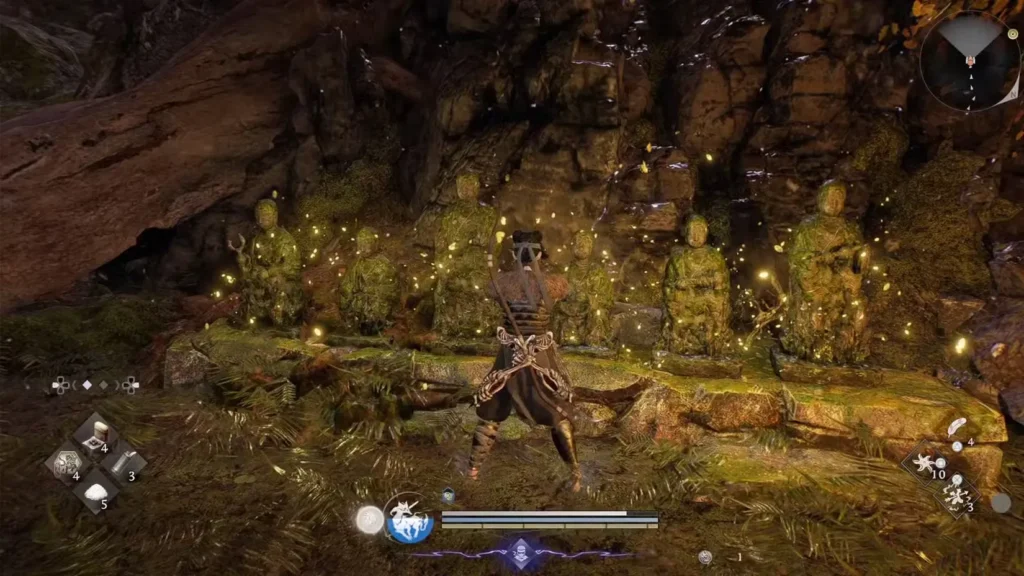
- Collect Jizo Merit by praying at Six Jizo Statues (50 Merit each)
- Visit any Shrine and select the Jizo Blessing menu
- Purchase blessing upgrades using accumulated Merit
Life Corrosion Recovery (Crucible) Blessing:
- Level 1 (50 Merit): Elixirs cure a small amount of Life Corrosion
- Level 2 (100 Merit total): Elixirs cure moderate Life Corrosion
- Level 3 (150 Merit total): Elixirs cure substantial Life Corrosion and restore additional health
Once upgraded, every Elixir you drink heals your current health and removes Life Corrosion simultaneously. This transforms your primary healing item into a multi-purpose survival tool.
Corrosion Recovery (Guardian Spirit Skill) Blessing:
Increases Life Corrosion removed when using Guardian Spirit Skills. Less reliable than the Elixir method since Spirit Skills require charge time, but useful as supplementary corrosion removal when Elixirs run low.
For help with Six Jizo locations, see our guide on finding the Six Jizo Statue head in Water Mill (Maisaka).
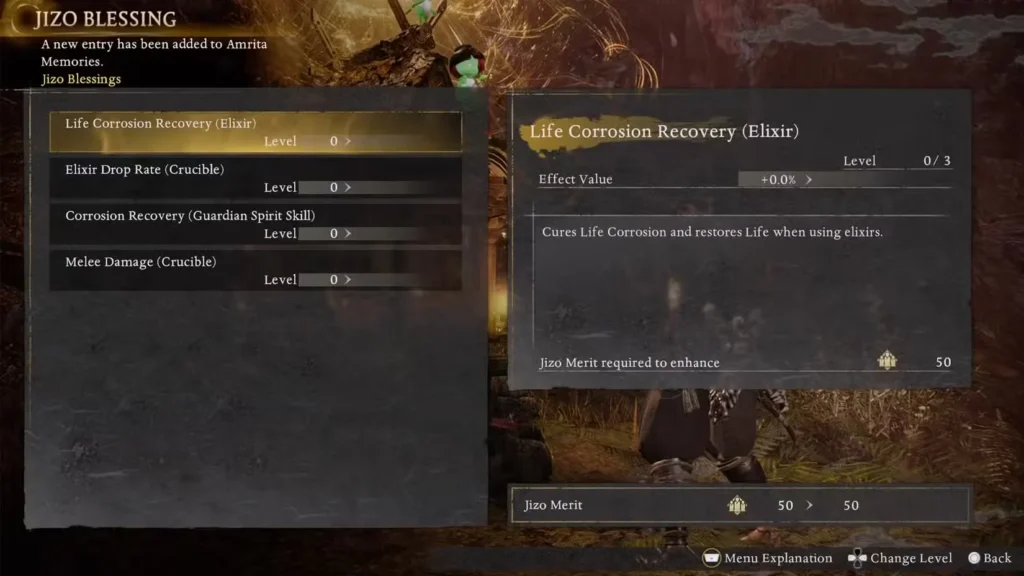
Which Jizo Blessings To Prioritize for Crucible Survival
Four Jizo Blessings exist, each costing 50 Merit per level (150 total for full upgrade). Here’s the optimal investment order:
Priority 1: Melee Damage (Crucible)
Why first: This blessing works unconditionally in all Crucibles with no extra requirements. Increased melee damage helps clear corrupted enemies faster, reducing overall damage taken and indirectly minimizing Life Corrosion accumulation by shortening combat duration.
Invest at least 1-2 levels here immediately upon entering your first Crucible.
Priority 2: Life Corrosion Recovery (Crucible)
Why second: Requires you to use an Elixir to trigger, making it conditional. However, the dual-purpose heal-and-cure effect is powerful once you have reliable Elixir supplies.
Upgrade to Level 1 (50 Merit) as soon as you’ve invested in Melee Damage, then raise it to Level 2-3 once Elixir availability improves.
Priority 3: Elixir Drop Rate (Crucible)
Why third: Increases how frequently Elixirs drop from enemies in Crucible areas. Ensures you maintain healing supplies during extended Crucible sections, which directly supports the Life Corrosion Recovery blessing.
Invest here once you’ve upgraded Life Corrosion Recovery to make the system self-sustaining.
Priority 4: Corrosion Recovery (Guardian Spirit Skill)
Why last: Only works when using Guardian Spirit Skills, which require charge time. Useful as emergency corrosion removal when Elixirs run low, but too conditional to prioritize early.
Invest leftover Merit here after the other three blessings are upgraded.
For help with equipment progression, see our Blacksmith guide for forging and upgrading weapons.
Strategic Life Corrosion Management Tips
Keep Healing Pills stocked before Crucibles. Unlike Elixirs (which require Jizo Blessing upgrades to cure corrosion), Healing Pills work immediately. Carry them as emergency insurance when heavily corroded.
Recover your grave whenever possible. The partial Life Corrosion restoration from grave recovery is free and doesn’t consume items. Push back to your grave after death not just for Amrita, but for the health recovery.
Clear corrosion between encounters. Don’t enter boss fights or difficult sections with existing Life Corrosion. Fight weaker enemies first to remove it, starting each major encounter at full maximum health.
Use Crucible Weapons strategically. Since corrosion only occurs when you take damage while wielding them, swap to standard weapons when expecting hits, then switch back to Crucible Weapons for safe damage windows.
Farm weak enemies for quick removal. If heavily corroded, find low-threat enemies and perform backstab assassinations. One or two kills often clear all corrosion without risking additional damage.
Upgrade Melee Damage first, Life Corrosion Recovery second. Melee Damage works unconditionally and speeds up all Crucible combat. Life Corrosion Recovery requires Elixir usage but becomes powerful once you have reliable supplies.
Invest in Elixir Drop Rate after recovery. Once Life Corrosion Recovery is upgraded, Elixir Drop Rate creates a self-sustaining system where enemies drop the items you need to counter their corrosion attacks.
Life Corrosion vs Standard Damage: Critical Differences
Understanding this distinction is crucial for proper health management:
Standard Damage:
- Reduces current health only
- Maximum health remains unchanged
- Fully restored by healing items
- No lingering effect after healing
Life Corrosion:
- Reduces maximum health capacity
- Current health ratio may stay the same (but pool is smaller)
- Requires combat, items, or grave recovery to remove
- Persists indefinitely until actively cured
- Does NOT fade over time or disappear when resting at Shrines
This makes Life Corrosion far more dangerous than standard damage. You can’t simply heal through it — you must actively remove the status effect to restore your full health pool.
For more information about Nioh 3, visit the official Team Ninja website, check it out on PlayStation Store, or grab it on Steam.
Frequently Asked Questions
What’s the fastest way to remove Life Corrosion in Nioh 3?
Use a Healing Pill for instant removal without prerequisites, or perform backstab assassinations on weaker enemies for near-instant combat removal. If you’ve upgraded the Life Corrosion Recovery Jizo Blessing, Elixirs cure corrosion while healing simultaneously — the most reliable method during active combat.
Does Life Corrosion go away when I die in Nioh 3?
No. Life Corrosion persists through death — when you respawn at a Shrine, any corrosion you had before dying remains on your health bar. However, recovering your grave (the golden glow where you died) restores some of the depleted maximum Life from corrosion as a bonus alongside Amrita recovery.
Can I prevent Life Corrosion entirely in Nioh 3?
No prevention method exists. The only ways to minimize exposure are avoiding Crucibles when possible and unequipping Crucible Weapons when you expect to take damage. However, Crucibles contain valuable rewards and story progression, making corrosion management more practical than complete avoidance.
What’s the difference between Life Corrosion and Blood Corrosion in Nioh 3?
They function identically — both reduce maximum health and appear as red bars on your health gauge. Life Corrosion comes from taking damage in Crucibles or while wielding Crucible Weapons. Blood Corrosion comes from walking into blood pools in specific Crucible missions. Both are removed through the same methods: attacking enemies, using Healing Pills, recovering graves, or drinking Elixirs with Jizo Blessings.
How much Jizo Merit do I need to fully upgrade Life Corrosion Recovery?
Fully upgrading Life Corrosion Recovery (Crucible) requires 150 Jizo Merit total — 50 Merit per level across three levels. Find and pray at three Six Jizo Statues (50 Merit each) to afford the full upgrade. However, most guides recommend upgrading Melee Damage (Crucible) first for unconditional damage increases.
Does Life Corrosion affect Samurai and Ninja styles differently in Nioh 3?
No. Life Corrosion reduces maximum health equally for both combat styles. However, Ninja Style offers a unique advantage for removal — Ninjutsu ranged attacks (Shuriken, Kunai) slowly remove corrosion from a safe distance, while Samurai Style relies on melee contact that risks accumulating more corrosion.