Your medical career in Pathologic 3 begins not in a sterile hospital, but in a dimly lit pub with a mysterious dancer who might be dying. The Herb Bride quest is your baptism by fire into the diagnostic systems you’ll be using for the rest of the game—and it all happens before you even have proper medical facilities.
This early case teaches you the fundamental skills every Bachelor needs: conducting patient interviews, recognizing symptoms from vague descriptions, performing physical examinations, and making confident diagnoses when lives hang in the balance. It also introduces you to the controversial “steppe cure” and its questionable effectiveness against the Sand Pest.
Let’s walk through exactly how to handle your first patient and get it right the first time.
Starting the Vlad’s Experiments Thought in Pathologic 3
The Herb Bride represents your first official patient case in Pathologic 3, and it kicks off before you’ve established your hospital. This is intentional—the game wants you learning the diagnostic process in a more intimate, low-stakes environment before the chaos of hospital wards.
Getting to Andrey’s Pub:
Head to the Factory district and look for Andrey’s pub. The game makes this easy on you—it’ll be marked clearly on your map, and once you’re in the district, Concentration Mode will highlight it. No need to wander aimlessly on your first assignment.
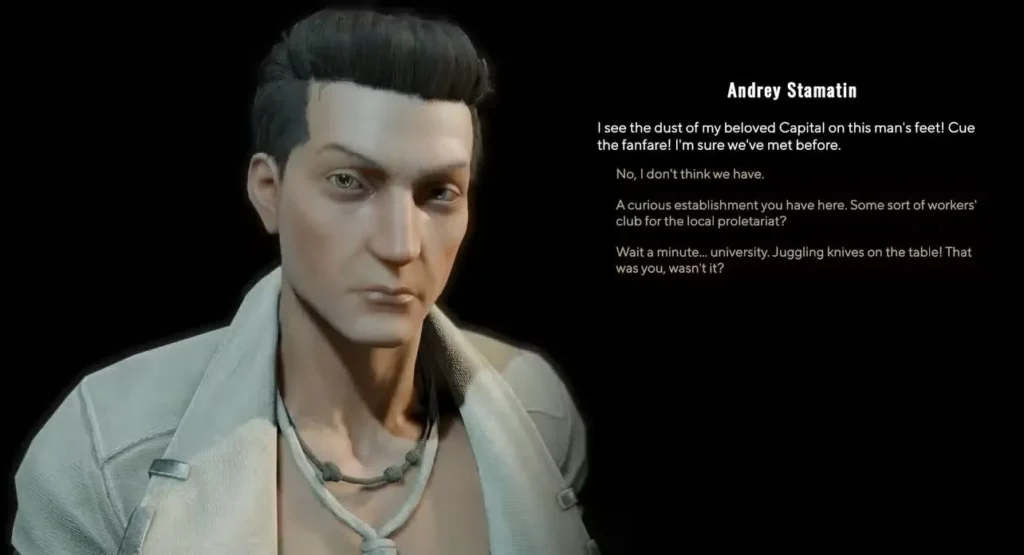
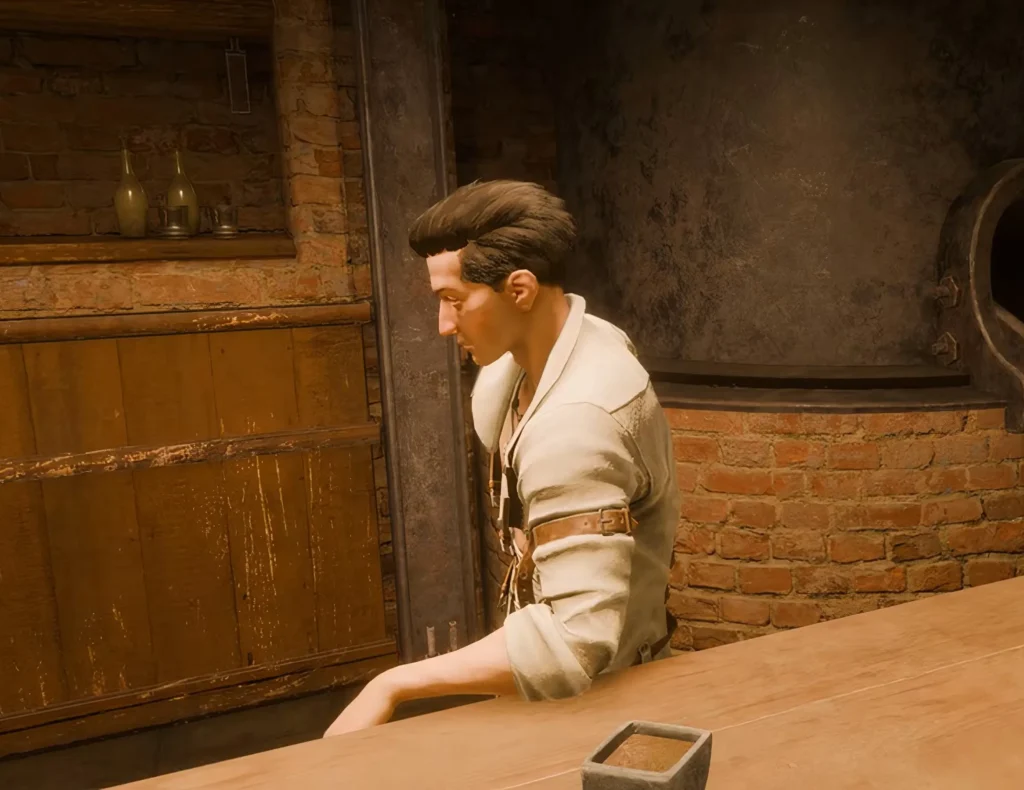
Once inside, approach the bar and speak with Andrey Stamatin. He’ll fill you in on the controversial steppe cure being administered to the dancer currently performing in his establishment. This conversation sets up the context: you’re not just diagnosing a patient, you’re investigating whether this traditional remedy actually works against the plague.
With the background established, it’s time to do what you came here for: interview the patient herself.
Identifying All of the Dancer’s Symptoms
This conversation serves as your crash course in patient diagnosis. Unlike games where symptoms are spelled out clearly, Pathologic 3 requires you to actively listen and interpret what patients tell you. The Herb Bride won’t say “I have a rapid pulse”—she’ll describe how she feels, and you need to recognize what she’s actually experiencing.
The Interview Process:
Open your Casebook regularly during the conversation (check the bottom-right corner of your screen for the key binding). As the Herb Bride describes her condition, you’ll need to click on the symptoms you recognize in her words.
Pay close attention because she describes things indirectly:
- She’ll mention sensations that indicate a rapid pulse
- Her words will suggest loss of coordination
- The phrasing won’t be medical terminology—it’ll be how a regular person describes feeling wrong
This is your first lesson in translating patient language into medical symptoms. Get comfortable with this skill because every future diagnosis relies on it.
Performing the Physical Examination:
Eventually, the conversation transitions to a hands-on examination. Activate Inspection Mode and start looking for physical symptoms. These appear as Daniil’s internal observations on-screen as you examine different body parts.
The physical examination will confirm:
- Her very rapid pulse (confirming what she described)
- A visible rash or insect bites
Time-Saving Tip: Don’t bother examining her arms or legs. There’s nothing diagnostically relevant there, and you’ll just waste precious time. Focus on the torso and head where the actual symptoms manifest.
Make absolutely certain your Casebook has recorded all identified symptoms by clicking on them. This is crucial—unrecorded symptoms might as well not exist when you’re making your final diagnosis.
Asking Follow-Up Questions
Once you’ve completed the physical examination and logged the symptoms, speak with the Herb Bride again. This opens up new dialogue options where you can ask her specific questions about the symptoms you’ve identified.
This step serves multiple purposes:
- It clarifies vague symptoms and confirms your interpretations
- It can reveal additional context that helps differentiate between similar diseases
- It demonstrates thoroughness, which the game rewards
Go through each symptom you’ve recorded and ask her about it. Her answers will give you the complete picture you need for an accurate diagnosis.
Making the Correct Diagnosis
With all the information gathered, it’s time to make your call. Review the symptoms in your Casebook:
- Rapid pulse (confirmed both verbally and physically)
- Loss of coordination
- Rash or insect bites
- Notably, she doesn’t show significant weakness
The correct diagnosis is Lymphotonitis.
Here’s what makes this interesting: the lack of pronounced weakness might make you second-guess yourself. Many diseases present with weakness, and its relative absence could throw you off. However, the combination of rapid pulse, coordination issues, and the rash/bites pattern points definitively toward Lymphotonitis despite this.
This teaches you an important lesson about diagnosis in Pathologic 3: not every textbook symptom will be present, and you need to diagnose based on the pattern of symptoms that are there rather than fixating on what’s missing. Trust the evidence you’ve gathered.
Lock in Lymphotonitis as your diagnosis and proceed with confidence.
Completing the Quest
With the diagnosis confirmed, you’ve got two final administrative tasks:
- Report back to Andrey at the bar. He’ll want to know your findings about the dancer and, by extension, the effectiveness of the steppe cure on Sand Pest symptoms.
- Head to Town Hall and speak with Saburov. Deliver your full report on the case, which officially documents your findings.
Completing these steps wraps up the Herb Bride investigation and naturally progresses you into the next major objective of Day 3: establishing your hospital. You’ve proven you can handle diagnostics in the field—now it’s time to set up proper medical facilities.
Frequently Asked Questions
What happens if I diagnose the Herb Bride incorrectly?
Getting this first diagnosis wrong won’t completely derail your game, but it does have consequences. You’ll miss out on unlocking certain useful decrees that come from perfect diagnostic records, and it sets a poor precedent with the town authorities who are already skeptical of your methods. More importantly, it means you haven’t properly learned the diagnostic system, which will cause bigger problems when you’re juggling multiple complex cases later. If you’re unsure, review all your symptoms carefully before locking in your answer—the game gives you all the information you need.
Why doesn’t the Herb Bride show weakness if she has Lymphotonitis?
This is actually a brilliant teaching moment from the game. In medical reality (and in Pathologic 3’s simulation of it), patients don’t always present with every textbook symptom of a disease. Individual variation, disease progression stage, and other factors mean you’ll rarely see a “perfect” case. The Herb Bride shows enough characteristic symptoms—rapid pulse, coordination loss, and visible skin manifestations—that Lymphotonitis is still the clear diagnosis. Learning to diagnose from partial symptom sets is essential for later, more ambiguous cases.
Should I use Concentration Mode during the entire examination?
While Concentration Mode is incredibly useful for navigation and finding quest objectives, during the actual patient interview and examination, focus on the dialogue and inspection mechanics instead. Concentration Mode won’t highlight which symptoms to click in your Casebook—that requires careful listening and reading. Save Concentration Mode for finding the pub, locating Saburov at Town Hall, and navigating between locations. The diagnostic work requires your full attention on the patient interaction itself.
Does the steppe cure actually work against the Sand Pest?
Without spoiling too much, the Herb Bride case is your first exposure to one of the game’s central tensions: traditional steppe medicine versus modern scientific approaches. The effectiveness (or lack thereof) of these traditional remedies becomes a recurring theme throughout your time in the town. Your diagnosis and report here feed into this larger narrative question. Pay attention to how different factions react to your findings—their responses reveal their biases and priorities, which matters for later decisions.
Congratulations—you’ve successfully diagnosed your first patient in Pathologic 3. The skills you’ve learned here—active listening, systematic examination, symptom pattern recognition, and confident diagnosis despite incomplete information—form the foundation of everything that follows.
As you establish your hospital and face increasingly complex cases, remember this first lesson: the answers are always there if you look carefully enough. The Herb Bride taught you how to look.
For more essential survival strategies and system explanations, check out our complete Pathologic 3 beginner’s guide.
Now get to Town Hall and report your findings. The Bachelor’s real work is just beginning.