Preventing Bad Grief’s Death in Pathologic 3
Pathologic 3 isn’t just about correcting your own mistakes—it’s about reshaping the entire town’s fate by intervening in other people’s tragedies. While you’re busy preventing Daniil Dankovsky’s arrest on Day 5, you’re also given opportunities to save lives that would otherwise be lost.
One of the most memorable early interventions involves Bad Grief, the ruthless leader of the town’s criminal underworld. On Day 5 of the original timeline, you encounter his corpse crucified outside his own territory—a grim statement from those who believed he murdered Simon Kain.
But here’s the thing: you can stop that from happening. With the right approach (and the right words), you can turn Bad Grief from a crucified corpse into a living ally and merchant who’ll actually help you throughout the game. No pressure, right?

Understanding the Timeline: When Bad Grief Dies
Before you can save someone, you need to know when they’re in danger. Through conversations with the Tragedian on Day 5—standing right next to Bad Grief’s crucified body—you learn that his execution happened on Day 4.
This means Day 4 is your only window of opportunity. Miss it, and Bad Grief’s fate is sealed. The good news? Once you know what you’re looking for, the intervention itself is pretty straightforward.
For more time-sensitive rescue missions, check out our guide on how to save Rubin on Day 4—another character who desperately needs your help on the same day.
Getting to Bad Grief’s Base
Bad Grief has barricaded himself inside his headquarters in the Warehouses district. When you arrive on Day 4, you won’t find him immediately—instead, you’ll encounter two angry bandits standing guard outside.
These men are absolutely convinced that Bad Grief murdered Simon Kain, one of the town’s most respected figures. They’re not here for a friendly chat—they’re here for revenge.
This is where things get interesting. You have choices to make, and those choices have very different outcomes.
The Violence vs. Persuasion Choice
Let’s be real: you could just shoot these guys. Pathologic 3 gives you that option, and it will technically save Bad Grief’s life.
But here’s why that’s a terrible idea:
- You’ll take damage during the fight, potentially significant damage
- You’ll waste precious resources like ammunition and medical supplies
- You’ll miss out on the “peaceful resolution” satisfaction (and let’s be honest, that feels better)
The much smarter play is to talk your way out of this situation. Daniil is supposed to be an educated doctor and speaker, right? Time to put that silver tongue to work.
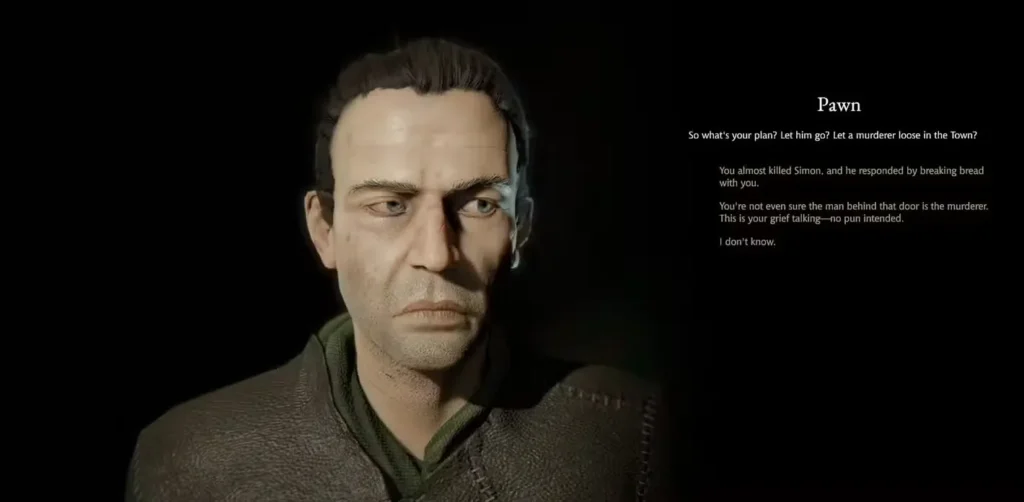
The Correct Dialogue Path to Save Bad Grief Peacefully
Here’s where your dialogue choices actually matter. The game doesn’t spell out exactly which options are “correct,” but there’s a clear logic to the conversation that will spare Bad Grief without bloodshed.
Step 1: Let Them Explain Their Suspicions
Start by getting the bandits to talk about why they suspect Bad Grief of killing Simon Kain. Don’t immediately argue or contradict them—let them voice their reasoning. This establishes that you’re listening and taking their concerns seriously.
Step 2: Bring Up Simon Kain’s Character
Steer the conversation toward Simon Kain himself and his reputation for forgiveness. This is crucial because you’re reminding them of the very man they claim to be avenging. What would Simon have wanted? How did he handle similar situations in the past?
This plants seeds of doubt without directly attacking their position.
Step 3: Question Their Certainty
Now’s the time to gently but firmly challenge their assumptions. Point out that they can’t be absolutely certain of Bad Grief’s guilt. Remind them of Simon’s kindness in similar situations—would he have approved of execution based on suspicion alone?
The key here is to make them question themselves rather than forcing them to defend their position. You’re not telling them they’re wrong; you’re helping them realize they might be.
The Outcome
If you navigate this conversation correctly, the bandits will actually stand down and leave. They’ll walk away without violence, convinced (or at least uncertain enough) that killing Bad Grief isn’t the right move.
It’s honestly one of the more satisfying moments in the early game—proof that words can be just as powerful as bullets in the plague-ridden town.
Meeting Bad Grief After the Rescue
Once the bandits have left, you’re free to enter Bad Grief’s den. You’ll need to speak with his assistants first (because of course a crime lord has layers of security), but eventually, you’ll meet the man himself.
Bad Grief will acknowledge that you saved his life, and this establishes a working relationship between you two. Going forward, he becomes:
- A merchant who can sell you various items
- A sometimes-ally who may help you in future situations
- A living character whose storyline continues to develop
This is way more valuable than a corpse, trust me. For tips on managing your resources and making the most of merchant relationships, check out our Pathologic 3 beginner’s guide.
Why This Choice Matters in the Bigger Picture
Pathologic 3 is all about consequences and the ripple effects of your decisions. Saving Bad Grief isn’t just a one-time good deed—it fundamentally changes how the criminal underworld operates in the town.
With Bad Grief alive, you have access to:
- Unique trading opportunities that won’t exist if he’s dead
- Information from someone deeply connected to the town’s underground
- Potential assistance in situations where having a crime lord on your side actually helps
Plus, let’s be honest—preventing someone from being crucified just feels like the right thing to do, even if that someone runs the local criminal empire.
For more on managing complex character interactions and quest chains, see our guides on getting Amalgam and refilling your Prototype.
Frequently Asked Questions
Can I save Bad Grief on any day other than Day 4?
No. Bad Grief’s execution happens specifically on Day 4, so that’s your only opportunity to intervene. If you skip Day 4 or don’t visit the Warehouses district, he’ll be dead by Day 5 with no way to reverse it (unless you use Amalgam to restart Day 4 entirely).
What happens if I fail the dialogue and the bandits attack anyway?
If you choose the wrong dialogue options and the conversation turns violent, you’ll need to fight the bandits. Winning the fight will still save Bad Grief, but you’ll take damage and waste resources. If you lose the fight (or reload), you can try the dialogue approach again with better choices.
Is Bad Grief essential for completing the game?
No, he’s not technically essential—you can complete Pathologic 3 without saving him. However, having him alive provides significant benefits in terms of trading, information, and overall story depth. It’s highly recommended to save him if you can.
Can I come back to save Bad Grief later if I skip it initially?
Yes, but only if you haven’t progressed past Day 4 yet. If you’re still on Day 4, you can return to the Warehouses district at any time before the day ends. If you’ve already moved to Day 5 and Bad Grief is dead, you’d need to spend Amalgam to restart Day 4 and try again.
The Last Trade thought quest is a perfect example of what makes Pathologic 3 special—you’re not just playing through a linear story, you’re actively rewriting it. Bad Grief’s fate is entirely in your hands, and the choice between violence and persuasion adds a layer of moral complexity that sticks with you.
Take the time to talk to those bandits. Choose your words carefully. Remind them of Simon Kain’s legacy of forgiveness. And when you walk into Bad Grief’s den knowing you saved his life without firing a single shot, you’ll feel like you actually accomplished something meaningful in this nightmarish town.
Need help with other challenging character interactions? Our Herb Bride diagnosis guide covers another tricky situation where the right approach makes all the difference.
Good luck, Bachelor. The town’s fate is in your hands—and apparently, so is the criminal underworld’s.