NVIDIA’s RTX 50 series Blackwell GPUs arrived with serious performance claims — and for the most part, they’ve delivered. But with GPU prices climbing sharply above MSRP in 2026 due to ongoing AI-driven memory shortages, choosing between the RTX 5070 and RTX 5080 is more complicated than ever.
On paper, the RTX 5080 is the more powerful card. It wins in raw performance at every resolution. But the RTX 5070 launched at $549 MSRP — nearly half the RTX 5080’s $999 launch price — and street prices in March 2026 have pushed both cards even further apart in terms of value. The question isn’t simply “which is faster?” It’s “which is worth your money for how you actually game?”
This guide answers that question with full spec comparisons, real-world benchmark data across 1440p and 4K, DLSS 4 performance, power draw analysis, and a clear verdict for every type of gamer.
🔗 Planning a full build around one of these GPUs? Check out our Best Gaming PC Builds Under $1,500 in 2026 for complete component pairings and budget strategies.
Quick Verdict
| RTX 5070 | RTX 5080 | |
|---|---|---|
| Best For | 1440p high-refresh gaming | 4K / heavy ray tracing / future-proofing |
| MSRP | $549 | $999 |
| Street Price (March 2026) | ~$620–$680 | ~$1,269–$1,499 |
| VRAM | 12GB GDDR7 | 16GB GDDR7 |
| 1440p Performance | ⭐⭐⭐⭐½ | ⭐⭐⭐⭐⭐ |
| 4K Performance | ⭐⭐⭐⭐ | ⭐⭐⭐⭐⭐ |
| Value for Money | ⭐⭐⭐⭐⭐ | ⭐⭐⭐ |
| Power Draw | 250W | 360W |
| DLSS 4 MFG | ✅ | ✅ |
Bottom line: For the majority of gamers targeting 1440p with a budget-conscious build, the RTX 5070 wins on value. The RTX 5080 justifies its premium only if you’re committed to 4K gaming, work in creative or AI workloads, or simply want the best performance the Blackwell mid-range has to offer.
Full Spec Comparison: RTX 5070 vs RTX 5080
| Specification | RTX 5070 | RTX 5080 |
|---|---|---|
| Architecture | Blackwell (GB205) | Blackwell (GB203) |
| CUDA Cores | 6,144 | 10,752 |
| RT Cores (Gen) | 4th Gen | 4th Gen |
| Tensor Cores (Gen) | 5th Gen | 5th Gen |
| VRAM | 12GB GDDR7 | 16GB GDDR7 |
| Memory Bus | 192-bit | 256-bit |
| Memory Bandwidth | ~672 GB/s | ~960 GB/s |
| Base Clock | 2,325 MHz | 2,295 MHz |
| Boost Clock | 2,512 MHz | 2,617 MHz |
| TDP | 250W | 360W |
| Recommended PSU | 750W | 850W |
| PCIe Interface | PCIe 5.0 | PCIe 5.0 |
| DLSS 4 MFG | ✅ | ✅ |
| Multi Frame Generation | ✅ | ✅ |
| NVENC Encoders | 1× 9th Gen | 2× 9th Gen |
| MSRP at Launch | $549 | $999 |
| Street Price (March 2026) | ~$620–$680 | ~$1,269–$1,499 |
The RTX 5080 boasts significantly more CUDA cores (10,752) compared to the RTX 5070 (6,144), with both cards featuring GDDR7 VRAM — though the 5080 has 16GB versus the 5070’s 12GB, and the RTX 5080 has a higher TDP at 360W while the RTX 5070 is rated at 250W.
A critical real-world note for 2026: at current prices of approximately $1,269 for the RTX 5080 versus $610–$680 for the RTX 5070, the RTX 5070 offers superior value, with a value score of 47.0 compared to the RTX 5080’s 28.0. GPU prices have moved significantly above MSRP due to the same AI-driven chip shortage affecting DDR5 RAM and overall PC build costs in 2026.

1440p Gaming Benchmarks: RTX 5070 vs RTX 5080
1440p is the sweet spot for most PC gamers in 2026 — it offers a clear visual upgrade over 1080p without the brutal GPU demands of native 4K. Here’s how both cards perform at 1440p Ultra settings.
1440p Average FPS (No Upscaling)
| Game | RTX 5070 | RTX 5080 | RTX 5080 Lead |
|---|---|---|---|
| Counter-Strike 2 | 200+ FPS | 240+ FPS | ~20% |
| Fortnite (Epic) | 165 FPS | 200 FPS | ~21% |
| Cyberpunk 2077 (no RT) | 98 FPS | 146 FPS | ~49% |
| The Last of Us Part I | 90 FPS | 124 FPS | ~38% |
| Metro Exodus (RT On) | 102 FPS | 156 FPS | ~53% |
| S.T.A.L.K.E.R. 2 | 78 FPS | 108 FPS | ~38% |
| Forza Horizon 5 | ~118 FPS | ~144 FPS | ~22% |
| Call of Duty Warzone | 119 FPS | 144 FPS | ~21% |
According to benchmark calculations, the RTX 5080 is approximately 33.2% better in 1440p gaming overall when compared to the RTX 5070, and the RTX 5070 is 34.7% more power-efficient than the RTX 5080 in terms of power consumption.
Key takeaway at 1440p: The RTX 5070 delivers excellent performance for high-refresh gaming in most titles — hitting 100+ FPS in demanding AAA games with ease. The RTX 5080 holds a significant performance lead in the most demanding titles (Cyberpunk with RT, Metro Exodus), but in competitive games and less GPU-intensive titles, the difference matters less. At their MSRPs, the RTX 5070 delivers better performance per dollar for most 1440p gamers — you still get Blackwell features, DLSS 4, and strong ray tracing, but at a substantially lower GPU and PSU cost than a 5080-based build.
4K Gaming Benchmarks: RTX 5070 vs RTX 5080
4K is where the RTX 5080’s superiority becomes most pronounced — and where the RTX 5070’s 12GB VRAM starts to show limitations in the most demanding titles.
4K Average FPS (Ultra Settings, No Upscaling)
| Game | RTX 5070 | RTX 5080 | RTX 5080 Lead |
|---|---|---|---|
| Cyberpunk 2077 (RT On) | ~58–62 FPS | ~78–82 FPS | ~30% |
| Forza Horizon 5 | ~88 FPS | ~100 FPS | ~14% |
| Assassin’s Creed Mirage | ~68 FPS | ~91 FPS | ~34% |
| The Witcher 3 (RT On) | ~72 FPS | ~90 FPS | ~25% |
| Hogwarts Legacy | ~65 FPS | ~82 FPS | ~26% |
| Alan Wake 2 (RT) | ~48 FPS | ~65 FPS | ~35% |
| Fortnite (Epic + RT) | ~75 FPS | ~95 FPS | ~27% |
The RTX 5080 is a clear step above the RTX 5070, typically delivering around 30–40% higher performance at 4K and stronger ray tracing, while the RTX 5070 still offers excellent 1440p and usable 4K performance with DLSS 4.
Key takeaway at 4K: Without DLSS, the RTX 5070 can struggle to maintain 60 FPS in the most demanding 4K titles with ray tracing enabled. With DLSS 4 Quality mode active, both cards become far more capable — but the RTX 5080’s larger VRAM buffer and higher bandwidth give it a meaningful advantage at maximum settings. For those who demand the absolute best performance at 4K and are willing to pay a significant premium, the RTX 5080 justifies its cost with its higher core count and memory bandwidth.
DLSS 4 & Multi Frame Generation: The Game Changer
Both the RTX 5070 and RTX 5080 support DLSS 4 with Multi Frame Generation (MFG) — one of the most significant GPU features of the Blackwell generation. This is exclusive to RTX 50 series cards and cannot be added via driver update to older GPUs.
What DLSS 4 MFG Does
Standard DLSS generates one frame using AI upscaling. Multi Frame Generation generates multiple intermediate frames per rendered frame, dramatically boosting perceived frame rates in supported titles.
Example — Cyberpunk 2077 at 4K with DLSS 4 MFG enabled:
| Card | Native 4K FPS | With DLSS 4 MFG |
|---|---|---|
| RTX 5070 | ~60 FPS | ~140–160 FPS |
| RTX 5080 | ~80 FPS | ~180–210 FPS |
NVIDIA even claimed the RTX 5070’s performance could be comparable to the RTX 4090 with Frame Generation — a claim that needs careful scrutiny, but highlights its potential in DLSS 4-enabled titles.
Important caveats for DLSS 4 MFG:
- Input latency increases with MFG — NVIDIA Reflex 2 helps offset this
- MFG works best when base frame rates are already above 60 FPS
- Not all games support DLSS 4 MFG yet (the list is growing rapidly)
- At very high MFG multipliers, some visual artifacts can appear in fast motion
For the RTX 5070, DLSS 4 MFG is particularly transformative — it allows a card in the $600–$700 range to achieve frame rates in DLSS-supported titles that would have required a $1,500+ GPU in the RTX 40 era.
VRAM Deep Dive: 12GB vs 16GB — Does It Matter in 2026?
This is arguably the most important long-term consideration when choosing between these two cards.
| Workload | RTX 5070 (12GB) | RTX 5080 (16GB) |
|---|---|---|
| 1440p AAA gaming | ✅ Sufficient | ✅ Comfortable headroom |
| 4K Ultra textures | ⚠️ Can hit limits | ✅ No issues |
| 4K with RT + max settings | ⚠️ VRAM pressure | ✅ Handles well |
| Ray tracing heavy titles | ⚠️ Some stuttering at max | ✅ Stable |
| Video editing (4K) | ✅ Adequate | ✅ Better for long timelines |
| AI / LLM local inference | ✅ Fine for mid-size models | ✅ Better for large models |
| 3D rendering (Blender) | ✅ Good | ✅ Faster with complex scenes |
| 8K editing / streaming | ❌ Not recommended | ✅ Capable |
The 12GB of VRAM on the RTX 5070 is sufficient for most current gaming workloads at 1440p and even 4K in many titles. However, as 2026 and 2027 titles continue to push VRAM requirements upward — particularly in ray tracing-heavy games — 12GB can force batch or context-size reductions in larger workloads, while 16GB reduces out-of-memory risk and supports larger batches with less optimization required.
🔗 Not sure whether to build a PC at all? Our deep dive into Console vs Gaming PC: Which Gives Better Value in 2026? breaks down the full cost comparison — especially relevant given current GPU pricing.
Ray Tracing Performance
Ray tracing is one area where the gap between these two cards is more substantial than in standard rasterization — and where the RTX 5080’s extra RT cores genuinely make a difference.
Ray Tracing Performance Comparison (3DMark Port Royal)
| Test | RTX 5070 | RTX 5080 | Difference |
|---|---|---|---|
| 3DMark Port Royal | ~22,000 | ~27,000 | ~22% |
| 3DMark Speed Way | ~8,500 | ~10,500 | ~23% |
| Cyberpunk 2077 4K Overdrive RT | ~38–42 FPS | ~52–58 FPS | ~35% |
| Alan Wake 2 4K Path Tracing | ~30–35 FPS | ~42–48 FPS | ~37% |
In synthetic workloads, the RTX 5080 consistently outperforms the RTX 5070 Ti across all 3DMark tests — in Fire Strike (DX11), the RTX 5080 leads by roughly 24%, and in more demanding ray tracing workloads such as Port Royal and Speed Way, the RTX 5080 maintains an advantage of roughly 19 to 22%.
For gamers who love ray tracing at maximum quality — full path tracing in Alan Wake 2, or Overdrive mode in Cyberpunk 2077 — the RTX 5080 is meaningfully better. The RTX 5070 can handle ray tracing well, but struggles at native 4K with maximum RT settings without leaning heavily on DLSS 4.
Power Consumption & Build Compatibility
This is an often-overlooked factor that has real cost implications.
| RTX 5070 | RTX 5080 | |
|---|---|---|
| GPU TDP | 250W | 360W |
| Recommended PSU | 750W | 850W+ |
| Annual Electricity Cost (est.) | ~$50–$65/year | ~$85–$105/year |
| Cooling Requirements | Standard mid-tower | Needs good airflow |
| Compatible with older PSUs? | Often yes | Frequently requires upgrade |
The RTX 5080’s 360W TDP is not just about the electricity bill — it also means you need a higher-spec PSU (850W minimum, 1000W recommended for headroom), better case airflow, and more robust cooling. The 5080’s 360W power draw generates significant heat that can throttle performance in compact builds — some users have found switching to a 5070 Ti configuration paired with better cooling achieves more consistent performance.
If you are building a new PC from scratch, factor in the PSU cost difference. A quality 850W+ 80+ Gold PSU adds $20–$40 over a 750W unit. If you are upgrading an existing system with a 650W or 750W PSU, the RTX 5080 may force a PSU upgrade that the RTX 5070 would not.
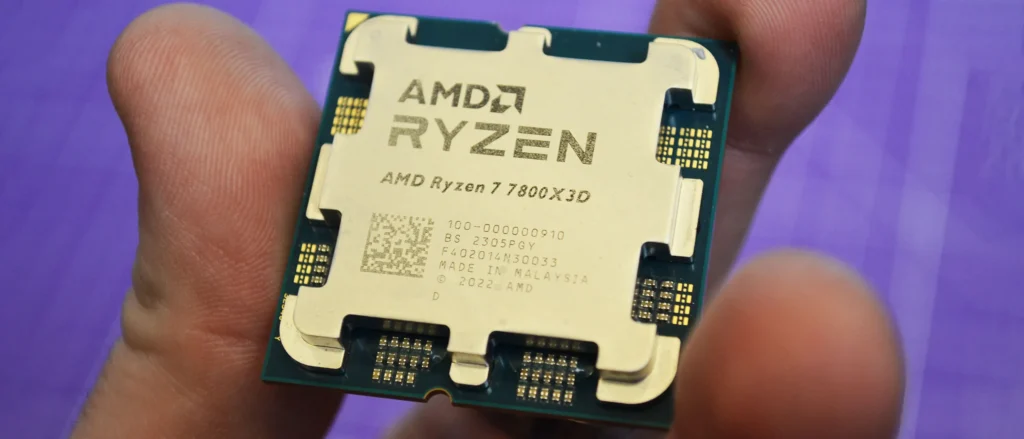
🔗 Building on a tighter budget? The AMD Ryzen 7 7800X3D deal on Amazon UK pairs extremely well with either GPU for a high-performance build — check if the deal is still live.
Creative & AI Workloads: Which Card for Professionals?
Both GPUs are capable of handling creative work, but the RTX 5080 has a meaningful edge for professional and semi-professional workflows.
Professional Workload Comparison
| Workload | RTX 5070 | RTX 5080 | Recommendation |
|---|---|---|---|
| 1080p / 1440p Video Editing | ✅ Excellent | ✅ Excellent | Either card |
| 4K Video Editing (Premiere / Resolve) | ✅ Good | ✅ Better timeline scrubbing | RTX 5080 |
| 8K RAW Video Editing | ⚠️ Sluggish | ✅ Capable | RTX 5080 |
| 3D Rendering (Blender) | ✅ Fast | ✅ ~25% faster | RTX 5080 for heavy scenes |
| AI / LLM Inference (local) | ✅ Up to ~10B params | ✅ Better for 13B+ params | RTX 5080 for large models |
| Stable Diffusion / Image Gen | ✅ Fast | ✅ Faster | RTX 5070 sufficient for most |
| Streaming (1080p / 1440p) | ✅ Identical quality | ✅ Identical quality | Either card |
| 8K Streaming / Encoding | ❌ Single encoder | ✅ Dual NVENC encoders | RTX 5080 |
The RTX 5080 offers higher AI TOPS, more memory bandwidth, and better performance with large models and higher batch sizes — making it the stronger choice for researchers and developers handling demanding AI training and inference tasks. For purely gaming-focused buyers, the RTX 5070 handles all mainstream gaming streaming scenarios without any limitations.
Current Street Prices & Value Analysis (March 2026)
This is the critical section — because MSRP means very little right now.
| Card | Launch MSRP | Street Price (March 2026) | Premium Over MSRP |
|---|---|---|---|
| RTX 5070 | $549 | ~$620–$680 | +13–24% |
| RTX 5080 | $999 | ~$1,269–$1,499 | +27–50% |
The RTX 5080 has been hit disproportionately harder by the GPU pricing crisis than the RTX 5070. At launch, the gap between these two cards was $450. At March 2026 street prices, the gap has widened to $600–$820. That changes the value equation significantly.
At current street prices of around $1,400 for the RTX 5080 and $1,000 for the RTX 5070 Ti, a 15–18% performance gain comes with a 40% price premium — and for most gamers, that is a difficult proposition to justify at 1440p.
Performance Per Dollar at Current Street Prices
| Metric | RTX 5070 | RTX 5080 |
|---|---|---|
| Avg. 1440p FPS (no DLSS) | ~105 FPS | ~140 FPS |
| Street Price | ~$650 | ~$1,350 |
| FPS per $100 (1440p) | ~16.2 FPS | ~10.4 FPS |
| Value Score | ✅ Excellent | ⚠️ Poor at current prices |
The numbers are stark: you are paying roughly 2× the price for approximately 33% more performance in raw rasterization. Unless you have a specific 4K or professional workflow need, the RTX 5070 is the rational purchase at 2026 street prices.
Who Should Buy the RTX 5070?
✅ Buy the RTX 5070 If You:
- Game primarily at 1440p on a 144Hz–240Hz monitor
- Are building or upgrading a PC with a budget under $1,500 total
- Want excellent DLSS 4 MFG performance at a fraction of the 5080’s cost
- Are upgrading from an RTX 30 series or older — the 5070 is a massive leap
- Want a 750W-compatible GPU that doesn’t require a PSU upgrade
- Game mostly in titles where both cards exceed 100 FPS anyway
- Want to pair with an AMD Ryzen or mid-tier Intel CPU without bottleneck concerns
❌ Skip the RTX 5070 If You:
- Game primarily at native 4K with maximum quality settings and RT enabled
- Use your GPU for 8K video editing, 3D rendering, or large AI model training
- Want maximum future-proofing for 2027–2028 titles with increasing VRAM demands
- Plan to use full path tracing in titles like Alan Wake 2 or Cyberpunk Overdrive
- Have a 4K 144Hz+ monitor and want to hit high frame rates without DLSS
Who Should Buy the RTX 5080?
✅ Buy the RTX 5080 If You:
- Game at 4K and want consistently high frame rates with demanding settings
- Work in 4K/8K video production, 3D rendering, or AI inference locally
- Want the best Blackwell GPU below the RTX 5090 for long-term use
- Plan to hold this card for 4+ years and want maximum headroom for future titles
- Use path tracing / full ray tracing in supported titles as a priority
- Run local LLMs and need 16GB VRAM for larger model contexts
- Budget is not your primary concern
❌ Skip the RTX 5080 If You:
- Game at 1440p and are satisfied with 100+ FPS — the 5070 covers this completely
- Are price-sensitive — at current $1,269–$1,499 street prices, the value case is weak
- Have a PSU under 850W — add that upgrade cost to the total
- Could use the $600–$800 difference to build a better overall PC around the RTX 5070
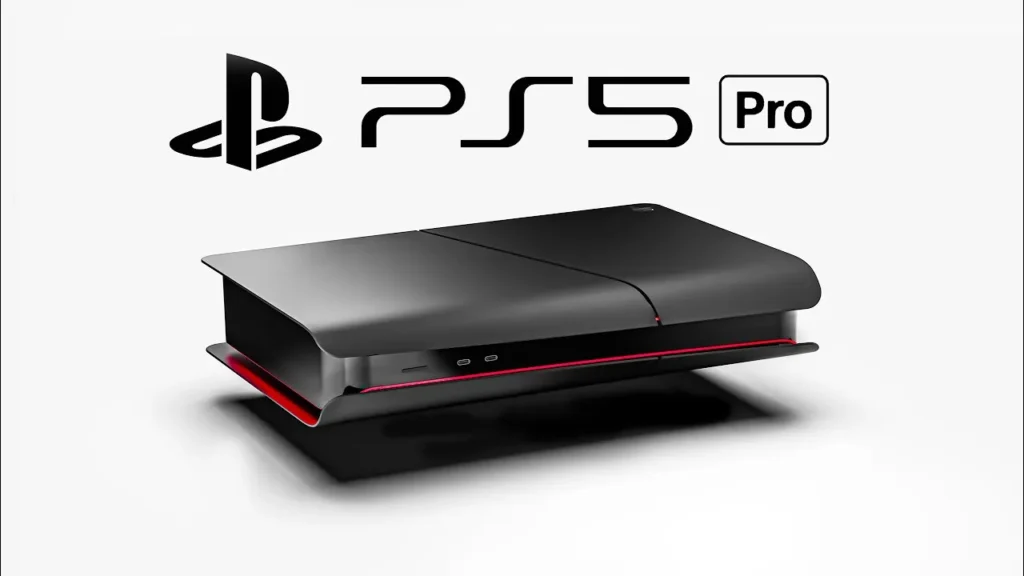
🔗 Considering a console instead of a GPU upgrade? With the RTX 5080 now costing $1,300–$1,500 at street prices, the maths of PC gaming vs console gaming have shifted dramatically. Read our PS5 Pro review to see how Sony’s machine stacks up against a mid-range gaming PC in 2026.
RTX 5070 vs RTX 5080: The Hidden Middle Option
If you are genuinely torn between these two cards, there is a strong argument for considering the RTX 5070 Ti as a middle ground:
| RTX 5070 | RTX 5070 Ti | RTX 5080 | |
|---|---|---|---|
| CUDA Cores | 6,144 | 8,960 | 10,752 |
| VRAM | 12GB GDDR7 | 16GB GDDR7 | 16GB GDDR7 |
| TDP | 250W | 300W | 360W |
| MSRP | $549 | $749 | $999 |
| Street Price | ~$650 | ~$950–$1,100 | ~$1,350+ |
| 1440p Perf. vs 5070 | Baseline | ~+22% | ~+33% |
| 4K Perf. vs 5070 | Baseline | ~+25% | ~+40% |
The RTX 5070 Ti gets you 16GB GDDR7 VRAM (matching the 5080), meaningfully better 4K performance, and a significant step up in ray tracing — all for around $300 less than an RTX 5080 at current street prices. For most gamers, the RTX 5070 Ti offers the better balance of performance and value right now — it delivers strong 1440p performance and very capable 4K results without the steep cost increase of the RTX 5080.
Frequently Asked Questions (FAQs)
Is the RTX 5070 good enough for 4K gaming in 2026?
Yes — with DLSS 4 Quality or Balanced mode enabled, the RTX 5070 handles 4K at 60+ FPS in most AAA titles. However, at native 4K with maximum settings and ray tracing enabled, it can struggle in the most demanding games. It’s best considered a 1440p primary / 4K secondary card. The RTX 5080 is the better choice if 4K native performance is your main priority.
What is the real performance difference between the RTX 5070 and RTX 5080?
In raw rasterization at 1440p, the RTX 5080 is approximately 25–33% faster on average. At 4K the gap widens to roughly 30–40%. In ray tracing workloads, the 5080 maintains a 20–35% advantage depending on the title. At current 2026 street prices, this performance difference is difficult to justify for mainstream gamers.
Does the RTX 5070 support DLSS 4 Multi Frame Generation?
Yes. Both the RTX 5070 and RTX 5080 fully support DLSS 4 with Multi Frame Generation. This is one of the most important RTX 50 series exclusive features and works on all Blackwell cards regardless of tier.
Is 12GB of VRAM enough in 2026?
For 1440p gaming, yes — 12GB is sufficient for virtually all current titles. At 4K with maximum settings and ray tracing in the most demanding AAA games, the 12GB limit can cause VRAM pressure and stuttering. If you primarily play at 1440p or use DLSS 4, 12GB is not a concern. For 4K without DLSS at max settings, 16GB is preferable.
What PSU do I need for the RTX 5070 vs RTX 5080?
The RTX 5070 (250W TDP) is well served by a quality 750W 80+ Gold PSU. The RTX 5080 (360W TDP) should be paired with an 850W minimum — 1000W is recommended for a comfortable overhead with a high-end CPU. Factor this PSU cost into your total budget when comparing the two cards.
Is the RTX 5080 worth it at current 2026 street prices?
At MSRP ($999), the RTX 5080 is a compelling option for serious 4K gamers and content creators. At current street prices of $1,269–$1,499, it becomes much harder to recommend unless 4K performance or professional workloads are specifically important to you. The RTX 5070 Ti at ~$950–$1,100 offers a more balanced alternative.
How do the RTX 5070 and 5080 compare to the RX 9070 from AMD?
AMD’s RX 9070 (16GB VRAM) at ~$550–$600 is a genuine competitor to the RTX 5070, offering better VRAM capacity at a similar price point and strong rasterization performance. However, it lacks DLSS 4 MFG support — FSR 4 is AMD’s equivalent, though the implementation varies by title. If you are NVIDIA-agnostic and prioritize VRAM, the RX 9070 is worth including in your comparison.
Which GPU pairs best with the AMD Ryzen 7 7800X3D?
Both cards work excellently with the Ryzen 7 7800X3D, which remains one of the best gaming CPUs available. At 1440p, the 7800X3D pairs best with the RTX 5070 — the CPU will not bottleneck it at this resolution. For 4K gaming where the GPU is the primary limiter, either card works. The 7800X3D is the recommended CPU pairing for either build at this price tier.
The RTX 5070 is the better value for gamers primarily targeting 1440p, offering excellent performance at a more accessible price point — while the RTX 5080 justifies its cost for serious 4K gamers who demand uncompromised performance at high frame rates and engage in demanding creative workloads.
In March 2026, with the RTX 5080 selling for $1,269–$1,499 on the street, that calculus is even more skewed toward the RTX 5070 for mainstream buyers. You are paying roughly double the price for around 30% more performance. Unless you are explicitly a 4K gamer or professional user with workload demands that benefit from 16GB VRAM and more compute power, the RTX 5070 is the smarter card.
Buy the RTX 5070 if you game at 1440p, value performance per dollar, and want all of DLSS 4’s features in a power-efficient, PSU-friendly card.
Buy the RTX 5080 if 4K gaming at maximum settings is non-negotiable, you work in video production or AI, and you are investing in a card you intend to keep for 4–5 years.
🔗 Still deciding between console and PC entirely? Read our High-Tech Console vs Gaming PC: Which Gives Better Value in 2026? — the GPU pricing crisis has genuinely shifted the equation this year.