TL;DR
The Sims 4’s December 4 SpongeBob SquarePants collaboration sparked immediate backlash from players criticizing “cheap” asset quality, lazy recolors, and aesthetic clash with the game’s art style. Priced at $6.99 each or $9.99 bundled, the two kits rank #792 and #807 on Steam’s sales charts with only 15 combined reviews. Popular YouTuber lilsimsie’s critical review stirred additional controversy about content creator responsibility.
Shadow Drop Strategy Backfires for Electronic Arts
Electronic Arts released two SpongeBob SquarePants-themed content packs for The Sims 4 on December 4, 2025, employing a “shadow drop” strategy—launching without prior marketing campaigns or community preparation. The approach, typically reserved for surprise announcements intended to generate excitement, instead triggered immediate negative reactions across The Sims 4’s vocal player community.
Product Details:
- SpongeBob Kid’s Room Kit: $6.99 standalone
- SpongeBob’s House Kit: $6.99 standalone
- Bundle Option: $9.99 (includes both kits plus exclusive bonus items)
The pricing positions these kits within EA’s established monetization tier structure, matching previous themed content packs. However, perceived value relative to content quality has become the collaboration’s central controversy.
Core Player Complaints: Asset Quality and Execution
The Sims 4 community has centered criticism around three primary concerns regarding the SpongeBob collaboration’s technical and artistic execution.
“Recolor-Level” Asset Creation
Players across Reddit’s r/TheSims community and social media platforms have characterized many items as basic texture swaps rather than purpose-built 3D assets:
Representative Criticism: “The clothes are especially tragic, it looks like someone who just learned how to recolor stuff made it,” wrote one Reddit user, articulating widespread sentiment about minimal apparent development effort.
Custom Content Comparison: Multiple players drew unfavorable comparisons to amateur custom content (user-created modifications), with one stating the clothing items reminded them of “custom content their 14-year-old self would have made for The Sims 2 by just slapping images onto everything.”
This criticism carries particular weight in The Sims community, where free custom content created by hobbyists often rivals or exceeds official DLC quality—making paid content that resembles amateur work especially controversial.
Specific Asset Failures: The Pineapple House
SpongeBob’s House Kit, designed to recreate the iconic pineapple home from the animated series, drew targeted criticism for texture quality:
Pineapple Roof Texture: Players described the roof texture as “tragic,” suggesting the attempted translation of SpongeBob’s cartoon aesthetic into The Sims 4’s semi-realistic engine produced visually unappealing results.
3D Model Execution: Beyond textures, players questioned whether the pineapple structure’s geometry and proportions successfully captured the source material’s character while fitting The Sims 4’s building system constraints.
Flat Textures and Low-Effort Perception
Across both kits, players identified what they characterized as excessive reliance on 2D image application rather than proper 3D modeling:
- Clothing items with flat printed graphics rather than modeled details
- Furniture pieces using simple texture swaps of existing Sims 4 assets
- Minimal apparent new 3D geometry creation
This approach contrasts unfavorably with higher-quality Sims 4 expansion packs and stuff packs that introduce purpose-built assets with appropriate geometric detail and texture work.
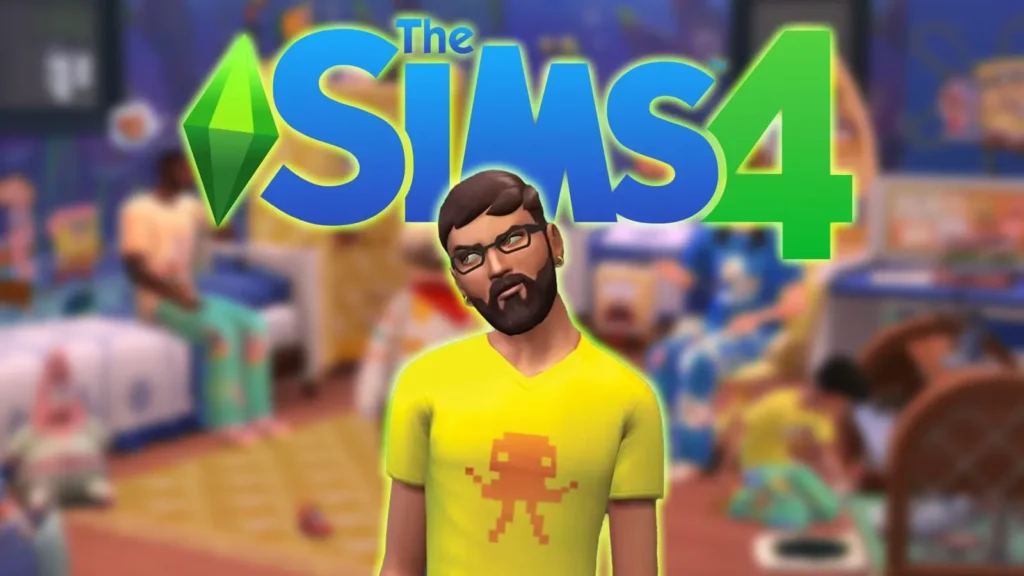
Aesthetic Clash: Breaking The Sims 4’s Visual Cohesion
Beyond individual asset quality, players expressed concern about the SpongeBob content’s fundamental incompatibility with The Sims 4’s established art direction.
The Sims 4’s Controversial But Consistent Art Style
The Sims 4 launched in 2014 with a deliberately exaggerated, almost caricature-like visual approach—a departure from The Sims 3’s more realistic aesthetic. This stylistic choice proved controversial initially but achieved internal consistency across subsequent expansions:
Established Visual Language:
- Slightly oversized features and proportions
- Vibrant, saturated color palettes
- Stylized but cohesive texture work
- Semi-realistic rendering maintaining believability
Maxis (The Sims’ development studio) has maintained this aesthetic across 11 expansion packs, 18 game packs, and numerous stuff packs/kits since 2014—creating player expectations for visual coherence.
“Jarring” Integration of Cartoon IP
The SpongeBob collaboration breaks this consistency by directly importing cartoon aesthetics without adequate translation:
Player Reactions: “There’s just something so jarring about seeing real-life art and things in Sims,” one player wrote, while another stated: “when I first saw the images, I thought they were AI fan mock-ups.”
The comparison to AI-generated content is particularly damning, suggesting the assets appear uncanny or poorly integrated rather than professionally crafted for the game engine.
Aesthetic Incompatibility: SpongeBob SquarePants features:
- Highly saturated, primary-color-dominant palette
- Cartoon cel-shading aesthetics
- Exaggerated proportions beyond even The Sims 4’s stylization
- Underwater fantasy setting elements
These characteristics clash fundamentally with The Sims 4’s grounded suburban simulation context, creating what players describe as immersion-breaking visual discord.
Commercial Performance: Early Sales Data Suggests Market Rejection
Publicly available sales metrics indicate the SpongeBob collaboration has failed to gain commercial traction during its crucial launch window.
Steam Sales Rankings (as of December 6, 2025)
SpongeBob Kid’s Room Kit: #792 on Steam’s top sellers list SpongeBob’s House Kit: #807 on Steam’s top sellers list
Context: For comparison, typical successful Sims 4 expansion packs and game packs routinely reach Steam’s top 10-50 during launch weeks. Even smaller stuff packs and kits generally place within the top 200-300 when released.
The 700+ ranking positions suggest minimal purchase activity relative to Steam’s broader game catalog.
Review Volume Indicates Limited Sales
Combined Steam Reviews: 15 total across both kits
Sales Estimation: Steam’s review-to-sales ratio typically ranges from 1:50 to 1:100 for most games. Using these ratios:
- Conservative estimate: 750 copies combined
- Liberal estimate: 1,500 copies combined
These figures represent extraordinarily weak performance for official Sims 4 DLC, particularly given The Sims 4’s massive Steam player base (frequently ranking among platform’s top 20 concurrent players).
Console Performance: Data Unavailable
Electronic Arts does not publicly report PlayStation Store or Xbox Store sales rankings with sufficient granularity to assess console performance. However:
- The Sims 4 maintains larger player populations on PC than consoles
- Console players typically show similar purchasing patterns to PC audiences
- No evidence suggests console sales are substantially offsetting weak PC performance
Content Creator Controversy: The Lilsimsie Response
Popular Sims 4 content creator Kayla “lilsimsie” Sims became embroiled in community controversy following her critical coverage of the SpongeBob packs.
The Critical Review Video
On December 5, 2025—one day after the packs’ release—lilsimsie published “I bought the SpongeBob packs so you don’t have to,” a 25-minute video examining the DLC’s shortcomings.
Video Content: The review largely echoed community criticisms regarding:
- Asset quality concerns
- Perceived lack of development effort
- Poor value proposition at $6.99 per kit
- Aesthetic incompatibility with base game
Stated Intention: Position the video as a consumer protection service, warning potential buyers about quality issues before purchasing.
Community Backlash Against the Creator
Despite the video’s critical stance, a segment of The Sims community accused lilsimsie of hypocrisy for purchasing the packs at all:
Core Argument: By buying the DLC—even to criticize it—she provided EA with revenue and engagement metrics that could be interpreted as market validation for low-quality content.
“Voting with Wallets” Philosophy: Critics argued the most effective protest involves complete purchase boycott, denying EA both revenue and data suggesting market interest.
YouTube Comment Backlash: The controversy generated sufficient negative feedback that it became the dominant discussion in the video’s comment section.
Lilsimsie’s Pinned Response
The content creator posted an extensive pinned comment defending her decision:
Justification: “I believed that making a negative video about these packs was the ‘best’ thing I could do with my platform. I understand if you disagree and feel that I shouldn’t have talked about them at all, but my intention was to openly encourage people to not buy either of these packs.”
Platform Responsibility Debate: The controversy raises broader questions about gaming influencer ethics:
- Do creators have obligations to completely boycott problematic content?
- Does critical coverage provide more consumer value than silent boycott?
- Can negative reviews offset the commercial signal of a purchase?
Audience Reach Consideration: Lilsimsie’s substantial subscriber base (several hundred thousand) means her negative review potentially influenced more purchase decisions than her individual $9.99 contribution supported EA financially—though this remains debatable.
Historical Context: The Sims 4’s Monetization Criticism
The SpongeBob collaboration backlash occurs against a backdrop of longstanding community frustration with The Sims 4’s monetization practices.
DLC Pricing Controversy Timeline
Expansion Packs: $39.99 each (12 released, $479.88 total) Game Packs: $19.99 each (12 released, $239.88 total)
Stuff Packs: $9.99 each (18 released, $179.82 total) Kits: $4.99-$6.99 each (dozens released, $150+ total)
Complete Content Cost: Players seeking all official Sims 4 content face expenditures exceeding $1,000—a figure that regularly sparks criticism about exploitative monetization.
“Kits” Tier Introduction Backlash
EA introduced the “Kits” micro-DLC tier in 2021, offering extremely limited content (typically 20-30 items) for $4.99-$6.99. The category immediately proved controversial:
Community Concerns:
- Content previously included in larger packs now sold separately
- Minimal item counts providing poor value
- Perception that EA was “nickel-and-diming” loyal players
- Quality inconsistency across kit releases
The SpongeBob kits fall into this already-controversial category, amplifying existing frustrations.
Free Custom Content Alternative
The Sims modding community produces thousands of free custom content items monthly, often matching or exceeding official DLC quality. This creates unique market pressure:
- Players can obtain similar or superior content at no cost
- Official DLC must significantly exceed custom content quality to justify purchases
- Low-quality official content faces especially harsh criticism when free alternatives exist
Brand Partnership Fit Questions
Beyond execution quality, some community members questioned whether SpongeBob SquarePants represents an appropriate brand partnership for The Sims franchise.
Target Demographic Misalignment
The Sims 4’s Core Audience:
- Primarily ages 18-35
- Interested in life simulation, architecture, storytelling
- Seeks realistic or aspirational content for gameplay
SpongeBob SquarePants Demographics:
- Children’s cartoon with nostalgic millennial appeal
- Surreal, absurdist humor
- Fantasy underwater setting
While millennial nostalgia for SpongeBob exists, the aesthetic and thematic fit with realistic life simulation remains questionable.
Successful vs. Unsuccessful Collaborations
Previous Sims 4 Brand Partnerships that received positive reception:
- Moschino Stuff Pack (fashion brand alignment)
- Star Wars: Journey to Batuu (controversial but thematically ambitious)
Key Difference: These partnerships attempted meaningful gameplay integration rather than simple asset reskins—though Journey to Batuu also faced criticism for breaking immersion.
Player Alternatives: “I Wouldn’t Get It Even If It Was Free”
Perhaps the most damning community sentiment came from players stating they would reject the content even as a free addition:
Representative Quote: “I wouldn’t get it even if it was free,” a Reddit user wrote regarding the $9.99 bundle.
This reaction suggests the issue transcends pricing to fundamental questions of:
- Whether the content belongs in The Sims 4 at all
- Whether it provides value even at zero monetary cost
- Whether it actively degrades the game experience through aesthetic pollution
When players reject free content, developers face a crisis of fundamental product-market fit rather than simple pricing objections.
What This Means for The Sims 4’s Future
The SpongeBob collaboration’s failure carries implications for EA’s content strategy going forward:
Potential Strategic Adjustments
Brand Partnership Reevaluation: EA may reconsider which intellectual properties align appropriately with The Sims’ simulation focus.
Quality Floor Enforcement: The backlash may prompt stricter internal quality standards for kit-tier content to prevent reputation damage.
Community Feedback Integration: More pre-release community consultation could identify aesthetic compatibility issues before development investment.
The Sims 5 Implications
With The Sims 5 (codenamed “Project Rene”) in development, EA faces critical decisions about:
- Whether to continue aggressive monetization strategies
- How to balance brand partnerships with aesthetic cohesion
- Whether kit-tier micro-DLC will carry forward to the next generation
The SpongeBob debacle serves as a cautionary example of how monetization missteps can damage long-term franchise goodwill.
Other Latest News:
- PS5 Captures 62% UK Console Market Share During Black Friday 2025
- Metroid Prime 4’s Unmasked Samus Design Earns Universal Fan Praise