Look, Arknights Endfield’s combat might seem straightforward when you first jump in, but trust me—there’s a whole chess game happening under the hood. This isn’t your typical “spam abilities and hope for the best” situation. The game’s Arts Infliction system rewards players who actually think about their combos, and once you understand how everything clicks together, fights become way more satisfying.
Whether you’re just getting started or looking to optimize your team comp, understanding elemental reactions is crucial. If you’re new to the game, check out our comprehensive Arknights Endfield guides hub for everything you need to know. You can grab the game from the official website, Google Play, or the Epic Games Store.
Understanding the Basics: How Inflictions Work
At its core, Endfield’s Elemental combat revolves around something called Inflictions—basically status effects that prime enemies for elemental reactions. Here’s the key thing to understand: an Infliction by itself does pretty much nothing. The magic happens when you layer them.
Every Operator skill can interact with Inflictions in three ways:
- Apply a new Infliction to an enemy
- Consume an existing Infliction to trigger a reaction
- Interact with Inflictions in unique, character-specific ways
When you hit an enemy that already has one Infliction with another skill, boom—you get a Reaction. The type of reaction depends on what elements you’re mixing and the nature of the skill itself.
Physical Damage and the Vulnerable System
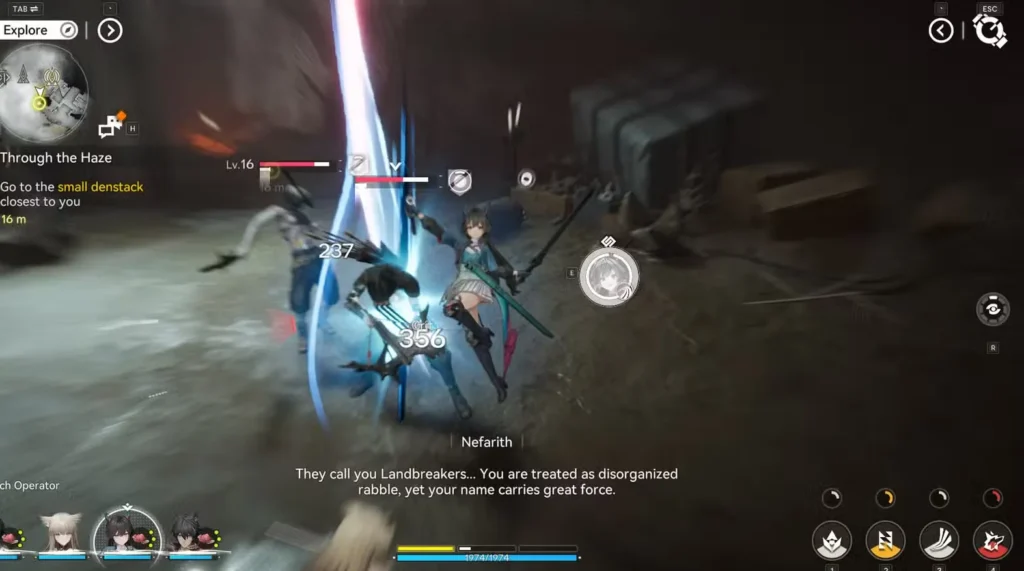
Let’s start with Physical damage since it’s a bit simpler to wrap your head around. Physical skills always apply the Vulnerable Infliction when they connect. But here’s where it gets interesting—different Physical skill types consume Vulnerable in different ways.
Crush-Type Skills (like Endministrator’s Battle Skill):
- Apply Vulnerable on hit
- Consume Vulnerable stacks to deal bonus damage
- Great for burst damage when enemies are already softened up
Lift-Type Skills (like Chen’s Battle Skill):
- Apply Vulnerable on hit
- Don’t consume Vulnerable—instead add more stacks
- Launch enemies into the air for crowd control
The beauty of this system is you can chain these together strategically. Use Lift to stack Vulnerable while controlling the battlefield, then swap to Crush for a devastating finisher.
Other Physical reactions include:
- Breach: Consumes Vulnerable to make enemies take more Physical damage overall
- Knock Down: Slams Vulnerable enemies into the ground for control
Worth noting: some Operators like Ember blur the lines by dealing both Physical and Arts damage, giving you more flexibility in how you build your combos.
Arts Inflictions: The Four Elements
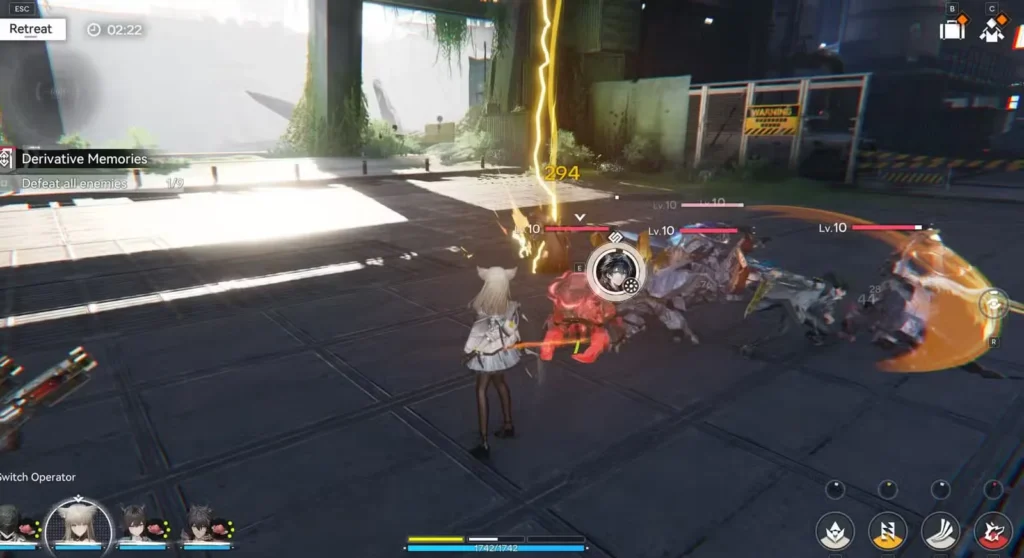
Now we’re getting to the fun stuff. Arts is Endfield’s term for elemental damage, and there are four types you’ll be working with:
- Heat (fire)
- Cryo (ice)
- Electric (lightning)
- Nature (poison/nature)
Just like Physical damage, Arts Inflictions don’t do much alone—they need to interact with other Inflictions to really shine. But Arts damage has two special mechanics that set it apart: Bursts and Reactions.
Arts Bursts: Stacking the Same Element
Here’s a cool trick: if you hit an enemy with the same Arts element twice, you trigger an Arts Burst. This creates a delayed explosion of that element for bonus damage.
For example, hit an enemy with Heat once to apply the Infliction, then hit them with Heat again—after a brief moment, they’ll take an additional chunk of Heat damage. The burst damage scales based on the hit that triggered it and your Operator’s Arts Intensity stat, so it’s worth investing in that stat if you’re running elemental-focused teams.
This is perfect for Operators who can rapid-fire the same element or when you’re coordinating with teammates in multiplayer co-op.
Arts Reactions: Mixing Elements
This is where combat gets really strategic. When you combine two different Arts Inflictions, you get an Arts Reaction. The crucial detail: the reaction type is determined by the element of the triggering skill, not the combination itself.
Here’s what that means: An enemy with Electric Infliction will Solidify when hit by Cryo. But if you reverse it—hit a Cryo-affected enemy with Electric—you get Electrification instead. Order matters!
The Four Arts Reactions
Combustion (Heat Trigger)
- Enemies burn and take damage over time
- Perfect for sustained pressure on tanky enemies
- Let it tick while you reposition or focus other targets
Electrification (Electric Trigger)
- Enemies become vulnerable to ALL Arts damage sources
- This is your damage amplifier—set this up before unleashing your heavy hitters
- Especially valuable in team compositions with multiple Arts damage dealers
Solidification (Cryo Trigger)
- Freezes weaker enemies completely
- Excellent crowd control for managing groups
- Can also be consumed by Crush skills for bonus damage (yes, Physical can interact with this one!)
Corrosion (Nature Trigger)
- Gradually reduces enemy elemental resistances
- The setup reaction for prolonged fights against resistant enemies
- Gets stronger the longer the fight goes on
Important: When you trigger an Arts Reaction, all Arts Inflictions are consumed. So you’re resetting back to a clean slate and can start building toward your next combo.
Character-Specific Combos and Advanced Interactions
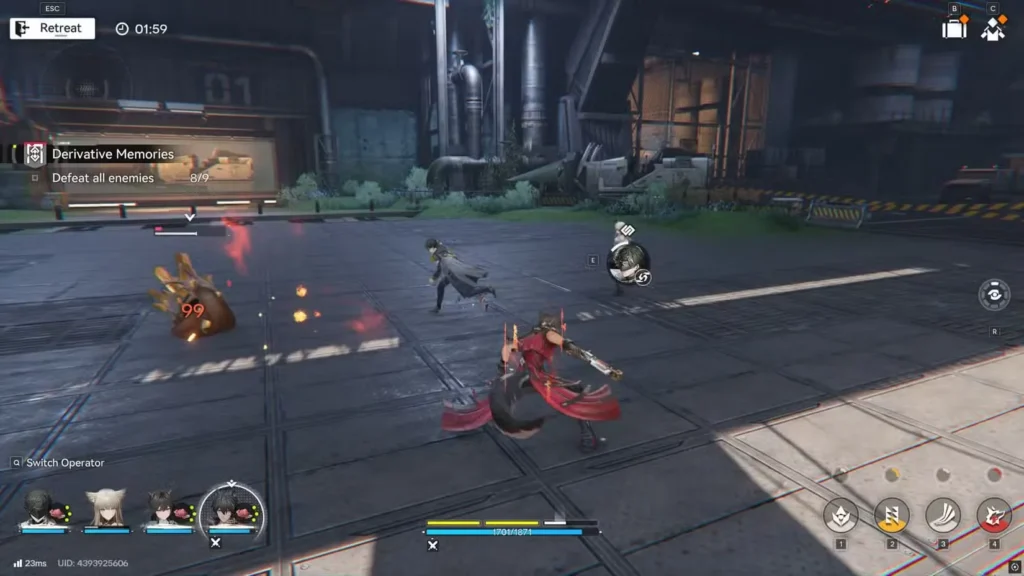
Once you’ve got the basics down, you’ll discover that many Operators have unique twists on these systems. This is where choosing the right characters becomes crucial.
Take Wulfguard, for example. His Thermite Tracers skill normally applies Heat Infliction with the final shot. But here’s the kicker—if your target already has Combustion or Electrification active, Wulfguard consumes the reaction and fires an extra shot that hits way harder. That’s a completely different playstyle than just spamming Heat Bursts.
This kind of depth means there’s real value in reading your Operators’ skill descriptions carefully. Some characters are designed to be combo enablers, while others are finishers who capitalize on reactions you’ve already set up.
Practical Combat Tips
Start Simple: Focus on mastering one element combo before trying to juggle everything. Heat → Heat Burst is straightforward and effective.
Pay Attention to Skill Tags: Skills are labeled with their type (Crush, Lift, etc.) and element. This tells you exactly what they’ll do when they hit an enemy with existing Inflictions.
Think About Turn Order: In tough fights, plan out your sequence. Who applies the Infliction? Who triggers the reaction? Who capitalizes on the aftermath?
Invest in Arts Intensity: If you’re building an elemental team, this stat directly increases your Burst damage and can make reactions significantly more impactful.
Don’t Sleep on Physical Teams: While Arts reactions are flashy, a well-coordinated Physical team stacking and consuming Vulnerable can absolutely shred through content.
If you’re still figuring out your optimal team setup, consider checking out our reroll guide to start with strong Operators. And don’t forget to grab any available redeem codes for extra pulls!
Optimizing Your Setup
Make sure you’ve got your game settings dialed in so you can actually see these reactions happening in real-time. Combat feedback is important when you’re trying to learn timing and sequences.
Also, if you’re watching streams, you might want to check out the Twitch Drops guide for free rewards while you’re learning from other players.
FAQs
Can I trigger multiple reactions at once?
No, reactions consume the Inflictions they interact with, resetting the enemy’s status. You’ll need to reapply Inflictions after each reaction to keep the combos going. This makes timing and skill rotation really important in longer fights.
Do Arts Bursts and Reactions scale with my level?
Yes, both scale with your character’s stats, particularly Arts Intensity for elemental damage. As you level up your Operators and gear, these interactions become significantly more powerful, which is why understanding the system early pays off later.
What’s better—focusing on one element or mixing them for reactions?
It depends on your team composition and the content you’re tackling. Single-element teams can spam Bursts for consistent damage, while mixed teams offer more utility through various reactions. For general content, having options is usually better than specializing too hard.
Do these mechanics matter in early game content?
Honestly? You can brute force early content without worrying too much about optimal combos. But understanding the system early means you’ll have a much easier time when the difficulty ramps up and enemies start having resistances, shields, and other defensive mechanics that require smart play to overcome.