Stock Bills are the primary economic driver in Arknights: Endfield, fueling everything from ambitious base expansions to essential equipment crafting. While T-Creds handle your Operator upgrades, Stock Bills power the industrial infrastructure that makes your entire operation tick — from assembling top-tier gear and buying weapons to purchasing discounted Headhunt Permits and fueling endgame systems like Essences and Golden Gear. Spend them carelessly early on and you’ll hit the endgame broke, with farming and upgrades grinding to a halt.
New to Talos-II? Check out our comprehensive [Arknights: Endfield guides hub] for everything you need to know about building your base and optimizing your progression.
Understanding Regional Stock Bills
Here’s something crucial that trips up many players: Stock Bills operate on a regional basis. Valley IV uses Valley Stock Bills, Wuling uses Wuling Stock Bills, and each additional region has its own separate currency. You cannot transfer wealth between regions, which means you’ll need to establish independent income streams wherever you’re operating.
This regional lock-in makes resource planning particularly important when expanding into new territories. Progress the main story in each region to unlock Outpost Trading there — in Wuling, for example, you need to reach Chapter 2 Process II and place the Sub-PAC in Jingyu Valley before Outpost trading becomes available. Until then, income options in new regions are very limited, so prioritize unlocking the Outpost as your first objective whenever you enter a new zone.
Download the game from Epic Games, Google Play, or visit the official Endfield site to start building your economic empire.
All Ways to Farm Stock Bills
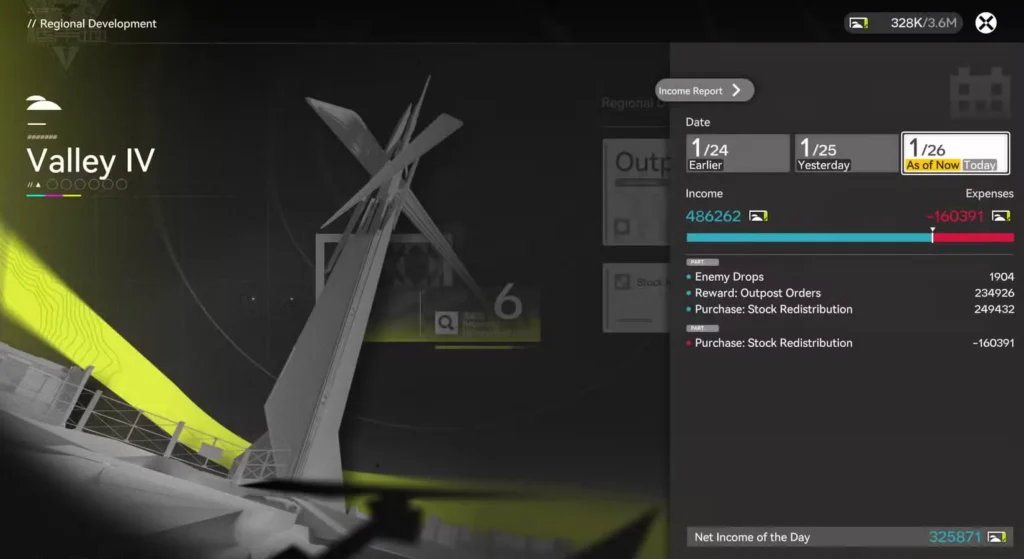
There are four main income sources for Stock Bills. Prioritize them in this order: Outpost Orders first, then Elastic Goods trading, then Depot Node deliveries, then enemy drops as a passive bonus on top.
1. Outpost Orders (Primary Income — Do This Daily)
Completing Outpost Orders is the most consistent and reliable way to farm Stock Bills in both Valley IV and Wuling. Outposts across Talos-II constantly need supplies, and they pay well for your excess factory production. The amount you receive depends on both the item type and your Outpost’s level — higher-level Outposts pay better rates and have more Stock Bill capacity to spend.
Pro tip: Assign an Operator as your Outpost liaison officer to earn a 20% Stock Bill bonus on trades. This is a significant multiplier that many players miss entirely.
This system rewards players who invest time into their base infrastructure. If manufacturing management isn’t your thing, you can always borrow blueprints from other players and skip the design phase entirely.
Trading with Outposts: Step-by-Step
- Access the Regional Development menu from your interface
- Navigate to Outpost Management
- Choose which Outpost you want to conduct business with
- Hit the Switch Goods button located below the Regional Stockpile meter
- Select which material type you’re selling
- Adjust the quantity slider to match how much you want to offload
- Confirm the transaction with the Trade button
Profit margins scale with item complexity. Basic resources like Origocrusts move quickly but return modest payments. Higher-tier products like LC Valley Batteries demand more production time and aerospace materials, but the payoff justifies the investment. Sell the most expensive item your factory can reliably produce without bottlenecking other operations.
Note for Wuling players: Wuling currently has only one Outpost compared to three in Valley IV, so income scales up slower there. Manufacturing and trading Xiranite and Yazhen Syringe [C] are your best early Wuling options.
2. Elastic Goods Trading via Stock Redistribution (Fastest Method)
Despite what many early guides suggest, Elastic Goods trading is actually the fastest way to earn large amounts of Stock Bills — and it requires almost no effort once set up. Players routinely flip goods for hundreds of thousands of Stock Bills per day using the friend market system. This is the method many players overlook until mid-game, when they suddenly realize they’re sitting on a money machine.
The mechanics work simply: prices for Elastic Goods change every day at the daily server reset (around 04:00 UTC+8). Purchase goods when prices dip (look for items marked with a red downward arrow or discounted 50%+ below recommended price), then sell them at a friend’s terminal when prices spike for maximum profit.

The Friend Market Trick: After buying cheap Elastic Goods, open the Friend Price screen to see what those same items sell for at other players’ terminals. Travel to a friend’s Dijiang ship, find the terminal at the top of their boat, and sell there for significantly higher prices. This price arbitrage is where the real money is — players have reported flipping a single day’s purchase into 290,000+ Stock Bills in a few minutes.
Daily reset routine: Check Elastic Goods immediately after the daily reset — that’s when new profit windows open. The Staple Goods section (permanent items, Headhunt Permits, upgrade mats) also refreshes daily, so check both sections every time you log in.
Keep in mind that daily purchase limits apply to Elastic Goods, with partial refreshes occurring every eight hours. Plan your trades to hit all three refresh windows for maximum throughput.
3. Depot Node Deliveries (Reliable Bonus Income)
Once you’ve established and upgraded your Depot Node in Valley IV and other regions, Delivery Jobs become a strong supplemental income source. These jobs pay out a large batch of Stock Bills per completion and are separate from your Outpost trading limits.
To complete a delivery: accept the supply request from the Depot Node, head to the designated Pick-Up Point, then transport the goods to the Delivery Point. The payouts are significantly larger per transaction than individual Outpost trades, making this worth building into your daily routine.
In Wuling specifically, look for the Depot Node quest that unlocks after completing Ivonne’s main task in Originium Science Park.
4. Defeating Enemies (Passive Supplement)
Every enemy you defeat in the open world has a chance to drop a small amount of Stock Bills. This isn’t a farming method you should deliberately pursue, but it accumulates naturally while you’re exploring, grinding other materials, or progressing story missions. Think of it as a free passive bonus on top of your active income sources, especially useful during early game exploration of new areas.
5. Environment Monitoring (Wuling Bonus Source)
Wuling players have access to an additional income source unavailable in Valley IV: Environment Monitoring. Once unlocked, this provides a reliable regular bonus of Wuling Stock Bills as part of your daily routine. Unlock all income systems in Wuling (Outpost, Stock Redistribution, Depot Node, and Environment Monitoring) as early as possible, then build a daily loop around all of them for maximum income.

Stock Redistributor Essentials
Stock Redistributors appear as stations operated by Lucky Carrot, an NPC sporting a distinctive yellow bunny costume. These trading posts typically sit near teleport points, marked on your map by a triangular icon connecting three boxes. You can also access the Stock Redistribution terminal directly from your Dijiang ship.
Unlocking each Redistributor requires an initial Stock Bill investment, and upgrades cost even more — some upgrades cost 200,000 bills or more. Despite the upfront expense, prioritize these upgrades aggressively. Higher-level Redistributors unlock access to Elastic Goods and increase your daily purchasing capacity, which directly translates to greater earning potential. They pay for themselves quickly and compound over time.
Your first priority when entering the Hub should be to check your Journal for the quest that mentions Stock Redistribution — this leads you to Lucky Carrot and kicks off the upgrade chain. Follow that quest before investing in anything else.
What to Spend Stock Bills On (Priority Order)
Knowing how to earn Stock Bills is only half the picture — knowing what not to spend them on early is just as important. Mismanaging early spending is the most common reason players hit endgame with empty reserves.
High Priority (Spend First)
- Stock Redistributor upgrades: Always reinvest into upgrading your Redistributor stations. Better stations mean higher daily Elastic Goods limits, more profit, and a faster snowball effect.
- Gear Assembly: Crafting and upgrading gear is one of the biggest Stock Bill sinks in the game, especially in mid and late game. Budget heavily for this.
- Weapon Store: Each region’s weapon store sells weapons that can only be purchased with local Stock Bills. These are often strong options worth prioritizing when available.
- Staple Goods — Discounted Headhunt Permits: The Staple Goods section refreshes daily and sells discounted Headhunting Permits. These are excellent value for gacha progression and worth buying every day.
- Base infrastructure upgrades: Expanding your Core AIC area, Depot Nodes, and production facilities all require Stock Bills and generate better returns over time.
Lower Priority (Spend Only When Comfortable)
- Chest and Aurylene detectors: Useful for completionists but not progression-critical.
- Operator Gifts: Increase operator trust for small stat bonuses. Nice to have but not urgent.
- Base decorations and cosmetics: Spend on these only after your income-generating infrastructure is fully established.
Building Your Economic Engine
Stock Bill generation ties directly into your broader progression strategy. The key is establishing a self-sustaining daily loop: run Outpost trades, flip Elastic Goods at the daily reset, complete Depot deliveries, and reinvest profits into Redistributor upgrades. Once this loop is running, income compounds rapidly — players who optimize this system early never struggle for Stock Bills in endgame.
Setting up efficient farming operations, managing your Quick Stash system, and optimizing power output all contribute to smoother resource flows. As you expand your Core AIC area and unlock new production capabilities, your Stock Bill income naturally scales upward.
For players looking to optimize their entire gameplay experience, our guides on best settings and 60fps configuration for mid-range systems can help ensure smooth performance while managing your economic empire.
Frequently Asked Questions
What’s the fastest way to farm Stock Bills in Arknights Endfield?
Elastic Goods trading through Stock Redistribution is actually the fastest method — players regularly earn hundreds of thousands of Stock Bills per day by buying cheap at their own terminal and selling at a friend’s terminal when prices spike. Outpost trading provides the most consistent baseline income, especially when producing higher-tier materials. Combine both methods daily, plus Depot Node deliveries, for maximum throughput.
Can I transfer Stock Bills between regions like Valley IV and Wuling?
No. Valley Stock Bills only work in Valley IV, Wuling Stock Bills only work in Wuling, and so on. You need to build separate income streams in each region you enter. In new regions, unlock the Outpost first by progressing the story — in Wuling, this requires reaching Chapter 2 Process II and placing the Sub-PAC.
How many Elastic Goods can I buy per day?
Daily purchase limits depend on your Stock Redistributor upgrade level. The Elastic Goods pool fully resets once per day at the daily server reset (around 04:00 UTC+8), with partial refreshes every eight hours. Upgrading your Redistributors increases these caps substantially, which is why Redistributor upgrades should be your first major Stock Bill investment.
Should I sell basic materials or wait to produce complex items?
Sell the most expensive item your factory can produce without creating bottlenecks. Complex items like LC Valley Batteries yield more Stock Bills per unit but require longer chains. If your setup handles advanced manufacturing smoothly, higher-tier items are better value. Otherwise, consistent basic material sales outperform sporadic high-tier trading. Don’t let your production sit idle waiting for the ‘perfect’ item.
Does it matter which Operator I assign as Outpost liaison?
Yes — assigning an Operator to your Outpost as liaison gives a 20% Stock Bill bonus on all trades. This is a significant multiplier that stacks directly with your trade volume, so always have a liaison assigned before trading. Some Operators may provide additional bonuses depending on their skills, so check the liaison assignment screen for any operator-specific bonuses.
What should I prioritize spending Stock Bills on first?
In order: Stock Redistributor upgrades (they compound your income), Gear Assembly (the biggest mid/late-game sink), Weapon Store purchases, and daily Headhunt Permits from Staple Goods. Avoid spending on Operator Gifts, detectors, or cosmetics until your income-generating infrastructure is fully upgraded. Early mismanagement of Stock Bills is the main reason players struggle in endgame.