TL;DR: Battlefield 6 offers several types of gameplay, from large-scale vehicle warfare to close-quarters infantry battles. Conquest, Breakthrough, Escalation, and Rush are the main All-Out Warfare modes. Domination, Team Deathmatch, Squad Deathmatch, and King of the Hill focus on smaller-scale combat. Additional modes include Strikepoint, Sabotage, Obliteration, and Tactical Obliteration. Seasonal events introduce temporary experiences, while REDSEC and Battlefield Portal offer separate ways to play. Remember that some Multiplayer playlists rotate, so a mode may not always appear in the standard Play menu.
If you’ve just jumped into Battlefield 6, you might feel overwhelmed by the number of ways to play. The game offers massive battles with tanks and helicopters, focused objective modes, small-team infantry fights, and experimental seasonal experiences.
The good news? There’s something here for almost every type of FPS player. You can capture objectives with a full squad in Conquest, attack defended sectors in Breakthrough, hunt enemies in Team Deathmatch, or coordinate a bomb run in Obliteration.
This guide explains the major Battlefield 6 game modes, how their objectives work, which playstyles they suit, and where to find additional experiences such as REDSEC and Portal. It also includes the latest changes from Patch 2.1.2.0 (Casino Heist).
Last updated: November 11, 2026.
The Big Picture: How Battlefield 6’s Modes Are Organized
Before diving into individual modes, understand that Battlefield 6 separates its experiences into three main areas, with Portal providing an additional way to create and play custom experiences.
- Campaign – The single-player story, where you complete missions, experience the conflict between NATO and Pax Armata, and earn campaign rewards.
- Multiplayer – The main competitive Battlefield experience, featuring All-Out Warfare, infantry-focused modes, objective-based combat, and seasonal playlists.
- REDSEC – The free-to-play Battlefield experience with Battle Royale, Gauntlet, Rapid Royale, and ranked competitive play.
- Battlefield Portal – A creation platform where players can build, customize, and play community-made experiences using supported maps, rules, and settings.
Within standard Multiplayer, modes are commonly grouped into two broad styles:
- All-Out Warfare – Larger maps, bigger teams, vehicles, and objective-based battles.
- Infantry and Tactical Modes – Smaller combat areas, shorter engagements, and more emphasis on squad coordination and gunfights.
Seasonal updates also introduce temporary modes and special event rules. These may appear for a limited period before rotating out of matchmaking.
Important playlist tip: Not every mode is available as a permanent standalone matchmaking option. Some objective modes alternate in the weekly playlists. Check Play → Multiplayer → Custom Search to select available modes and maps. Battlefield Portal is another option for accessing supported custom and verified experiences.
You can also visit the official Battlefield 6 modes guide for EA’s explanations of the core Multiplayer rules.
All-Out Warfare: The Main Event
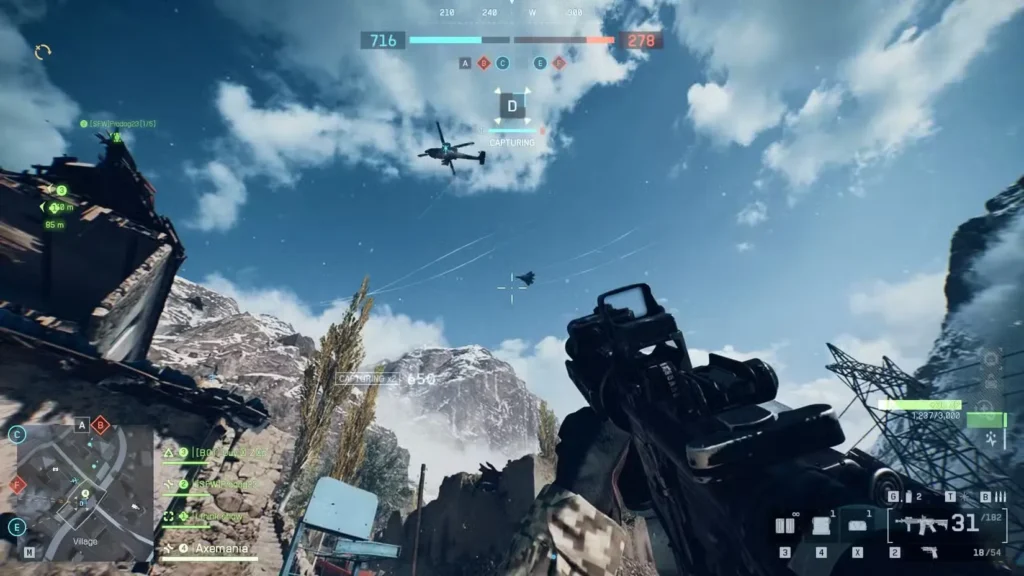
This is what most players imagine when they hear “Battlefield.” All-Out Warfare brings together large combat zones, infantry squads, tanks, aircraft, and objective-based battles. It is where the game’s combined-arms gameplay really comes alive.
Conquest: The Classic Battlefield Experience
What it is: Two teams fight to capture and hold multiple control points spread across a large map. Each team starts with a pool of lives, and the objective is to drain the enemy team’s resources before your own run out.
Players capture lettered objectives by staying inside their designated capture areas. An enemy team can take control of an objective, and a flag becomes contested when both sides are inside the capture zone.
In standard Conquest rules, team lives decrease when players are eliminated without being revived. Holding more objectives also drains the opposing team’s lives over time. This means reviving teammates and maintaining control of flags are both important.
Why you should play it: Conquest delivers the full Battlefield sandbox. You can fight as infantry, drive armored vehicles, pilot aircraft, defend flags, or move with your squad to capture objectives elsewhere on the map.
It is also one of the best modes for learning large maps because it encourages you to understand vehicle routes, capture locations, and different approaches to each objective.
Pro tip: Don’t simply rush toward the closest flag every time you respawn. Think about which objectives your team needs and whether your squad can defend the locations you already control. A team that captures several objectives but cannot hold them may lose its advantage quickly.
Check out our Battlefield 6 best tips and tricks guide for more advice on positioning, team play, and map awareness.
Escalation: Conquest with a Changing Frontline
What it is: Escalation is a large-scale territorial battle where two teams fight to control strategic objectives. As teams expand their territory, the number of available control points decreases, concentrating the fighting into increasingly intense areas.
The mode gradually changes the shape of the battle. Instead of spreading across the same collection of objectives throughout the entire match, both teams have to adapt as the available control points become more limited.
How it works:
- Two teams fight to capture and control strategic points.
- Expanding territory reduces the number of available control points.
- The fighting becomes increasingly concentrated as fewer objectives remain.
- The first team to reach three points wins.
Why you should play it: Escalation is a good choice if you enjoy Conquest but want the action to become more focused as the match progresses. It combines the territorial gameplay of Battlefield with increasingly intense fights around the remaining objectives.
Strategy note: Don’t get too comfortable defending a single position. Pay attention to how control points change during the match and be ready to move when the frontlines shift. A squad that adapts quickly can secure important positions before the opposing team establishes control.
Breakthrough: Attack and Defend
What it is: Breakthrough is an attack-versus-defense mode. One team must capture a series of sectors, while the opposing team tries to stop its advance.
The attackers advance by capturing all the required control points within a sector. Once they secure the sector, the frontline moves forward and they receive a fresh set of attacker lives for the next push.
Attackers have limited lives, while defenders have unlimited lives under the standard rules. The attackers win by capturing every sector. The defenders win by stopping the attack until the attackers run out of lives.
Why you should play it: Breakthrough is ideal if you prefer a clearly defined frontline instead of the free-flowing battles of Conquest. You always know which sector matters and where your team needs to focus its attention.
It creates intense fights around chokepoints, buildings, control areas, and defensive positions. Attackers must coordinate their pushes, while defenders need to hold important angles and prevent enemies from reaching the objectives.
Class recommendation: The Assault Class is a natural fit for players who enjoy pushing into defended areas. Support is also valuable for keeping teammates alive, while Engineers can help deal with enemy vehicles.
Rush: High-Stakes Objective Combat
What it is: Rush is an asymmetric attack-and-defend mode built around M-COM stations. Attackers must plant explosives at the designated objectives, while defenders try to stop them or defuse the charges before they detonate.
Once the attackers destroy the required M-COM stations, the fight moves forward to the next sector. Attackers have a limited number of lives to manage, while defenders have unlimited lives but a longer respawn delay.
Why you should play it: Rush is one of the best choices if you enjoy focused objective play with a clear attacking or defending role. The M-COM objectives create tense engagements because one successful plant can force defenders to abandon their positions and react immediately.
It is also a good mode for learning how to coordinate with a squad. Attackers need to create openings for the bomb carrier, while defenders must watch entrances, protect the objective, and communicate when an M-COM is armed.
Strategy note: Attackers should avoid rushing toward an objective one at a time. Coordinate a push from multiple angles and use smoke, explosives, and class gadgets to create opportunities. Defenders should avoid abandoning an armed M-COM unless the situation makes a defuse impossible.
For additional movement advice, take a look at our Battlefield 6 combat roll guide.
Infantry and Tactical Modes: Smaller Battles, Faster Action
Not everyone wants to spend a match dealing with tanks, aircraft, and large-scale vehicle battles. Sometimes you just want to focus on infantry combat, control points, and quick engagements.
Battlefield 6 has several smaller Multiplayer modes designed around these situations. Some are strictly infantry-focused, while others emphasize close-quarters team play and objective control.
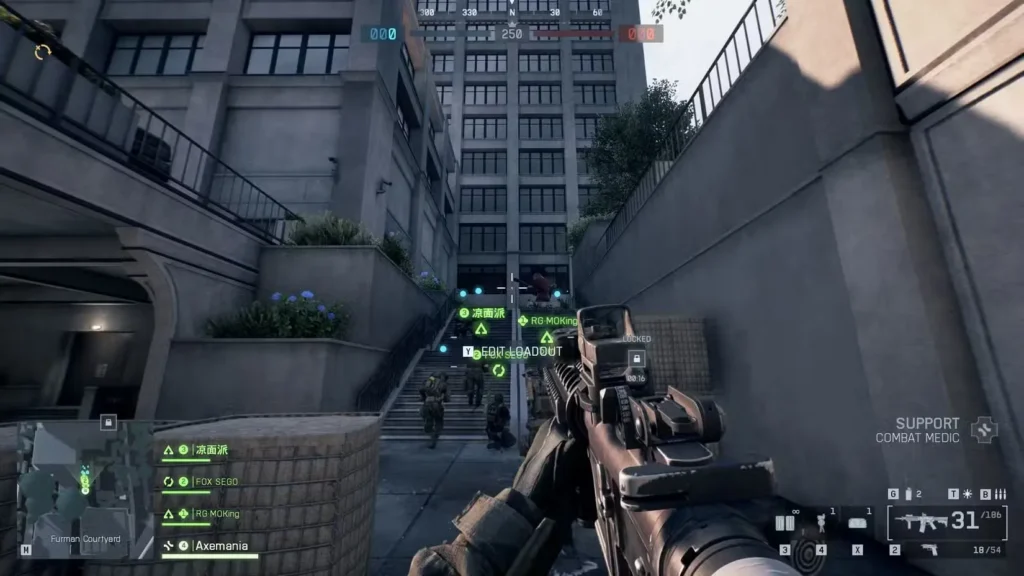
Domination: Fast Infantry-Based Territory Control
What it is: Domination is a smaller, infantry-only mode built around capturing and holding control points. Teams earn points by controlling objectives, and the first side to reach the score limit wins.
Unlike Conquest, Domination focuses on a condensed combat area. There is less emphasis on vehicles and long-distance travel, so you spend more time fighting over objectives and dealing with nearby enemies.
Why you should play it: Domination is great for practicing close-range gunfights, learning smaller map layouts, and getting comfortable with objective-based infantry combat.
Smart play: Don’t ignore the objectives just because the mode is fast-paced. Capturing and maintaining control of the key flags is how your team builds its score advantage. Coordinate with your squad instead of chasing every enemy you see.
It’s also a useful option for players working on weapon challenges that require regular infantry engagements. Check out our complete weapons list guide for more information about the arsenal.
Team Deathmatch: No Objectives, Just Gunfights
What it is: Team Deathmatch is a straightforward infantry mode. Two teams compete to eliminate opponents and reach the required kill target before the other side.
There are no control points to capture or M-COM stations to destroy. The main objective is to eliminate enemies while avoiding unnecessary deaths.
Why you should play it: TDM is perfect when you want to focus entirely on gunplay. It is also an easy way to get comfortable with a new weapon, test attachments, and practice aiming without worrying about larger objective strategies.
Pro tip: Don’t confuse aggression with reckless movement. Use cover, keep track of the enemy’s likely approach routes, and avoid repeatedly pushing through the same exposed lane.
TDM can also be useful for working on combat-focused challenges, although the best playlist depends on the specific challenge requirement. Our XP farming and fast leveling guide covers additional progression tips.
King of the Hill: Fight for the Moving Objective
What it is: King of the Hill places one control point on the map at a time. Both teams fight to capture and hold that location. The objective then moves between designated areas, forcing teams to reposition and compete for the next hill.
Why you should play it: King of the Hill keeps the action concentrated. Instead of searching for scattered enemies across a large map, you know where the main fight is taking place.
The changing location also prevents teams from relying on the same defensive position for the entire match. Good players need to anticipate where the next hill will appear, move with their squad, and establish control before the opposition arrives.
Smart play: Use your Recon tools to gather information around the next objective and check for enemies approaching from different directions. A squad that arrives together has a better chance of holding the hill.
Our Recon Class challenges guide can help you learn more about using Recon effectively in objective-focused modes.
Squad Deathmatch: Four Teams Fighting for the Kill Target
What it is: Squad Deathmatch features four competing squads. Each squad fights to reach the required elimination target before the other teams.
This is not a traditional two-team deathmatch or a free-for-all. You are competing against several opposing squads, which means enemies can approach from different directions and fights can become unpredictable very quickly.
Why you should play it: Squad Deathmatch is a good choice if you want to focus on smaller-team combat and coordination. Staying close to teammates, watching flanks, and avoiding isolated fights can make a big difference.
Teamwork tip: Don’t separate from your squad just to chase an enemy. Try to keep your teammates close enough to support one another during fights. A squad that communicates and controls its immediate area has a much better chance of reaching the kill target first.
Additional Multiplayer Modes Added After Launch
Battlefield 6 has received additional Multiplayer experiences after its initial launch. These modes add different objectives, team sizes, and combat rules beyond the original All-Out Warfare and tactical playlists.
Strikepoint: 4v4 Tactical Combat
What it is: Strikepoint is a 4v4 competitive mode built around one capture point. It uses a first-to-six match format, and players do not respawn during a round.
To win a round, your team must either capture the objective or eliminate the opposing team. Since you cannot simply respawn and try again, every movement and engagement matters.
Why you should play it: Strikepoint is ideal for players who enjoy smaller tactical matches where communication, positioning, and survival matter more than large-scale firefights.
Pay attention to sound, avoid exposing yourself unnecessarily, and coordinate with teammates before pushing the objective. One poorly timed move can leave your squad outnumbered for the rest of the round.
Sabotage: Protect and Destroy
What it is: Sabotage is a limited-time, team-based mode designed around attacking and defending high-priority cargo. One team tries to destroy the marked cargo while the other team protects it.
Attackers can damage cargo using explosives, grenades, gadgets, and other weapons. The team that destroys the most cargo wins. The mode uses two rounds so that both teams get a chance to play offense and defense.
Why you should play it: Sabotage gives players a different objective from standard flag capture or M-COM destruction. Attackers need to coordinate their explosives and find openings, while defenders must protect the cargo and prevent enemies from reaching it.
Strategy tip: Attackers should avoid spending all their explosives on one poorly defended approach. Use multiple angles and coordinate gadget attacks. Defenders should keep an eye on the cargo locations and avoid leaving one area completely unprotected.
Obliteration: Deliver the Bomb and Destroy M-COMs
What it is: Obliteration brings back a classic Battlefield objective. Both teams compete to secure a neutral bomb, carry it toward enemy M-COM stations, and destroy those targets before the opposing team does the same.
The main objective is to destroy three enemy M-COMs. The bomb appears in the middle of the battlefield, and teams must fight to pick it up and escort the carrier to an enemy target. Vehicles are available in the large-scale version, and the mode supports up to 64 players on some maps.
Why you should play it: Obliteration combines large-scale Battlefield combat with a clear objective that both teams must contest. Instead of simply capturing flags, your squad needs to secure the bomb, protect its carrier, and find a safe route to the enemy M-COMs.
Strategy tip: Don’t leave the bomb carrier without support. Protect the route, watch for enemy ambushes, and coordinate your attack before approaching an M-COM. If the opposing team gets the bomb, focus on stopping its carrier instead of scattering across the map.
Tactical Obliteration: Smaller, Infantry-Focused Bomb Combat
What it is: Tactical Obliteration takes the bomb-delivery objective from Obliteration and adapts it for an 8v8 infantry-focused match.
The rules are more compact than the large-scale version. Teams need to destroy two of the enemy’s three M-COMs to win. The mode has shorter match timing, no vehicles, and more focused combat layouts.
Why you should play it: This version is ideal for players who like Obliteration’s objective but prefer smaller fights without tanks and other vehicles. The bomb carrier needs support, and every squad member has an important job during an attack or defense.
Strategy tip: Keep track of the bomb carrier and think about where the enemy is likely to move. Use gadgets to slow down attackers, coordinate defensive positions around the M-COMs, and avoid sending teammates into separate fights.
For official rules and additional tips, see EA’s Obliteration and Tactical Obliteration guide.
Limited-Time and Seasonal Modes: The Wild Cards
Battlefield 6 regularly introduces special experiences through seasonal updates and events. Some use familiar maps and objectives with extra gameplay rules, while others introduce entirely new formats.
These experiences are not all permanent Multiplayer modes. They can disappear when an event ends or return in a future playlist rotation. Here are some of the important seasonal experiences released so far.
Ice Lock: Survive the Freezing Conditions
What it is: Ice Lock was a Winter Offensive event variant built around the Freeze mechanic. It modified Conquest and Domination experiences on the winter version of Empire State.
Soldiers had to manage their body temperature while fighting in freezing areas. Heat zones and fire-based equipment helped prevent the Freeze effect from becoming dangerous.
Why it was different: Players could not simply spend the entire match sprinting between objectives. They had to consider warmth, routes, and available heat sources while fighting for control.
VL-7 Strike: Fight Through Psychoactive Smoke
What it is: VL-7 Strike was a limited-time Multiplayer experience introduced during Season 2. It spread psychoactive smoke across selected battlefield areas, creating a visibility and awareness challenge for players.
The smoke was not designed to deal direct damage. Instead, it caused disorienting effects for soldiers who entered affected areas without protection. Masks and filters became important equipment for safely moving through the smoke.
Why it was different: VL-7 forced players to think about routes, protective equipment, and when to push through contaminated areas. It added another tactical consideration beyond simply spotting enemies and firing.
Nightfall: Fight in the Darkness
What it is: Nightfall introduced a special playlist of Team Deathmatch, Squad Deathmatch, and Domination matches on Hagental Base with the Darkness modifier active.
Most of the map’s lighting was disabled, making night vision goggles, thermal optics, and flashlights important tools for identifying threats.
Why it was different: Nightfall changed how players approached indoor combat. Instead of relying on normal visibility, squads had to manage their lighting equipment and use the environment to identify opponents.
Operation Augur: A Multi-Stage Battlefield Operation
What it is: Operation Augur was a large-scale, limited-time experience that connected two maps and two phases of combat.
The battle began on Contaminated, where NATO forces pushed through the frontline, before moving into the underground combat areas of Hagental Base. The operation emphasized coordinated attacks, sector captures, and adapting to different battlefield environments.
Why it was different: Instead of playing a single isolated map, squads moved through a connected operation with changing combat conditions. It offered a more extended objective-based experience than a normal round.
Top Gun: Carrier Strike
What it is: Carrier Strike was a limited-time mode introduced through the Top Gun collaboration. It focused on attacking and destroying the enemy aircraft carrier.
Teams had to work across land, sea, and air, capturing important sectors and creating opportunities for pilots and other units to attack the opposing carrier.
Why it was different: Carrier Strike placed naval warfare and aircraft combat at the center of the experience. It was a major change from standard infantry and ground-vehicle battles.
Marker Incursion: Dead Space PvE Experience
What it was: Marker Incursion arrived during the Battlefield x Dead Space: Convergence event. It was a 16-player PvE experience set beneath Area 51, where squads fought AI-controlled enemies and tried to stop the Marker threat.
Players had to push through corrupted areas, destroy Marker Shrines, and work together to stop the Convergence event. The experience also included Dead Space-themed rewards.
Availability: The Dead Space event ran from October 20 through November 10, 2026. It has now ended, so Marker Incursion should be treated as a completed limited-time experience unless EA announces a return.
Casino Heist: Season 5 Event
What it is: Casino Heist is the current limited-time event introduced with Season 5 Phase 2 on November 10, 2026. It takes place across Conquest and Escalation rather than functioning as an entirely separate core game mode.
During matches, defeated enemies can drop Contracts that provide additional objectives. These may involve capturing points, reviving teammates, exploring the European Casino map, and other tasks.
Completing Contracts rewards DOUGH, the event currency. You can exchange it for private security and casino-themed cosmetic rewards, including Heist Mask soldier skins, weapon packages, vehicle cosmetics, and other customization items.
New map: European Casino
The European Casino is a new infantry-only map added with the Casino Heist update. It features a casino floor, shopping areas, courtyards, balconies, destructible building facades, and the lazy river area.
It is designed around close-quarters battles and changing routes. Players can destroy parts of the environment to create new flanking opportunities, while balcony positions and open sections offer different sightlines.
Another update worth knowing: Patch 2.1.2.0 also added Rush, Team Deathmatch, and Domination support to the existing Vegas Strip map. This is a map compatibility update, not the introduction of three completely new modes.
Check EA’s Casino Heist event guide and Update 2.1.2.0 patch notes for the current event details.
Where to keep up: The Battlefield 6 subreddit is useful for community discussions, but check EA’s official announcements and the in-game Play menu for confirmed event dates and playlist availability.
Battlefield Portal: Community-Made Modes and Custom Experiences
Battlefield Portal deserves its own mention because it gives players a way to go beyond standard matchmaking playlists.
Portal is Battlefield 6’s creation platform. Players can build and customize experiences using supported maps, settings, rules, and gameplay options. Depending on the experience, this can produce anything from customized versions of familiar modes to completely different community-made battles.
What can you do with Portal?
- Join community-created experiences.
- Build custom matches using supported maps and game settings.
- Adjust supported gameplay rules and parameters.
- Play verified experiences created by the community.
- Explore different ways to practice or enjoy Battlefield beyond the standard playlists.
Portal is particularly useful when you want to play a supported mode that is not currently in the normal matchmaking rotation. It also gives creators more freedom to experiment with Battlefield’s tools.
For more information, visit the official Battlefield 6 website and explore the Portal section.
Battlefield REDSEC: Battle Royale and Competitive Modes
REDSEC is a separate free-to-play Battlefield experience. It shares the Battlefield universe and progression ecosystem, but its gameplay is different from standard Battlefield 6 Multiplayer.
Its main experiences include Battle Royale and Gauntlet, alongside competitive Ranked play and additional variants such as Rapid Royale.
Rapid Royale
What it is: Rapid Royale is a faster, smaller-scale Battle Royale experience. Its goal is to be the last player or team standing.
EA describes the mode as supporting up to 36 players in Solos or Trios, with matches lasting around 15 minutes. The reduced scale creates a faster experience than the standard Battle Royale format.
Ranked Battle Royale
What it is: REDSEC Ranked is designed for players who want a more competitive environment. You earn Rank Points and work through divisions as you improve your standing.
Ranked play places more emphasis on survival, team coordination, and consistent performance. It is a separate competitive experience from the regular Battlefield 6 Multiplayer modes covered above.
Important distinction: Don’t confuse REDSEC’s Battle Royale and Gauntlet playlists with standard Battlefield 6 Multiplayer modes. They have different objectives, maps, progression systems, and matchmaking rules.
For current REDSEC modes and competitive rules, check EA’s official game modes guide.
Which Battlefield 6 Mode Should You Play?
Still not sure where to start? Your best choice depends on whether you prefer vehicles, objectives, infantry combat, or competitive squad play.
Play Conquest if: You want the full Battlefield experience with large maps, vehicles, multiple objectives, and plenty of ways to support your team.
Play Escalation if: You enjoy territorial battles and want objectives to become more concentrated as the match progresses.
Play Breakthrough if: You prefer defined frontlines, with one team attacking and the other defending a series of sectors.
Play Rush if: You enjoy high-pressure objective play, M-COM attacks, and tense moments where defenders must stop an armed explosive.
Play Domination if: You want fast, infantry-only combat focused on capturing and holding a small number of objectives.
Play Team Deathmatch if: You want straightforward gunfights without capture points or complicated objectives.
Play King of the Hill if: You like close-range objective battles where the control point moves and your squad must constantly reposition.
Play Squad Deathmatch if: You want to fight alongside a small squad against several other competing teams.
Play Strikepoint if: You prefer tense 4v4 tactical combat with no respawns and a single objective.
Play Sabotage if: You enjoy attacking and defending destructible cargo in a focused team match.
Play Obliteration if: You want large-scale combat centered on securing a bomb and destroying enemy M-COM stations.
Play Tactical Obliteration if: You like the bomb-delivery objective but prefer smaller infantry-only matches.
Play REDSEC if: You want Battle Royale, survival-based combat, or a ranked competitive experience instead of standard Multiplayer.
Try Portal if: You want community-made experiences, custom rules, or a way to explore different Battlefield variations.
Best Modes for Challenges and Progression
Different Battlefield 6 modes can make certain challenges easier to complete. The important thing is to match the playlist to the task you are working on instead of assuming one mode is best for everything.
For Close-Range Combat Challenges:
Team Deathmatch, Domination, and other infantry-focused playlists give you frequent opportunities for weapon engagements. Check out our Close Quarters challenges guide for more help.
For Precision and Headshot Challenges:
Choose maps and modes that give you enough opportunities to engage enemies at the distances required by your challenge. Our Deadeye challenges guide covers precision-focused progression.
For Explosive and Gadget Challenges:
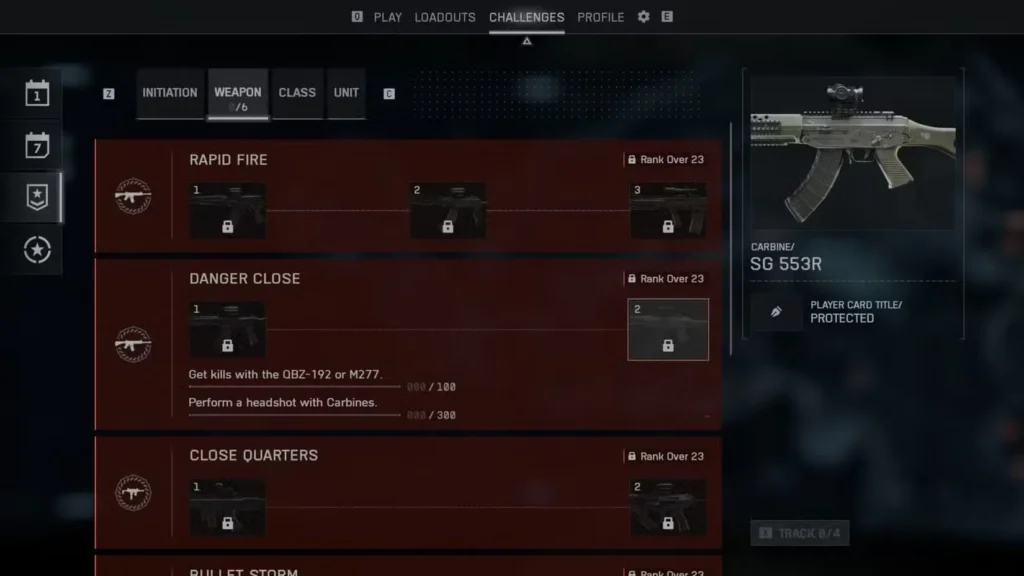
Objective modes can create opportunities to use explosives and class gadgets against groups of enemies, vehicles, and defensive positions. See our Danger Close challenges guide for more details.
For Weapon Progression:
Use a mode where you can consistently get into engagements with the weapon you want to level. Our complete weapons list can help you identify the weapons you want to unlock and use.
For General XP:
Playing the objective, helping teammates, and completing challenges can all contribute to progression. Our XP farming and fast leveling guide covers additional ways to progress efficiently.
Final Thoughts: Mix It Up
Battlefield 6 gives you plenty of ways to play, and there is no reason to limit yourself to one mode. Conquest is excellent for large-scale combined-arms warfare, Breakthrough and Rush offer focused objective battles, and infantry modes let you concentrate on gunplay and squad coordination.
Trying different modes can also help you become a more adaptable player. Conquest teaches map awareness and resource management. Breakthrough develops attacking and defensive skills. Team Deathmatch gives you more opportunities to practice gunfights, while Obliteration forces squads to protect an objective and work together.
Don’t ignore seasonal experiences either. Events such as Nightfall, Carrier Strike, and Casino Heist show how Battlefield can change familiar gameplay with new mechanics, maps, and objectives. Just remember that limited-time playlists may not stay available forever.
Whether you’re grinding through Close Quarters challenges, working on your Deadeye challenges, or tackling Danger Close challenges, there’s a Battlefield experience that can help you work toward your goals.
Now get out there, experiment with different modes, and find the style of Battlefield that suits you best.
Official Resources
- Battlefield 6 Official Website
- EA: Battlefield 6 Multiplayer Modes
- EA: What Battlefield 6 Game Mode Should You Play?
- EA: Season 1 Roadmap and Strikepoint
- EA: Obliteration and Tactical Obliteration Guide
- EA: Battlefield 6 Update 2.1.2.0
- EA: Casino Heist Season 5 Community Update
- Battlefield 6 on Steam
- Battlefield 6 on PlayStation
- Battlefield 6 on Epic Games Store
- Battlefield 6 Community on Reddit