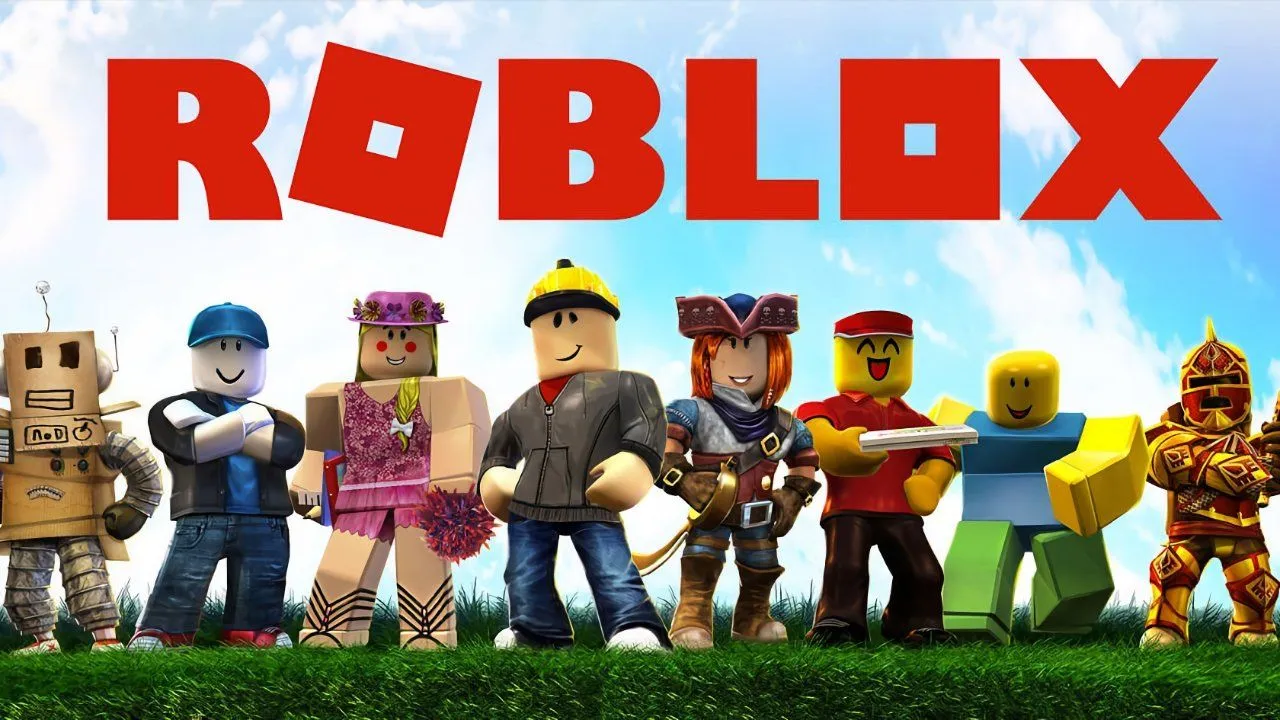
The United Kingdom government is weighing whether to introduce sweeping new restrictions on how children interact with strangers across online gaming platforms — and if the proposal moves forward, games like Fortnite, Roblox, Minecraft, and Discord could face significant compliance obligations within the next year. This is part of a broader push across multiple governments worldwide that’s reshaping how platforms handle minors, and the UK’s approach is notable both for how far it reaches and for the political momentum behind it.
What Is Actually Being Proposed?
The context matters here. The UK government’s consultation, titled “Growing up in the online world: a national consultation,” opened on March 2, 2026 and closed at 11:59 PM on May 26, 2026. The consultation asked whether there should be a minimum age for social media access, whether risky design features like infinite scrolling, autoplay, and streak mechanics should be restricted for minors, and whether the digital age of consent should be raised. Crucially, it also explicitly extended to gaming sites and AI chatbots — not just traditional social media platforms.
The government is weighing whether to introduce an Australia-style social media ban for under-16s or target specific features such as infinite scrolling, autoplay, location sharing, and personalized recommendation algorithms. Based on the signals from ministers and the Children’s Commissioner, the gaming-specific angle appears to be focused on one thing in particular: stranger pairing — the ability for adults with no existing connection to a child to initiate contact with them through in-game chat, voice, or messaging systems.
Narayan said one of the biggest concerns raised during a recent trip to Australia was “stranger pairing,” referring to adults being able to contact children they do not know through online platforms.
The government has not confirmed specific details of what restrictions will look like in practice. Tech minister Liz Kendall said the government would publish its response in the summer and intends to legislate by the end of 2026.
The Legislative Foundation Is Already in Place
This isn’t just talk. The legal machinery to move quickly already exists. The Children’s Wellbeing and Schools Act received Royal Assent on April 29, 2026, and with it came a new power to introduce age-based or feature-based restrictions for children on social media platforms without needing to pass a new Act of Parliament. That’s a significant detail — it means the government can move on restrictions through secondary legislation rather than waiting for a full parliamentary bill cycle.
The government has been clear that some form of restriction is coming for under-16s, regardless of what the consultation finds. What remains to be determined is which features or which platforms will be targeted.
Simultaneously, Ofcom has been running its own enforcement process. At the same time as the Act was completing its parliamentary passage, Ofcom’s deadline for the six major platforms — Facebook, Instagram, TikTok, Snapchat, YouTube, and Roblox — to respond to its four child safety demands passed on April 30, 2026. Ofcom has said it will publish a report on those responses, and if it is not satisfied with what platforms have committed to, it has said it will take enforcement action — fines of up to £18 million or 10% of global turnover, whichever is greater.
That’s a meaningful threat for a platform like Roblox, which has already been the subject of multiple lawsuits in the US over child safety failures.
Why Gaming Specifically?
Children’s Commissioner Rachel de Souza backed stronger action, saying many boys are not primarily using social media but are instead spending hours gaming. “Boys often aren’t on social media,” she told Sky News. “They’re often spending three or four hours a day gaming. And those games often have features that allow a 55-year-old in Arizona to come in and speak to a nine-year-old.”
That framing is important. The political argument for including gaming platforms in the same regulatory push as social media rests on the observation that if the goal is protecting children from unsolicited adult contact online, focusing only on Instagram and TikTok ignores where a substantial portion of younger children — particularly boys — actually spend their time online. Platforms like Roblox, Minecraft, and Fortnite have massive populations of younger players, built-in voice and text chat systems, and relatively limited age-based restrictions on who can communicate with whom.
De Souza added: “I wouldn’t be calling it a ban of children, I’d be calling it a ban and restriction on services that are not suitable for under-eighteens.” The framing positions this as a platform compliance issue rather than a restriction on children’s behavior — the burden falls on the service, not the user.
What Could Platforms Actually Be Required to Do?
Based on the consultation and the broader Online Safety Act framework, the range of potential requirements being discussed for gaming platforms includes:
- Stranger pairing restrictions — preventing adults from initiating unsolicited contact with accounts identified as belonging to under-16s
- Stronger age verification — moving beyond self-declaration to more robust confirmation of user age, potentially at the account creation stage
- Restrictions on addictive design features — limiting or prohibiting mechanics like autoplay, streak systems, and algorithmic recommendation loops when targeting minors
- Digital curfews or daily usage limits — time-based restrictions that cap how long children can use certain features per day
- Default-safe settings — requiring that privacy and communication settings default to the most protective configuration for accounts identified as belonging to minors
Developers of multiplayer games may need to adjust how features like live chat, friend matchmaking, or community interaction tools operate for users under 16. Games with built-in social systems could face requirements to limit exposure to strangers or restrict playtime for younger users.
The Broader Global Context
The UK isn’t doing this in isolation. The global regulatory landscape for minors online has shifted dramatically over the past 18 months, and the UK is looking carefully at what other jurisdictions have done.
Australia moved first and most aggressively. The Australian government introduced one of the first sweeping bans on minors from social media platforms, prohibiting children under 16 from creating accounts on Facebook, X (Twitter), and even YouTube — with compliance enforced through significant platform-facing penalties. The model has attracted international attention precisely because it placed all enforcement responsibility on the platform rather than the child or parent.
In the United States, New York State introduced the Children’s Online Safety Act in early May 2026, seeking mandatory age verification for any online platform with chat functions. California has separately proposed requiring all operating systems to include age verification at the OS level — a proposal with far-reaching implications for device makers. Several states have also filed lawsuits against platforms: Los Angeles County, Louisiana, and Texas have all sued Roblox Corporation over child safety failures, and New York State filed a separate lawsuit against Valve in February 2026 over the marketing of loot boxes to children.
How the Industry Is Already Responding
Faced with this wave of regulatory pressure and litigation, companies aren’t waiting for laws to force their hand. Discord has confirmed it will implement age restriction features in the second half of 2026, following significant backlash over its initial rollout announcement. Call of Duty added age verification requirements in July 2025, requiring Black Ops 6 and Warzone players to confirm their birthdate before playing. Sony and Steam have both made greater pushes to implement age verification software at the platform level.
The pattern is clear: every platform that delays voluntary action increases its legal and regulatory exposure in jurisdictions that are moving from consultation to enforcement. The UK’s announcement that legislation is intended by end of 2026 puts a hard deadline on that calculus for any platform with significant UK user bases.
The Counterarguments
Not everyone supports the direction of travel, and the criticism of blanket restrictions deserves serious treatment. Critics warn a ban could simply push young people into less regulated spaces and create new risks for marginalised groups who already face barriers to support and safe online access. The argument is that restricting mainstream, large platforms from hosting children doesn’t eliminate children’s online behavior — it moves it to less moderated environments where detection and enforcement are harder.
There’s also a practical enforcement question. Age verification systems are only as robust as the verification method being used. Self-declaration doesn’t work. Device-level verification creates privacy concerns. Document-based verification raises data protection issues around storing identity documents. Every jurisdiction grappling with this problem is wrestling with the same fundamental tension: genuine age verification at scale is technically difficult and creates its own risks.
The gaming-specific angle also raises questions about where the line is drawn. Restricting stranger contact on Roblox — a platform explicitly marketed to young children where incidents of grooming and inappropriate contact have been well documented — is a different proposition than applying the same restrictions to a competitive shooter like Fortnite, where the social features are incidental rather than core to the experience. Whether the UK’s eventual legislation makes that distinction or applies a single standard across all gaming platforms with chat will significantly determine the practical impact on developers.
What Happens Next
The consultation closed May 26. The government’s formal response is expected in the summer, following review of submitted feedback, with the intention to legislate by the end of 2026. Given that the legal power to act without a new primary Act of Parliament already exists through the Children’s Wellbeing and Schools Act, the timeline from summer response to actual implementation could be faster than most regulatory cycles.
For gaming platforms operating in the UK, the window to get ahead of this legislatively is closing. The platforms that have already begun implementing age verification and restricted communication features are better positioned than those still waiting for a law to force their hand. And given that similar legislation is either already in force or in progress across Australia, New York, and potentially California, UK compliance isn’t likely to be an isolated engineering effort — it’s part of a global compliance push that’s coming whether platforms are ready for it or not.
For everything else happening in gaming this week, Spider-Man: Brand New Day is shaping up to be the most classic MCU Spider-Man film yet ahead of its July 31 release, ARC Raiders won Nordic Game of the Year along with Best Technology and Best Audio at the 2026 Nordic Game Awards, Twitch’s new AI stream summary feature is generating a massive backlash from streamers, and ARC Raiders is testing a PvE Rebellion mode in China that the global community is already demanding gets ported over.


