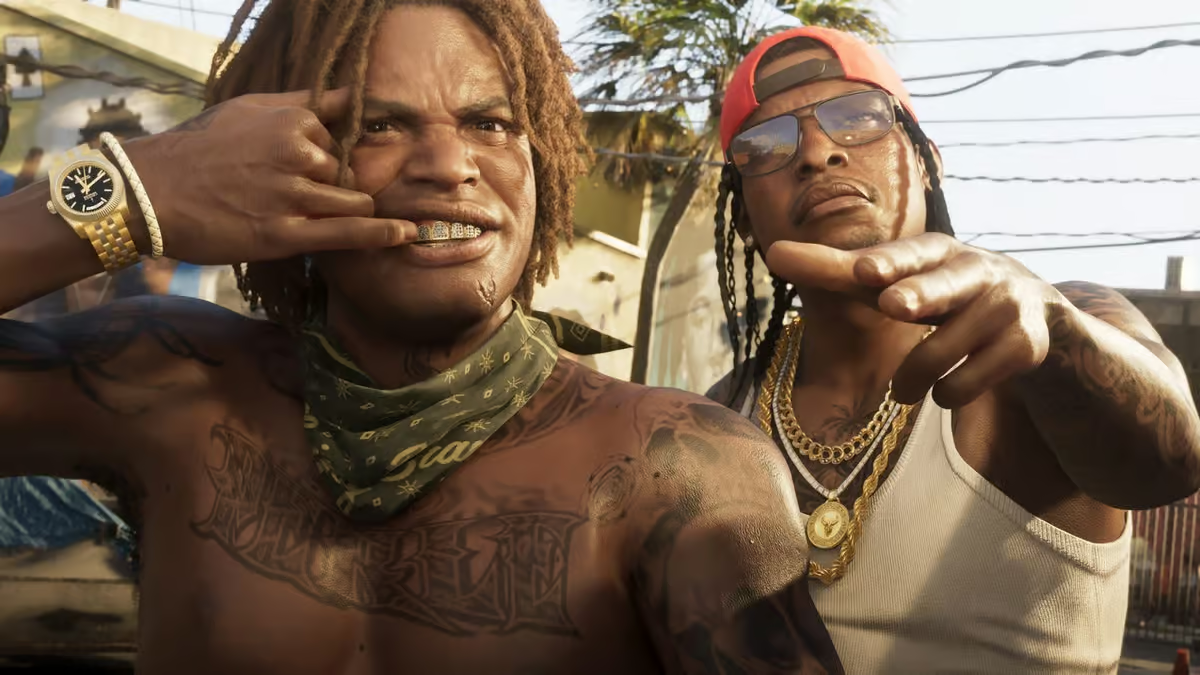
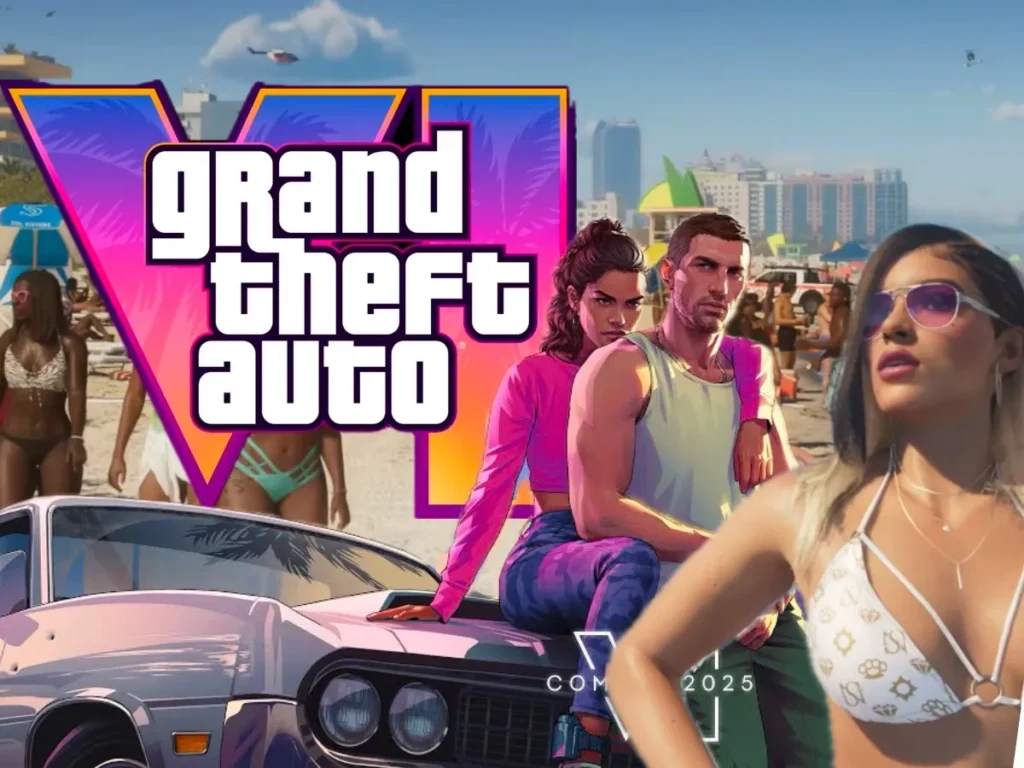
Rockstar just confirmed one of the more significant structural details about GTA 6’s story that fans have been trying to figure out for months. In a recent interview with Trois Couleurs, Rockstar North co-studio head Rob Nelson revealed that GTA 6 is built around a chapter-based narrative structure — the same approach Rockstar used to tell Arthur Morgan’s story in Red Dead Redemption 2. It’s a meaningful design decision, and if it works anything like it did in RDR2, it could make GTA 6 one of the most narratively focused entries in the entire franchise.
Here’s what was confirmed, how the chapter system works, and why this matters for anyone who’s been keeping a close eye on how Jason and Lucia’s story is going to play out when GTA 6 hits PS5 and Xbox Series X/S on November 19, 2026.

Rob Nelson Confirms GTA 6 Has a Chapter-Based Story Structure
During a Trois Couleurs interview focused on how Rockstar builds its stories, Rob Nelson explained that GTA 6 uses chapters to move Jason and Lucia through the narrative in a way that gives the team clear structural anchors to build around. Nelson described how the process starts with Senior Vice President of Narrative Rupert Humphries laying out roughly a page and a half of high-level story beats — where the characters start, what pushes them forward, where they end up — and then the rest of the development process fills in around those tent-pole moments.
The chapter breaks essentially act as the mechanism that transitions players from one major phase of the story and world to the next. As each chapter ends and a new one begins, Rockstar can naturally shift the characters’ situation, their location in Vice City, and the tone of what they’re dealing with — much like how Arthur Morgan and the Van der Linde gang kept moving to new camps across different regions of the map in RDR2 as their situation deteriorated chapter by chapter.
Nelson was clear that this doesn’t mean GTA 6 becomes a linear or restrictive experience. The chapter structure is specifically about establishing the big beats first, then engineering the world, missions, and set-pieces around those moments — and then figuring out how much freedom the player can have between them before a chapter-defining moment kicks in. The development question Nelson described is literally “what if the player wants to go off the rails?” — and whether GTA 6 can accommodate that without breaking the chapter’s narrative momentum.
How This Compares to GTA 5 and Red Dead Redemption 2
GTA 5 did not use chapters in any meaningful sense. Its structure was more of a traditional mission-based open world — Michael, Franklin, and Trevor’s story moved forward mission by mission, with players able to freelance between major beats but without any strong chapter-based framing giving the narrative a sense of escalating stages. It worked, but the three-protagonist juggling act also meant no single character arc got the depth or momentum it needed to hit as hard as a more focused story might have.
Red Dead Redemption 2 flipped that approach entirely. Six chapters plus two epilogues gave Arthur Morgan’s story a clear progression — each chapter moved the gang to a new location with a different set of pressures, and the chapter breaks made the deteriorating situation feel genuinely earned and paced. Players had enormous freedom within each chapter, but the chapter structure meant the overall narrative always had weight and forward momentum.
GTA 6 is explicitly taking that RDR2 lesson and applying it to a two-protagonist story set in a living Vice City. Rockstar has already said the decision to go with two protagonists instead of three (or the original four reportedly considered) came directly from what they learned developing Arthur Morgan — that fewer protagonists means deeper emotional investment per character. The chapter structure supports that same philosophy.
Hideouts Change Between Chapters — Just Like RDR2 Camps
In a separate Famitsu interview, Nelson confirmed another detail that ties directly into the chapter structure: Jason and Lucia’s hideouts change as the story progresses chapter by chapter. As each new chapter begins and the duo’s situation evolves, they move to different hideouts that reflect where they are in the story. Nelson specifically compared this to how the Van der Linde gang’s camps changed location and feeling across RDR2’s chapters — each camp felt like a snapshot of where the gang’s fortunes stood at that point in the story.
Each hideout reportedly has its own lived-in atmosphere, with NPCs operating on daily schedules that give the base a sense of life rather than just being a fast travel point. That kind of environmental storytelling is exactly what made RDR2’s camps so memorable, and applying it to GTA 6’s modern Vice City setting with Jason and Lucia’s crew is a promising direction.
The Criminal Profile System Adds Consequence to Every Chapter
The chapter structure isn’t just a narrative tool — it interacts with some of GTA 6’s deeper gameplay systems in ways that make each phase of the story feel meaningfully different depending on how you’ve played. The Criminal Profile system tracks how professionally or violently Jason and Lucia operate across the entire playthrough. Go in clean, minimize casualties, and avoid unnecessary mayhem, and better jobs, higher-paying clients, and more favorable pricing open up. Go in loud, kill witnesses, and max out your chaos — and the Criminal Profile icon in your character menu can eventually shatter, locking you into a severe state for the rest of the playthrough.
That reputation system feeding into a chapter-based story means the same chapter can feel mechanically different depending on what kind of operator you’ve been during the previous one. It’s a level of systemic storytelling consequence that GTA 5 never really attempted.
Money, Witnesses, and a Reactive World Across Each Chapter
The world GTA 6 is building around these chapters is significantly more reactive than anything the series has done before. The money system alone is a complete overhaul — cash on-person can be lost if you die and must be physically deposited at an ATM to secure it in the BuckMe digital bank balance. Stolen goods go into duffel bags and can’t be spent until taken to a fence. The type of score you run — small convenience store hit, jewelry store job, armored van, or full bank heist — each has its own logistical chain.
The witness system is also completely reworked. Witnesses in GTA 6 can actually report crimes to police, giving law enforcement real information to work with. Masks and disguises prevent visual ID on CCTV and by witnesses. Splitting up forces police to divide focus. Breaking line of sight and swapping to an inconspicuous vehicle lets you drive through roadblocks clean. The six-star Wanted system — restored from GTA 5’s five-star cap — layers on top of all of this.
All of that reactivity wrapped in a chapter structure means the stakes feel cumulative across the story in a way that GTA 5’s more freeform mission structure never quite managed.
What the Chapter Structure Means for Jason and Lucia
Rockstar has been consistently clear that Jason and Lucia’s relationship is at the center of everything in GTA 6. The Bonnie and Clyde-inspired duo are romantically involved, caught in a criminal conspiracy they have to navigate together, and players can choose how to treat the relationship — as a partnership in crime, as something more romantic, or somewhere in between. The chapter structure gives that relationship arc a proper framework to evolve across. Rather than a flat open-world campaign where the relationship just sort of exists in the background, chapters can mark genuine turning points in how Jason and Lucia relate to each other, what they’re willing to do, and what their situation costs them.
Rockstar originally planned four playable characters for GTA 6 before deciding two gave them far more room to develop meaningful character arcs. That decision, combined with the chapter structure, is probably the single biggest reason why GTA 6’s story has a chance to land as hard emotionally as RDR2’s did.
Is GTA 6 Still an Open World?
Absolutely — and Rockstar has been emphatic about this. The chapter structure is a storytelling tool, not a leash. Vice City and the surrounding Leonida region is still a massive open world where Jason and Lucia can get lost in side content, explore the Everglades, rob stores they walk into on a whim, or simply drift across the map doing whatever feels right. The chapters provide narrative momentum and emotional stakes without restricting what players can do between major beats.
If Red Dead Redemption 2 proved anything, it’s that a chapter-based open-world game can give you more freedom than a formless one — because when you know where the story is going and why, the open world feels like it has context rather than just being a sandbox waiting to be filled.
For everything else going on in the gaming world right now, the GTA 6 worldwide release times and staggered rollout details are worth checking if you’re planning your launch-day setup. And if you want to understand how Rockstar is handling the Jason and Lucia dynamic beyond just the story structure, the full GTA 6 relationship and romance system breakdown has everything confirmed so far on how that mechanic actually works in-game.
GTA 6 Release Date
GTA 6 launches on November 19, 2026, on PlayStation 5 and Xbox Series X/S. No PC release date has been confirmed yet, though Rockstar’s pattern with both GTA 5 and Red Dead Redemption 2 suggests a PC version is coming at some point after the console launch. The November 19 date is locked in, and with Rockstar’s recent press tour revealing more gameplay and system details than at any point in GTA 6’s development cycle, the wait is almost over.