TL;DR
- Comfort Level is a happiness rating tied to a Pokémon’s habitat — higher Comfort = higher Environment Level
- There are at least four Comfort Level tiers: Iffy, Average, Nice, and Great (and potentially more)
- Always start by asking a Pokémon “How’s your comfort level?” and checking their Pokédex entry for preferences
- Use the PC and Minus button (-) to see an overview of every Pokémon’s Comfort Level in a region at a glance
- The nine factors that affect Comfort Level are: Relaxation, Food, Toys, Decorations, Temperature, Light, Humidity, Houses, and Pathways
- Completing Pokémon requests also raises the requester’s Comfort Level — don’t overlook this method
- Building a house for a Pokémon is the single biggest Comfort Level boost available — more space means more room to decorate to their preferences
- Pokémon in houses are only affected by the conditions inside — adjust warmth, light, and humidity within the house itself
What Are Comfort Levels in Pokémon Pokopia?
Comfort Level is a measure of how satisfied a Pokémon is with its living situation in Pokémon Pokopia. Think of it as a personal happiness rating tied specifically to each Pokémon’s habitat or house, rather than anything related to battle or friendship. When a Pokémon’s Comfort Level is low, that’s a clear signal their home needs attention.
Beyond individual happiness, Comfort Levels have a broader impact on the game. The combined Comfort Levels of all Pokémon in an area contribute directly to the Environment Level of that region. A higher Environment Level unlocks new content, recipes, shop items, and — crucially — the ability to purchase Pokémon Center rebuilding kits. Raising Comfort Levels is therefore one of the fastest ways to push Environment Level forward.
There are at least four Comfort Level tiers, running from lowest to highest: Iffy → Average → Nice → Great. Additional tiers may exist and will be confirmed as players explore further.

How to Check Comfort Levels in Pokémon Pokopia
Before investing resources into a Pokémon’s habitat, it’s worth knowing exactly what they need. There are two key ways to check:
Talk to the Pokémon directly. Walk up to any Pokémon and select “How’s your comfort level?” They’ll give you an instant readout of their current tier and — more usefully — hints about what changes would help. Treat this as your primary diagnostic tool, and use it regularly.
Use the PC overview. At any Pokémon Center PC, press the Minus button (-) to see all Comfort Levels in the current region grouped by tier. This lets you quickly identify who needs the most help without walking around to check every individual Pokémon. Prioritise Pokémon with “Iffy” ratings before spending time on anyone already at “Great.”
Check the Pokédex entry. The ‘Specialities and Likes’ tab in any Pokémon’s Pokédex entry lists their ideal habitat conditions and favourite items — a goldmine of information before you start decorating. Always cross-reference this with what the Pokémon tells you directly.
The Nine Factors That Affect Comfort Levels
There are nine distinct factors that influence a Pokémon’s Comfort Level. Each Pokémon has different preferences, so tailoring the habitat to the individual is always more effective than a generic approach.
1. Relaxation
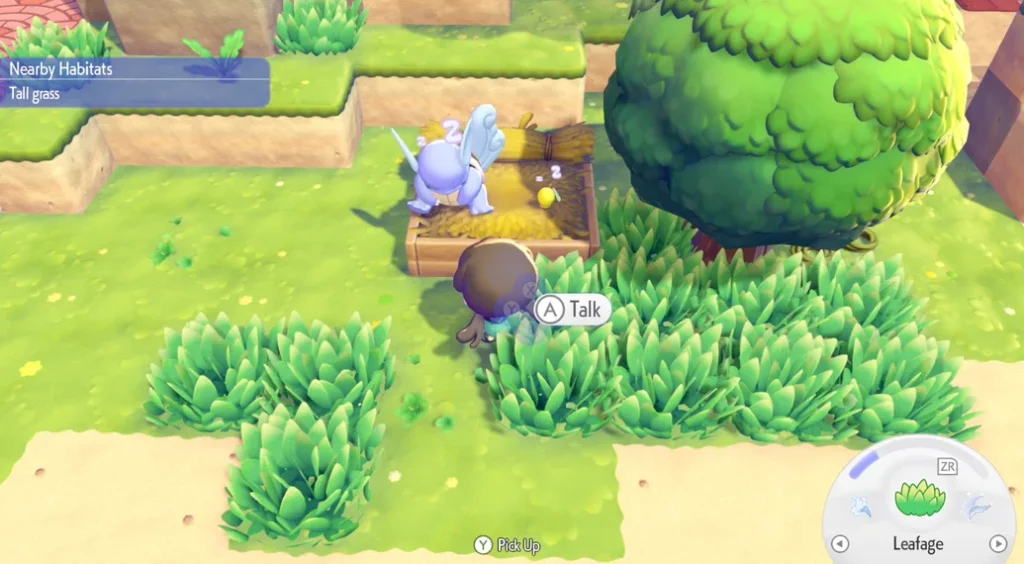
Pokémon enjoy having somewhere to rest. Placing a bed or chair in a Pokémon’s habitat boosts their Comfort Level, especially when they’ve specifically asked for something to relax on. The key caveat: size matters. A large Pokémon like Blastoise cannot sit on a small Straw Stool and won’t receive a Comfort boost from mismatched furniture. Always match the furniture scale to the Pokémon.
2. Food
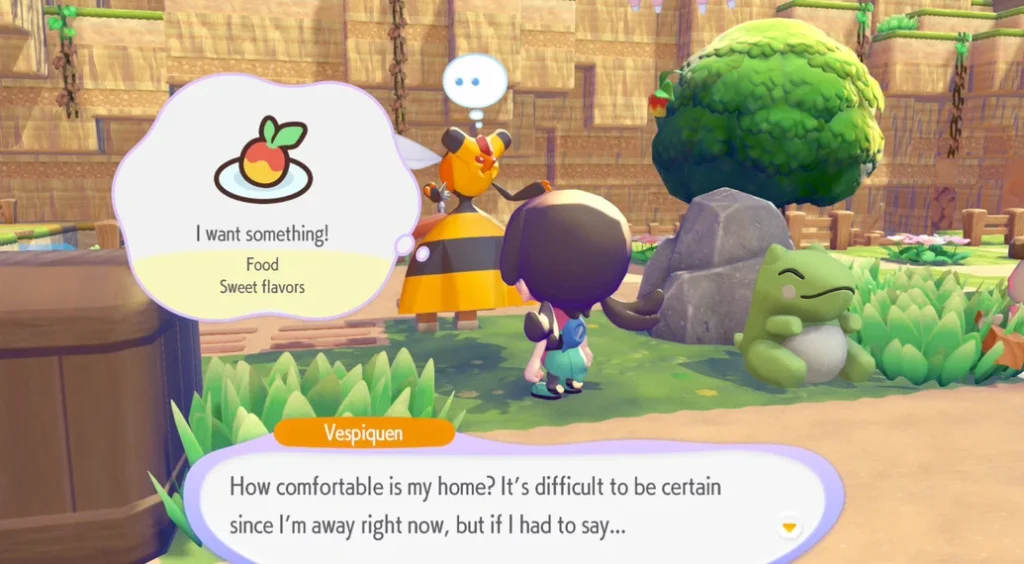
Feeding Pokémon is a reliable Comfort boost. You can either give food to a Pokémon directly or place it on a plate in their habitat for them to find. Pokémon often have flavour preferences — spicy, bitter, sweet — so always check their Pokédex entry or pay attention to hints they give when you ask about their Comfort Level. Matching the flavour to their preference makes a significant difference.
For example, Oddish prefers bitter flavours, so a Rawst Berry (placed directly or on a plate) is an ideal gift. A Pokémon that hints at wanting spicy food should receive a spicy dish rather than any generic food item.
3. Toys
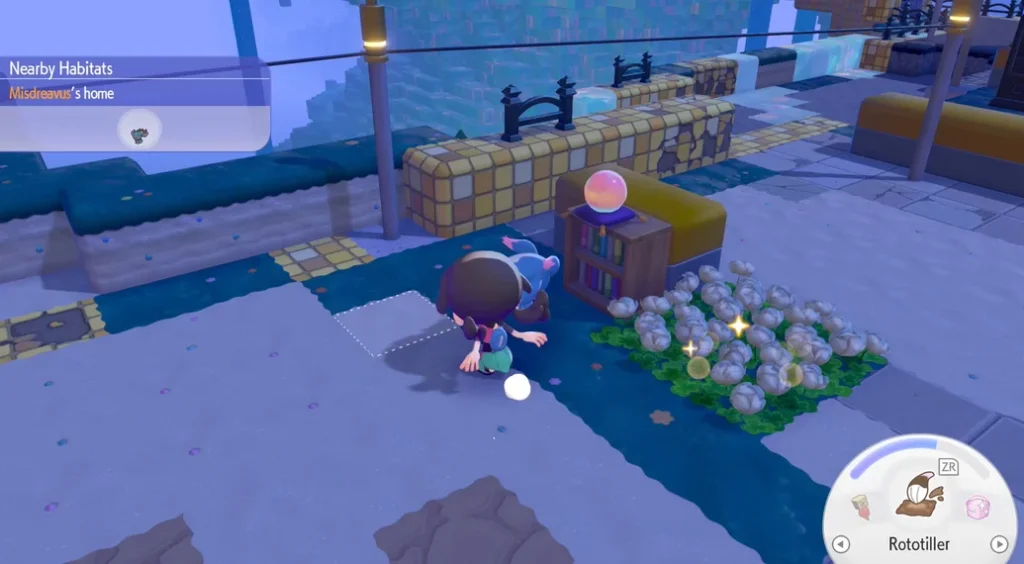
Placing a toy — such as Toy Blocks or a doll — in a Pokémon’s habitat can raise their Comfort Level, especially when they’ve asked for something to play with. Some Pokémon have specific toy preferences: a Pokémon that likes spooky items, for example, will respond better to a Crystal Ball than a generic toy. Check the Pokédex first. For players already collecting dolls, these double as both Dream Island keys and Comfort-boosting toys — see our guide to getting dolls in Pokémon Pokopia for the full breakdown.
4. Decorations
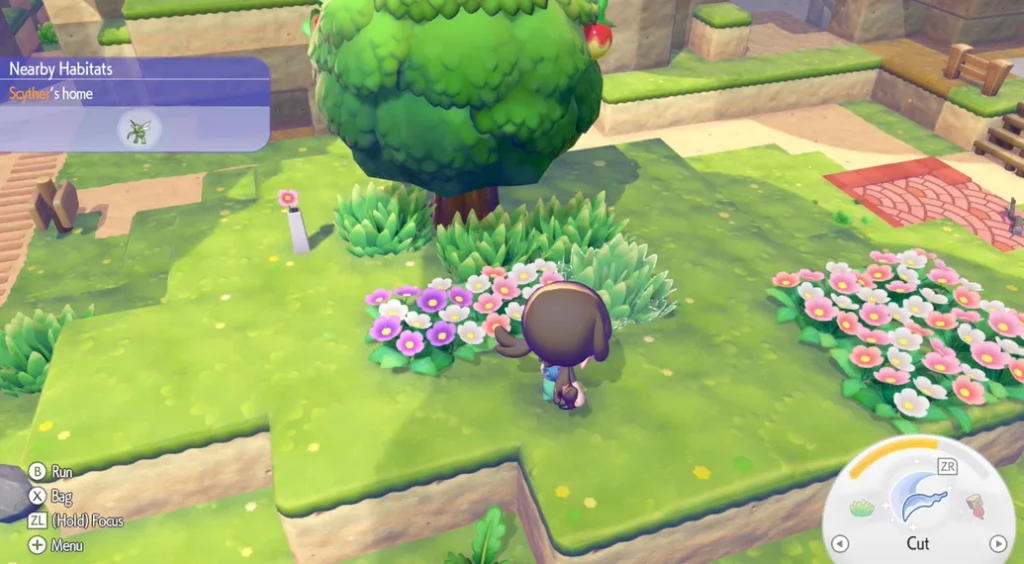
Even without a direct request, placing decorations that match a Pokémon’s preferences in their habitat will positively affect their Comfort Level. Nature-loving Pokémon appreciate plant decorations; Pokémon with urban or construction-oriented preferences respond better to metal or industrial decorations. The Pokédex entry is again your best reference here.
5. Temperature: Warm or Cold
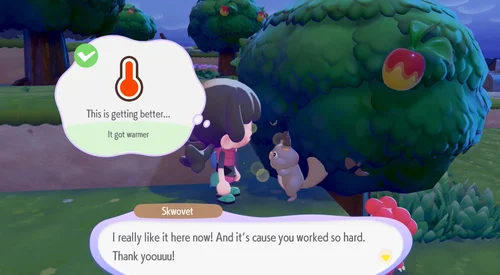
Some Pokémon want a warmer habitat; others prefer it cooler. Fire-types like Charmander thrive in warm environments — place Campfires or Fire Pits nearby to increase warmth. For Pokémon that prefer the cold, Ice Blocks placed in the habitat will help bring the temperature down.
6. Light: Bright or Dark

Lighting preferences vary significantly. Grass-type Pokémon typically prefer bright habitats — a variety of lamps can help, or simply lighting fires if electricity isn’t yet available. Cave-dwelling Pokémon like Zubat prefer darkness.
Creating a dark habitat requires more effort: either move the Pokémon underground or build a structure around them that blocks natural light. If building a structure, solid blocks without windows are the most effective way to keep the habitat dark — either a roof or a fully enclosed house with no openings.
7. Humidity: Dry or Humid
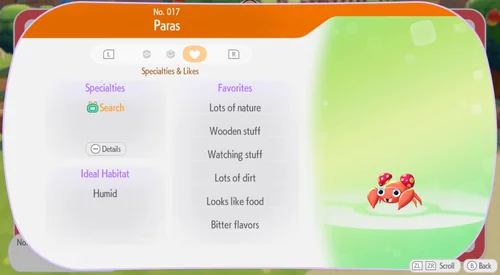
Humidity affects Pokémon with strong environmental preferences. For humid habitats, surround the Pokémon with plenty of vegetation and water — fountains and ponds are particularly effective. For dry habitats, remove vegetation and water features entirely and lean toward an urban landscape.
Worth noting: watering plants and growing grass gradually improves humidity, but the fastest way to shift humidity significantly is to complete Pokémon requests — fulfilling what a Pokémon asks for has a far more direct effect on their environment conditions than passive world changes alone.
8. Houses

Building and assigning a Pokémon to a dedicated house is the single biggest Comfort Level boost available. Houses offer significantly more space for decorations than original habitats, giving you far more room to tailor the environment to a Pokémon’s specific tastes. The larger the house, the greater the potential Comfort Level rise.
There is one important rule to understand: Pokémon living in houses are only affected by the conditions inside the house. Temperature, light, and humidity from the surrounding environment do not carry in. If a Pokémon prefers a dark habitat, the interior of the house must be dark — the outside world’s lighting has no effect. Adjust warmth, brightness, and humidity within the house itself to match the Pokémon’s needs.
A building qualifies as a home once you place at least three furniture items inside. You can then invite the Pokémon to follow you and reassign them to the house as their new habitat.
Remember too that you can move any Pokémon’s habitat at any time. This is especially useful in crowded areas where overlapping habitats may have conflicting needs — separating incompatible Pokémon into their own spaces prevents them from inadvertently lowering each other’s Comfort Levels.
9. Pathways
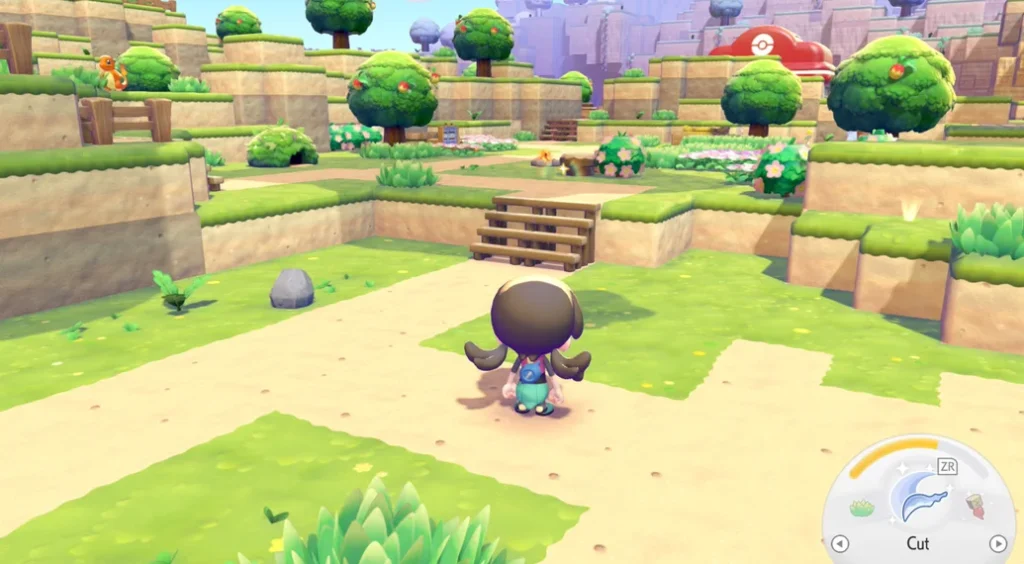
Having smooth, unobstructed pathways throughout an environment positively affects Comfort Levels across the board. Pathways should allow Pokémon to reach the Pokémon Center without encountering obstacles or rough terrain. Add steps where terrain rises to ensure Pokémon can navigate hills without difficulty. Tidy, connected paths signal a well-maintained environment that Pokémon are generally happier to live in.
Don’t Forget: Completing Requests Raises Comfort Level
One of the most overlooked ways to raise a Pokémon’s Comfort Level is simply completing their requests. Both major requests and shorter general requests (the Pokopia equivalent of side quests) raise the Comfort Level of the requesting Pokémon upon completion. This makes working through your request list a dual-purpose activity — progressing the story while simultaneously pushing Comfort Levels up across your roster.
General requests tend to be shorter tasks like deliveries or escorts, and while some don’t offer item rewards, they reliably contribute to Comfort improvements. Keep your request list active and prioritise Pokémon whose Comfort Level is already close to the next tier. For more on all your available moves during requests and exploration, see our full moves and transformations guide.
Comfort Level Tips: Putting It All Together
Here’s the Oddish example from the source article to illustrate how all these factors combine in practice:
Oddish’s ideal habitat is humid with lots of nature. It likes water, flowers, dirt, and soft objects. To maximise Oddish’s Comfort Level:
- Fill the habitat with flowers and bushes (nature + humidity)
- Build a fountain or pond (water + humidity increase)
- Place a doll as a toy (Oddish likes soft, cute objects)
- Add a Plain Bed for relaxation (soft items preference)
- Give or place a Rawst Berry on a plate (Oddish likes bitter flavours)
- Avoid: dry, urban environments, minimal vegetation
Once you’ve made these changes, check back with Oddish using “How’s your comfort level?” to confirm the tier has improved.
For players managing storage while gathering decoration materials, our storage guide will help you keep your bag and boxes organised. And if you’re at the stage of unlocking the Iron Ingots or Bricks you need for larger builds and furniture, our Iron Ingots guide and Bricks guide cover those production loops in full.
Frequently Asked Questions
How do I increase Comfort Levels in Pokémon Pokopia?
Decorate habitats with items matching a Pokémon’s preferences, feed them their preferred flavour of food, place appropriate toys, adjust temperature and humidity, build a dedicated house, create smooth pathways, and complete their requests. Ask each Pokémon “How’s your comfort level?” for personalised hints.
What are the Comfort Level tiers in Pokémon Pokopia?
There are at least four confirmed tiers: Iffy, Average, Nice, and Great, running from lowest to highest satisfaction. Additional tiers may be discovered as more players progress through the game.
What is the fastest way to increase a Pokémon’s Comfort Level?
Building and assigning a Pokémon to a dedicated house is the single biggest boost. Houses provide far more decoration space than open habitats, making it much easier to tailor the environment to a Pokémon’s exact preferences.
Does completing requests raise Comfort Levels?
Yes. Both major and general requests raise the Comfort Level of the requesting Pokémon upon completion. This makes working through your request list one of the most efficient ways to improve Comfort Levels across multiple Pokémon at once.
Do Pokémon in houses still care about outdoor temperature, light, and humidity?
No. Once a Pokémon is living in a house, only the conditions inside the house affect their Comfort Level. The outdoor environment has no impact — adjust temperature, brightness, and humidity within the house to match the Pokémon’s preferences.